Perfect for Christmas Eve and St. Martin's Day
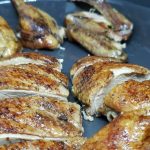
Recipe for slow-roasted duck
For most Danes, Mortens Aften or Christmas Eve means roast duck. Here, we provide you with a recipe for a delicious, slow-cooked duck.
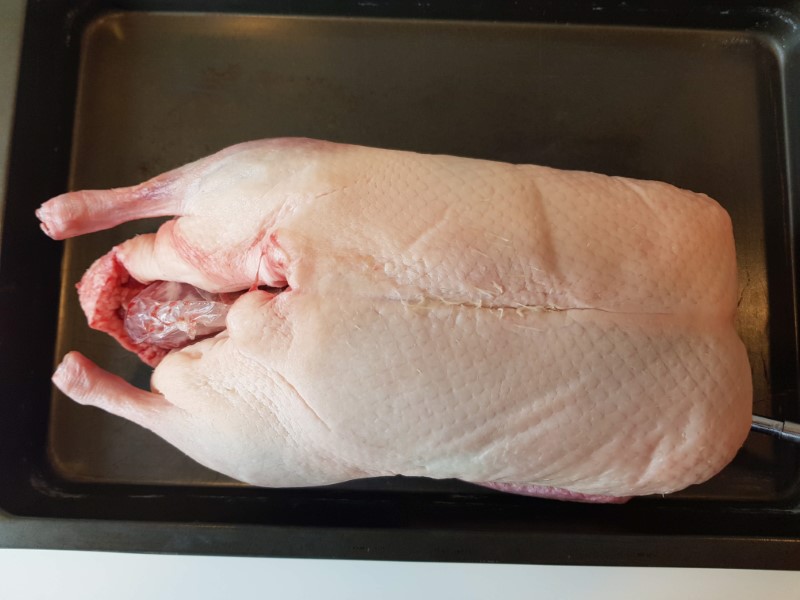
The duck for this recipe was on the smaller side. 2400 grams and frozen.
Always take the duck out two days before and place it in a refrigerator to thaw slowly.
The duck was aged in my aging cabinet for 12 hours before cooking.
This draws some moisture out of the meat and helps the skin crisp up more easily.

Servings: Portions
Slow-Roasted Duck
Perfect for Christmas Eve and St. Martin's Day
Ingredients
- 2400 gram Duck
- 0.5 package Prunes Soaked in alcohol for a few hours
- 2 pcs. Apples
- Spices Salt, pepper, and thyme
- 2 pcs. Onion
- 2 pcs. Celery Leaf Stalks
- 2 pcs. Carrots
- 2 pcs. Bay Leaf
- 200 gram White Wine Can easily be replaced with red wine
- 0.5 l Water
- 50 gram Butter
- 30 gram Wheat Flour
- 200 gram Water Preferably water from boiled potatoes
- 206 gram Milk
- 202 gram Cream
- Spices Salt, pepper, gastrique (or sugar and vinegar), and lemon juice
Instructions
Slow-Roasted Duck
- I soaked my prunes in rum overnight. The liquid from the rum (and the apples) helps to keep the duck moist during cooking.
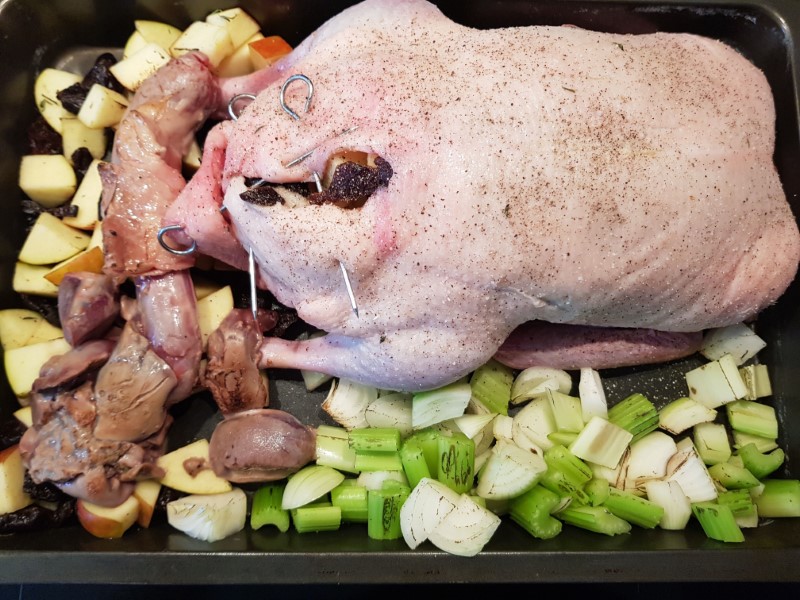
- Start by removing the innards (do not throw them away) from the duck and rinse it well to remove any blood residues and other impurities.
- Season the duck with salt and pepper, both inside and outside.
- Halve your soaked prunes and place them in a bowl.
- Cut the apples into wedges and remove the cores.
- Place them in the bowl with thyme - preferably fresh.
- Mix well and stuff your duck with the ingredients.
- Close the duck with a few kitchen needles.
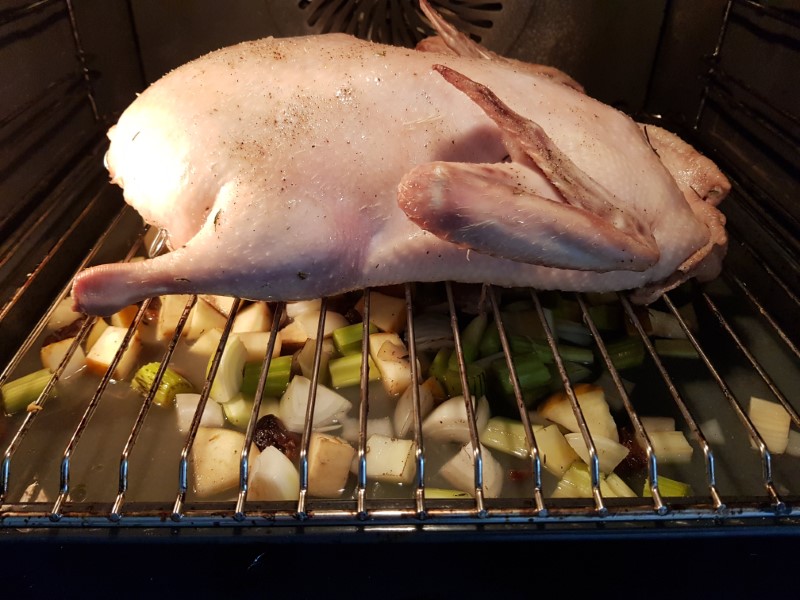
- Place the duck on a rack as low as possible in the oven.
- Take a deep roasting pan and place the innards in it. Cut the onions, carrots, and celery stalks into larger pieces and also place them in the roasting pan.
- I have a gas burner, so I use it to give everything a bit of a sear. If you don't have one, you can do two things:
- 1) Either quickly brown everything in a pan before putting it in the roasting pan.
- or
- 2) Set the oven to 225/250 degrees Celsius (482 degrees Fahrenheit) convection/grill and sear it directly in the roasting pan instead.
- Before putting the roasting pan in the oven, add wine, water, and bay leaves along with the other ingredients.

- It was a small duck I used, so it cooked at 120 degrees Celsius (248 degrees Fahrenheit) for 5 hours in a conventional oven. If it weighs about 3 kg, I would say 140 degrees Celsius (284 degrees Fahrenheit) for 5.5 hours.
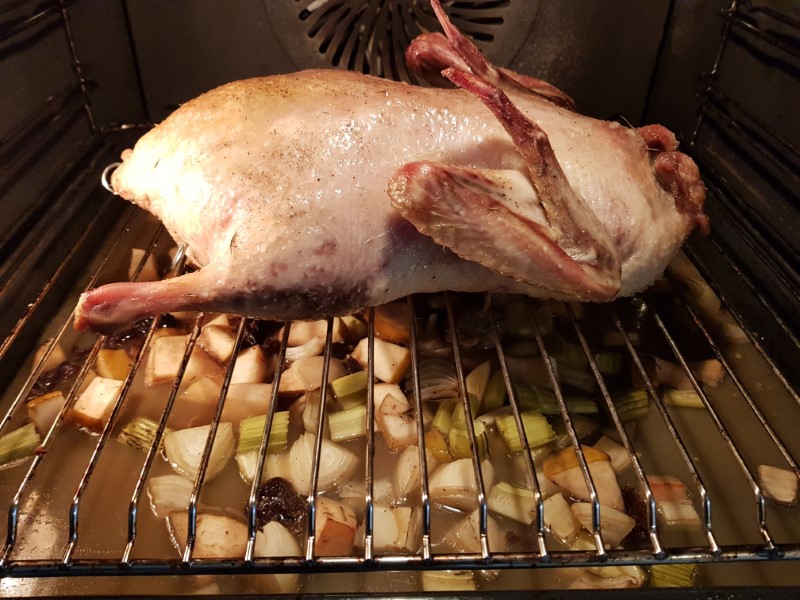
- For the first 2.5 hours, it was placed with its back up.
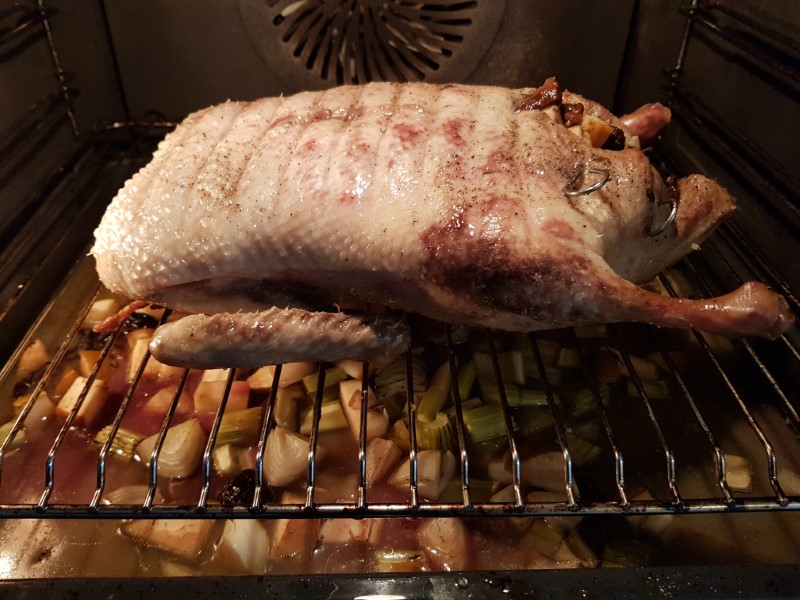
- For the last 2.5 hours, it was placed with its breast up.
- Roughly every half hour (not more often), I poured some liquid from the roasting pan over my duck. If you find that the liquid evaporates too quickly, you can always add a bit of water to the roasting pan.
- When it's done, take it out of the oven and let it rest for 15-30 minutes.
- During the resting time, keep it uncovered to prevent the skin from losing its crispiness.
- Meanwhile, pour the liquid from the roasting pan into a tall, thin jug/container and place it in the freezer for 15-20 minutes.
- This causes the mixture to separate, with the fat rising to the top. You only need the stock/liquid for the gravy. The fat can be set aside and used for e.g., confited potatoes or confit de canard.
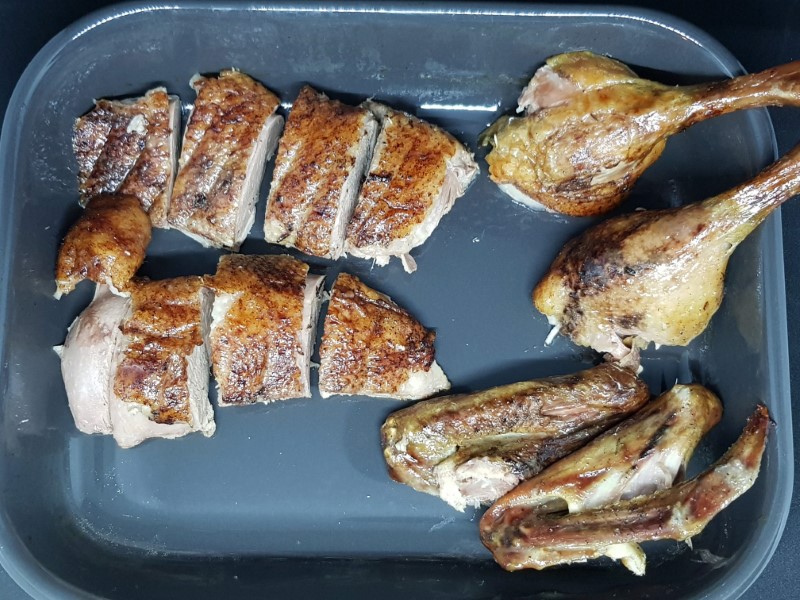
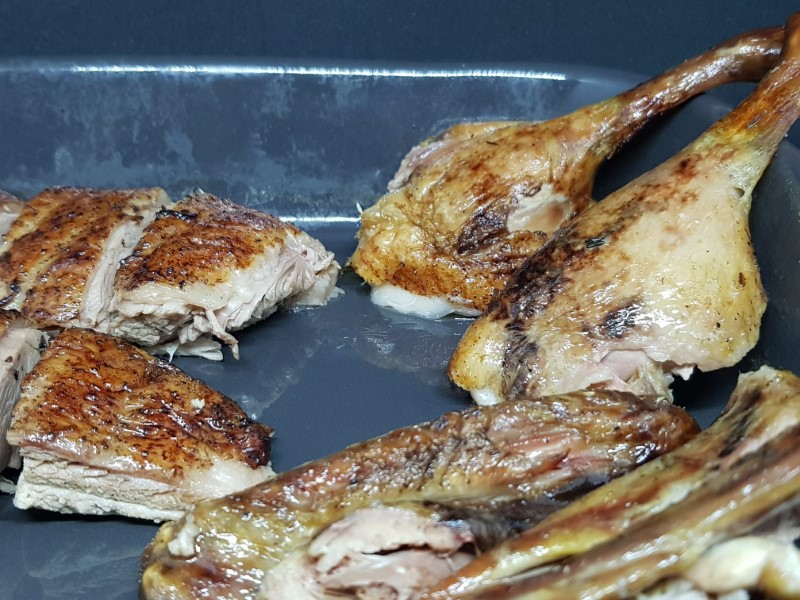
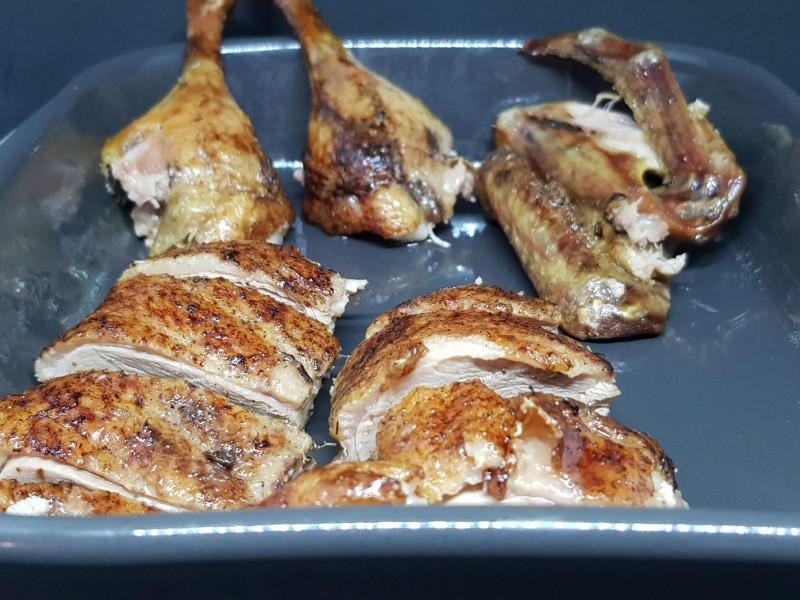
- When the duck has rested, cut it into smaller pieces. I prefer to do this with poultry shears.
Duck Gravy
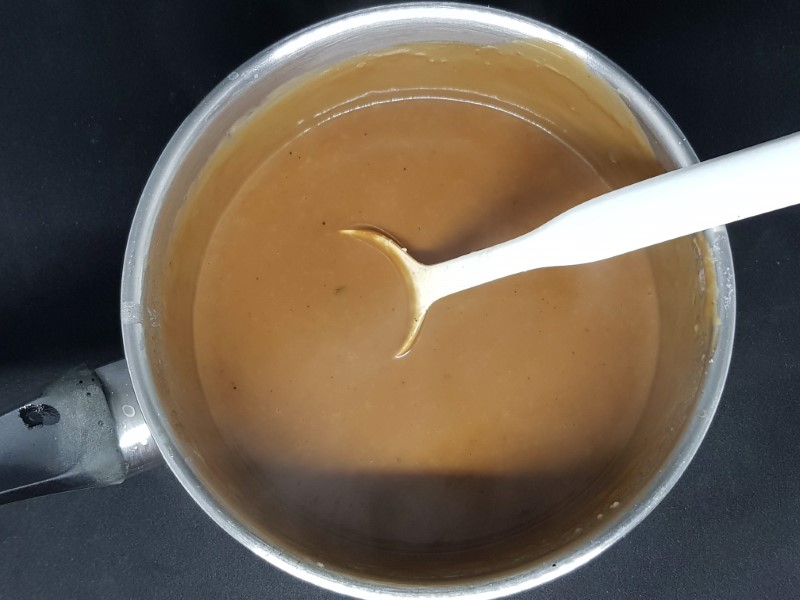
- I generally swear by a roux-based gravy, as it is the easiest way to control the consistency of my gravy.
- My rule of thumb for the butter/flour ratio is 10-12.5 grams of butter per tablespoon of flour, and 1 tablespoon of flour per person.
- Find a thick-bottomed pot and set it over medium-high heat.
- Melt the butter and add the flour to the pot while stirring vigorously.
- Pour in water (preferably from the potato boiling water) and whisk well to prevent lumps.
- Repeat with the milk and then the liquid from the duck.
- The color from the seared vegetables/innards should be enough to give your gravy a rich color. If not, add a little coloring.
- Season the gravy with salt, pepper, gastrique (or sugar and vinegar), and lemon juice.
- If you still can't get enough flavor, you can always add a bit of Fond du Chef chicken/beef bouillon.
Serving