Servings: Portions
Slow-Roasted Duck
Perfect for Christmas Eve and St. Martin's Day
Ingredients
- 2400 gram Duck
- 0.5 package Prunes Soaked in alcohol for a few hours
- 2 pcs. Apples
- Spices Salt, pepper, and thyme
- 2 pcs. Onion
- 2 pcs. Celery Leaf Stalks
- 2 pcs. Carrots
- 2 pcs. Bay Leaf
- 200 gram White Wine Can easily be replaced with red wine
- 0.5 l Water
- 50 gram Butter
- 30 gram Wheat Flour
- 200 gram Water Preferably water from boiled potatoes
- 206 gram Milk
- 202 gram Cream
- Spices Salt, pepper, gastrique (or sugar and vinegar), and lemon juice
Instructions
Slow-Roasted Duck
- I soaked my prunes in rum overnight. The liquid from the rum (and the apples) helps to keep the duck moist during cooking.
- Start by removing the innards (do not throw them away) from the duck and rinse it well to remove any blood residues and other impurities.
- Season the duck with salt and pepper, both inside and outside.
- Halve your soaked prunes and place them in a bowl.
- Cut the apples into wedges and remove the cores.
- Place them in the bowl with thyme - preferably fresh.
- Mix well and stuff your duck with the ingredients.
- Close the duck with a few kitchen needles.
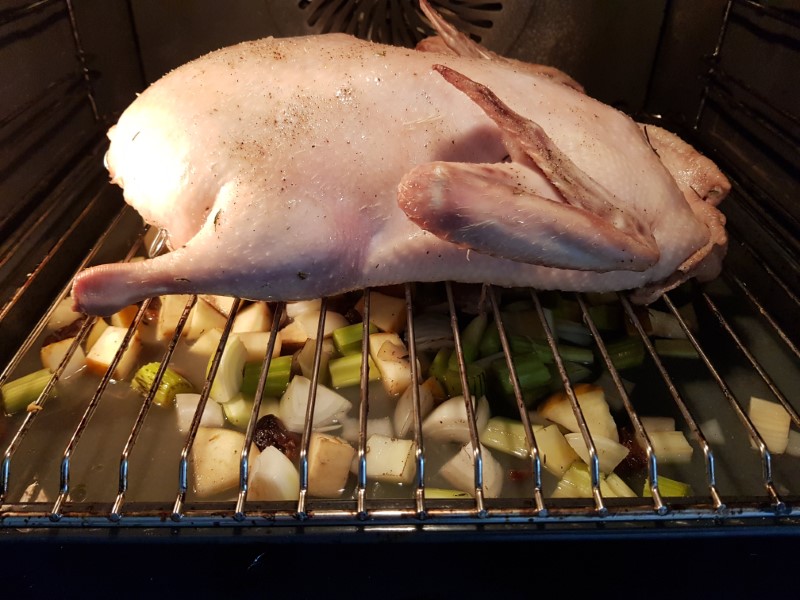
- Place the duck on a rack as low as possible in the oven.
- Take a deep roasting pan and place the innards in it. Cut the onions, carrots, and celery stalks into larger pieces and also place them in the roasting pan.
- I have a gas burner, so I use it to give everything a bit of a sear. If you don't have one, you can do two things:
- 1) Either quickly brown everything in a pan before putting it in the roasting pan.
- or
- 2) Set the oven to 225/250 degrees Celsius (482 degrees Fahrenheit) convection/grill and sear it directly in the roasting pan instead.
- Before putting the roasting pan in the oven, add wine, water, and bay leaves along with the other ingredients.
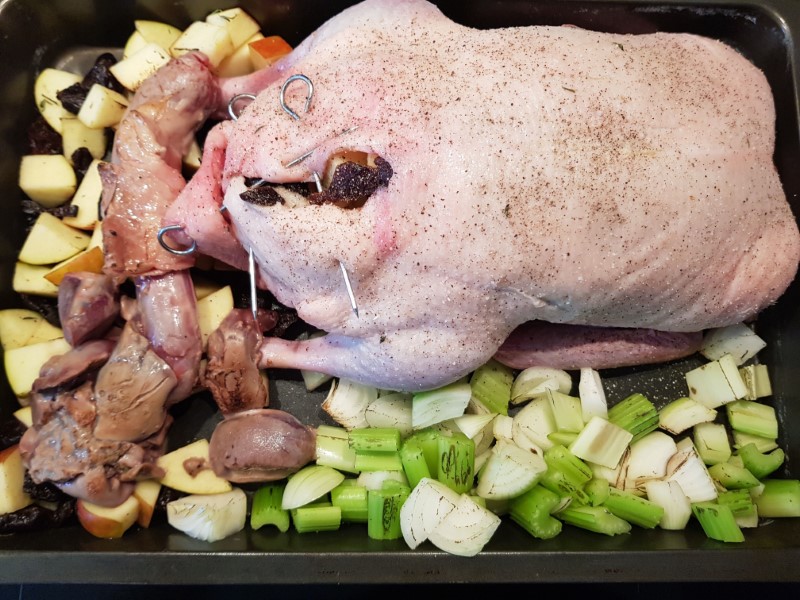
- It was a small duck I used, so it cooked at 120 degrees Celsius (248 degrees Fahrenheit) for 5 hours in a conventional oven. If it weighs about 3 kg, I would say 140 degrees Celsius (284 degrees Fahrenheit) for 5.5 hours.
- For the first 2.5 hours, it was placed with its back up.
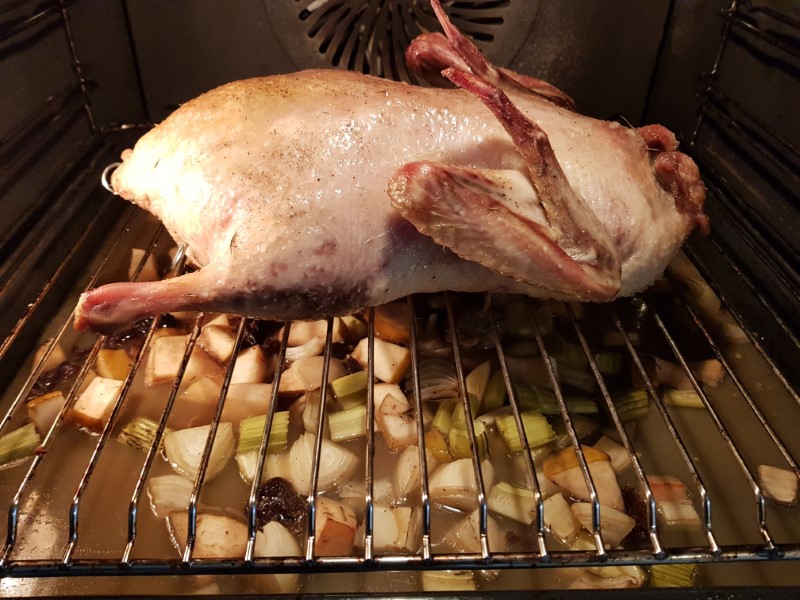
- For the last 2.5 hours, it was placed with its breast up.
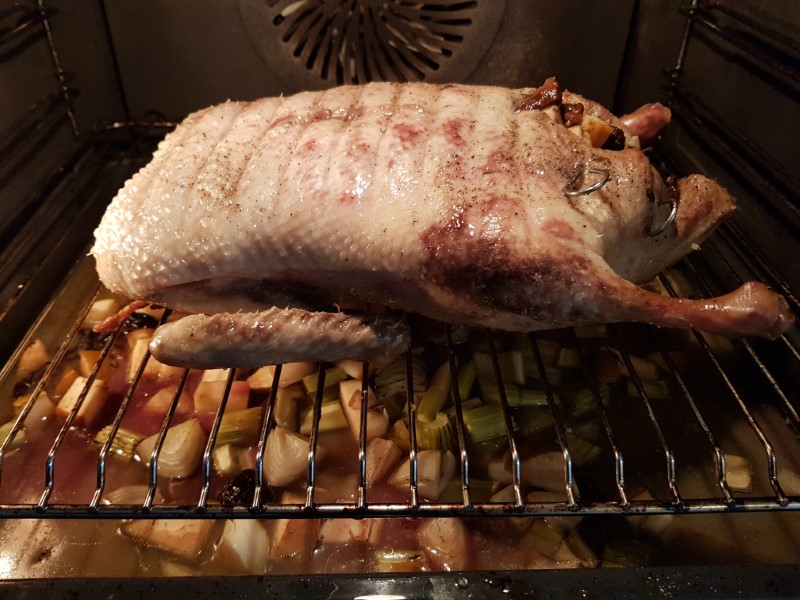
- Roughly every half hour (not more often), I poured some liquid from the roasting pan over my duck. If you find that the liquid evaporates too quickly, you can always add a bit of water to the roasting pan.
- When it's done, take it out of the oven and let it rest for 15-30 minutes.
- During the resting time, keep it uncovered to prevent the skin from losing its crispiness.
- Meanwhile, pour the liquid from the roasting pan into a tall, thin jug/container and place it in the freezer for 15-20 minutes.
- This causes the mixture to separate, with the fat rising to the top. You only need the stock/liquid for the gravy. The fat can be set aside and used for e.g., confited potatoes or confit de canard.
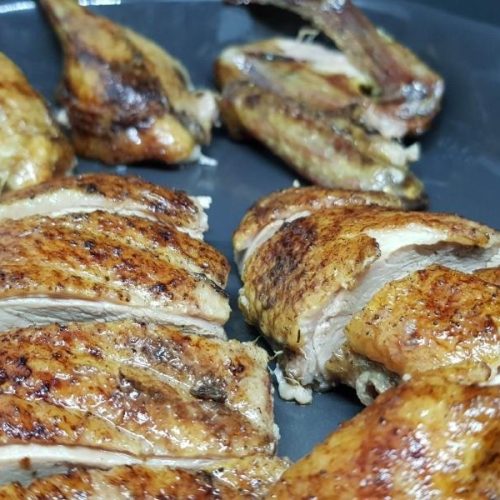
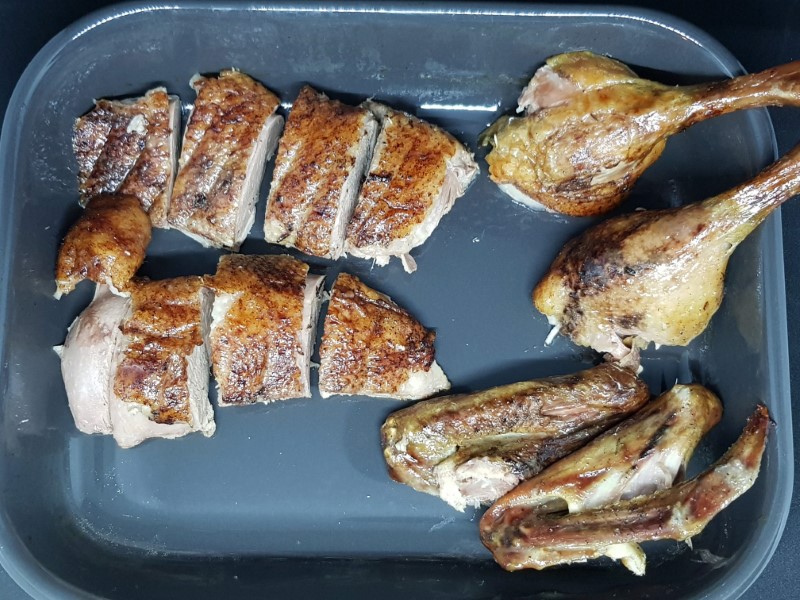
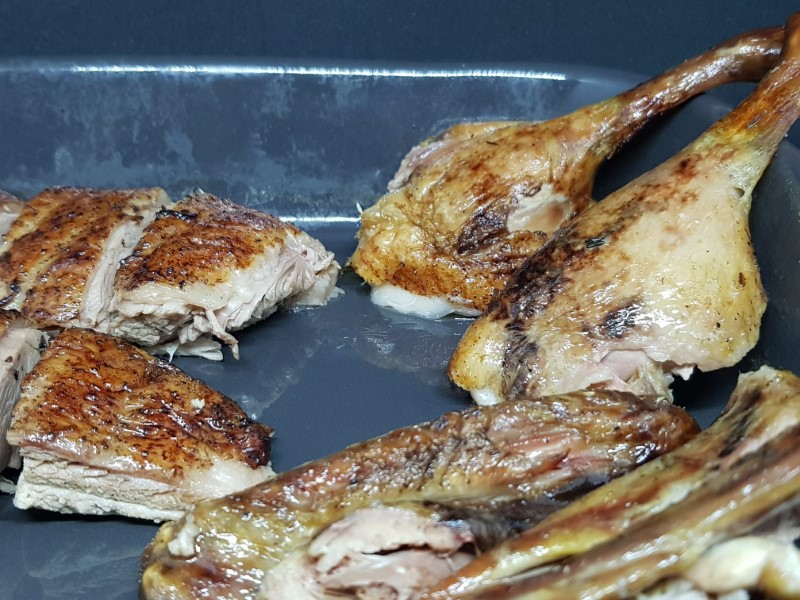
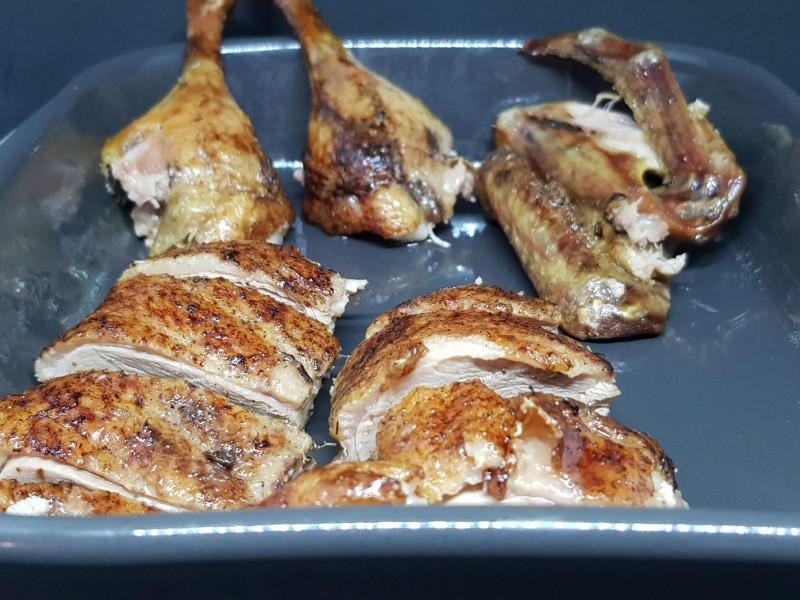
- When the duck has rested, cut it into smaller pieces. I prefer to do this with poultry shears.
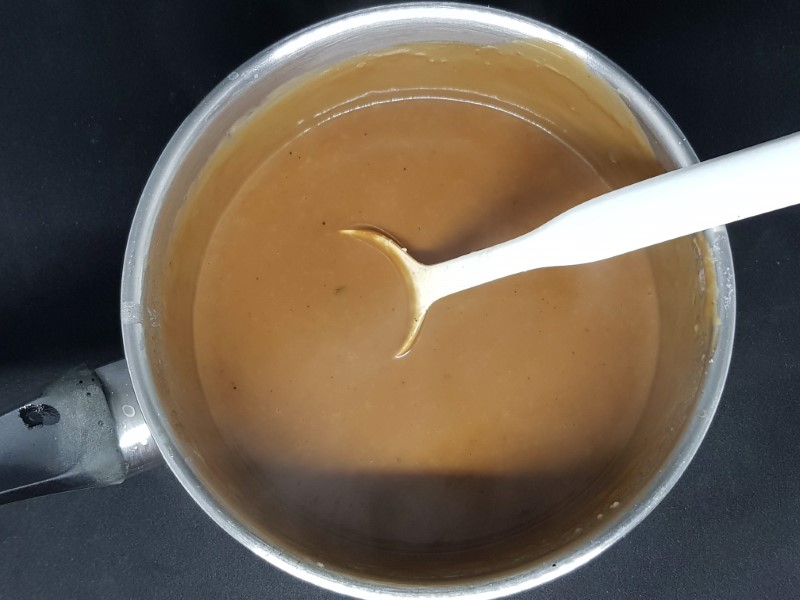
Duck Gravy
- I generally swear by a roux-based gravy, as it is the easiest way to control the consistency of my gravy.
- My rule of thumb for the butter/flour ratio is 10-12.5 grams of butter per tablespoon of flour, and 1 tablespoon of flour per person.
- Find a thick-bottomed pot and set it over medium-high heat.
- Melt the butter and add the flour to the pot while stirring vigorously.
- Pour in water (preferably from the potato boiling water) and whisk well to prevent lumps.
- Repeat with the milk and then the liquid from the duck.
- The color from the seared vegetables/innards should be enough to give your gravy a rich color. If not, add a little coloring.
- Season the gravy with salt, pepper, gastrique (or sugar and vinegar), and lemon juice.
- If you still can't get enough flavor, you can always add a bit of Fond du Chef chicken/beef bouillon.
Serving