


Recipe for halibut fillet sous vide
Halibut fillet is simply fantastic. The meat has a lovely peppery scent and a COMPLETELY sublime taste!
Halibut fillet can generally withstand all of the most common fish preparations, but it’s no secret that I am particularly fond of the sous vide method.
Sous vide is mostly used for cooking steaks, roasts, and poultry, but it is also a FANTASTIC cooking method for fish, and not least for halibut, which, as we know, is not the cheapest ingredient.
Below, I will guide you to the most optimal temperature and time for your halibut fillet in sous vide.

What is Halibut?
Halibut – in English, halibut – is one of the best eating fish, which is why it’s certainly not the cheapest to find at the fishmonger. Its meat is white, firm, and delicious, and it is very fond of cold water, which is why it usually stays at great depths, for example, in the Norwegian Trench in the North Sea.
The halibut is a truly, truly wonderful eating fish – as long as it hasn’t grown too large. If it gets too big, the meat becomes dry and coarse. Halibut tastes best when it weighs between 3 – 5 kilograms.
One can imagine that the 115-kilogram halibut found here in 1999 was probably NOT very tasty! In 2011, a halibut weighing a whopping 90 kilograms was caught in the Skagerrak, and in 2016, Thyborøn boasted a halibut weighing 102 kilograms.
Halibuts can, however, grow up to three (!) meters long and weigh more than 300 kilograms. Phew.
The Difference Between Halibut and Greenland Halibut
It quite often happens that both the press and anglers confuse the two fish. Visually, however, they differ from each other as the halibut is the only one of the two whose blind side is white. The blind side of the Greenland halibut is speckled.
The reason the Greenland halibut’s blind side is not white, as is otherwise seen in flatfish, is that the Greenland halibut swims vertically while hunting. A speckled blind side is therefore a much better camouflage than a white one 😉
While the halibut falls under semi-fat fish, the meat of the Greenland halibut is very fatty. Thus, Greenland halibut is particularly suitable for smoking.
Cooking Halibut
On the other hand, the leaner meat of the halibut can handle all the more “traditional” preparations – for example, grilled, fried, or steamed.
Fish should in principle not be cooked for too long, as the meat is very delicate. Pan-frying is therefore nicely simple to handle as it is easy to keep an eye on the fish.
You can see my recipe for “plain” pan-fried halibut fillet right here, and we also have another fried halibut here.
Halibut Fillet Sous Vide
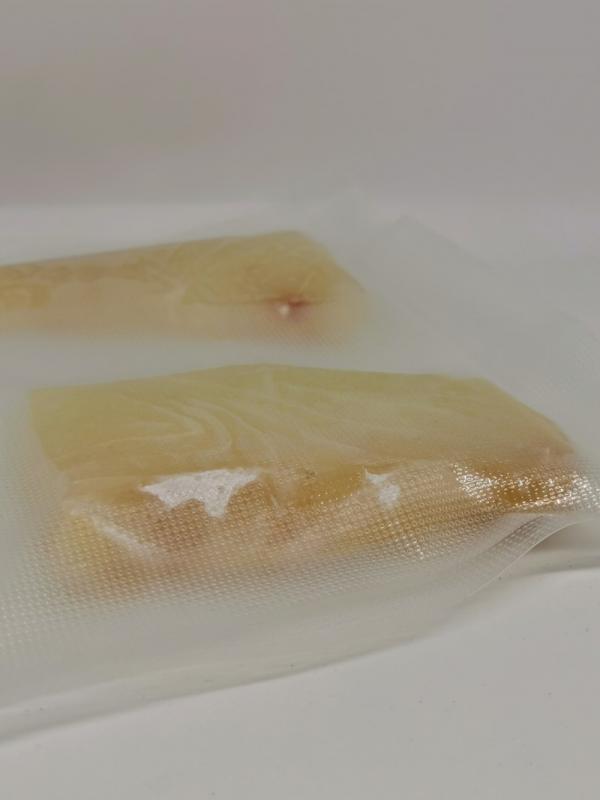
However, sous vide suddenly makes it MUCH easier to achieve a result that might otherwise require a bit of skill when cooking fish.
With sous vide, you get an extremely delicious halibut fillet with a COMPLETELY perfect bite. Since halibut fillet is quite expensive, it would really be a shame to spoil it with too long or incorrect cooking. I am completely free of these worries when I use sous vide.
Halibut Fillet Sous Vide Temperature and Time
You should note that when cooking fish in sous vide, you need to keep the same things in mind as when making sushi: not all bacteria are likely to be killed during cooking, as the temperature is low and the cooking time relatively short.
I always buy my fish from my regular fishmonger, and I would definitely recommend that you buy the fish from a good fish dealer.
The recommended sous vide times for fish fillets typically lie between 25 – 30 minutes, while the temperature should be around 48 – 49 degrees Celsius, depending on the weight of the fillets.
For whole fish, a suitable temperature spans 45 – 55 degrees Celsius.

Halibut Fillet Sous Vide Crust
A crust makes almost everything better, and fish is naturally no exception. It contributes a good flavor with more depth and character.
When the fish is taken out of the water bath, it should therefore be dried thoroughly from moisture, after which it should get a quick crust. Remember, the fish is already cooked, and since fish is generally quite delicate and cannot tolerate too long cooking, it should only “kiss” the pan very briefly.
I usually fry in ghee, but you can also use a mixture of butter and oil in a 1:1 ratio.
You can also give the halibut fillet a crust on the grill or with a blowtorch, and here it still applies that a HIGH temperature and a SHORT cooking time are essential for a perfect result.
This time, however, I did NOT give my halibut fillet a crust, as I served the fish with, among other things, pea soup.
Halibut Fillet Sous Vide Recipe
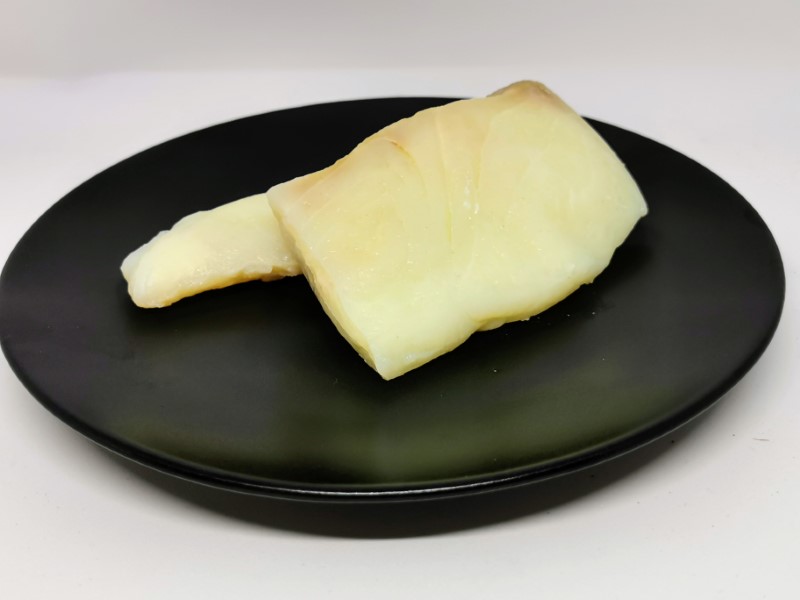

Halibut Fillet Sous Vide
Ingredients
- 200 gram Halibut Fillet
- Salt