
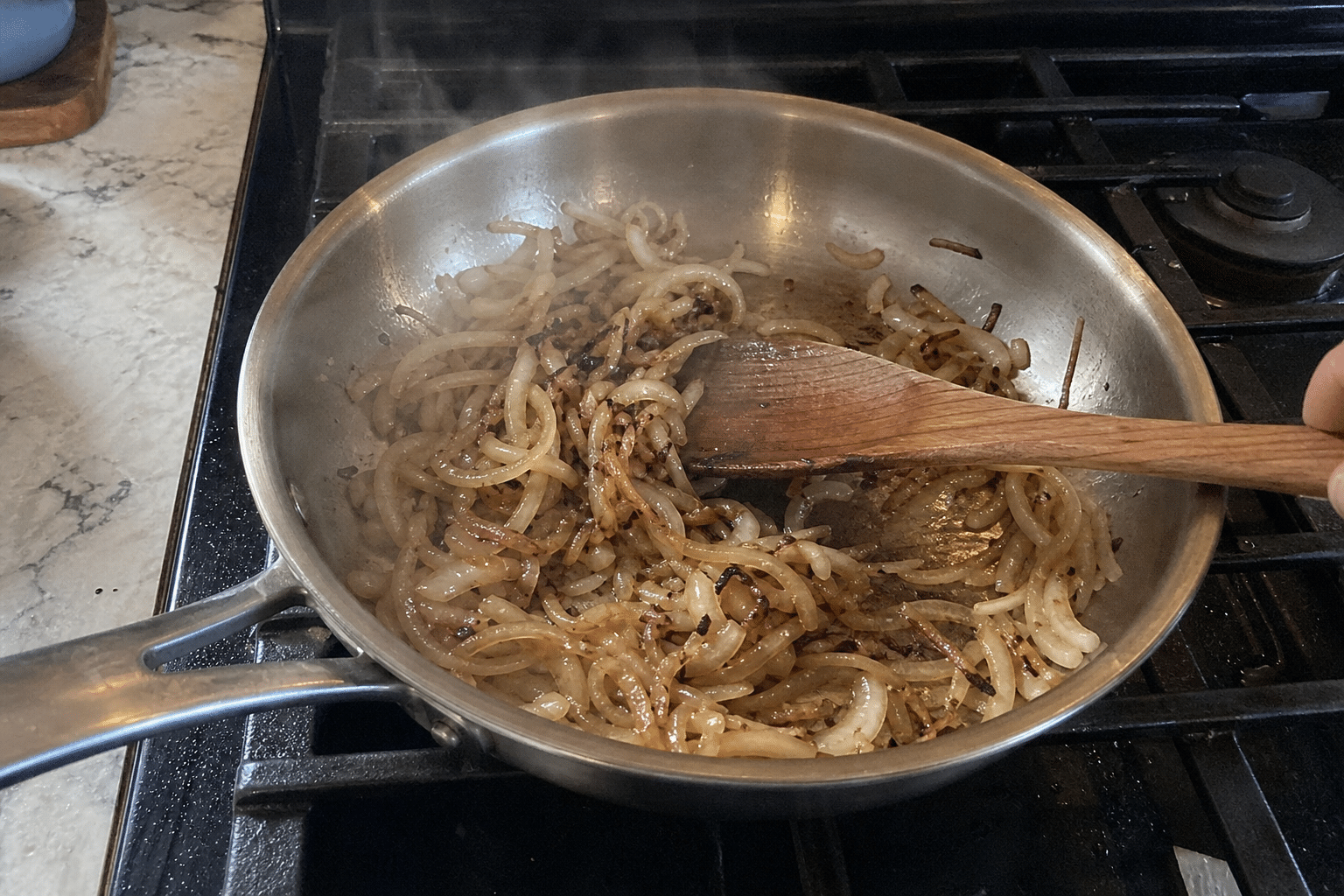

Onions have a talent for turning deep, savory, and sweet when cooked properly. They also have an equally reliable talent for turning acrid and unpleasant when rushed. The difference comes down to which sulfur compounds form inside the pan, and that is entirely controlled by heat.
The sulfur chemistry behind the bitterness
Onions belong to the Allium genus and store their flavor as sulfur-containing amino acids locked inside the cells. When you cut an onion, the cells rupture and an enzyme called alliinase activates, beginning a chain reaction that releases sulfurous gases. At moderate heat, those precursors gradually break down and the onion’s natural sugars caramelize into the deep sweetness you are aiming for.
At high heat, the same precursors take a different path. A 2018 study published in the Journal of Agricultural and Food Chemistry, led by food chemist Roman Kubec, identified nine groups of previously unknown sulfur compounds, which the researchers named allithiolanes, as the source of the bitter off-taste in processed onions. The compounds form spontaneously when onion tissue is damaged and develop over time: as reported by phys.org covering the study, fresh onion juice showed no bitterness but after 30 minutes had developed a strong bitter taste. The team also found allithiolanes in leeks and garlic, indicating the phenomenon extends across the Allium genus.
The detection threshold for allithiolanes is 15-30 parts per million. At that concentration, they register clearly as bitter, not just slightly off.
Why high heat is the trigger
At medium-low heat, onions soften slowly and moisture escapes gradually. The sulfur precursors have time to convert to caramelized compounds before allithiolane formation takes hold.
Read more: How resting meat before slicing keeps up to 60 percent more juice in every bite
At high heat, the surface of the onion dries and scorches before the interior has softened. The alliinase-driven reactions accelerate and the sulfur chemistry tips toward bitterness rather than sweetness. According to Eat and Geek, “when onions are cooked, the heat can denature the alliinase enzyme, leading to the formation of unwanted flavor molecules.”
Overcooking creates a similar problem through a different route: even at moderate heat, prolonged cooking past the sweet spot allows residual sulfenic acids to deepen into bitterness.
The pan technique: medium-low heat, every time
The fix that restaurant cooks rely on is not a special ingredient. It is heat control and patience.
Read more: Rinsing raw chicken spreads bacteria up to 3 feet, USDA data shows
Start with a wide, heavy-bottomed pan. Cast iron and stainless steel retain and distribute heat evenly, preventing the hot spots that scorch some onions while others stay raw.
Heat the pan over medium heat for the first few minutes to begin softening, then reduce to medium-low and stay there. Culinary educator Jessica Gavin writes at jessicagavin.com: “Reduce the heat to medium-low; do not use high heat, or the onions will burn or cook too fast on the surface and not fully soften the centers.”
The full process runs 35-55 minutes depending on the color you want:
- Blonde (30-35 min): clean sweetness with mild savory depth
- Golden brown (40-45 min): robust, meaty flavor
- Deep brown (50-55 min): intense savory with lingering sweetness
Salt the moment the onions go in
A pinch of salt at the start draws out moisture immediately, which speeds the initial softening stage. That means the onions spend less time in the vulnerable early phase where high surface heat can scorch them before the interiors have softened.
Read more: How long Thanksgiving leftovers are actually safe to eat, by food type
Early salting also suppresses the perception of any mild bitterness that forms in those first minutes before the sulfur chemistry completes the caramelization pathway.
Deglaze when the fond gets ahead of you
If the browned layer on the pan bottom starts darkening too fast before the onions are fully soft, add 2 tablespoons of water and scrape. The moisture drops the pan temperature, lifts the flavorful browned bits, and gives the onions more time at gentle heat.
Stock, white wine, or a splash of dry sherry all work in place of water and add additional depth to the finished result.