
Thai cuisine isn’t just about heat and chili—it’s about balance, texture, and social connection. Here’s a look into how a traditional Thai meal is enjoyed—and how you can recreate the experience at home.
All dishes on the table at once
A Thai meal works very differently from what many are used to in Western dining. Instead of moving through starter, main, and dessert, all the dishes are served at the same time. The food is shared, and each dish plays a specific role in the overall harmony.
You might recognize the idea from festive meals like holiday spreads or dinner parties—but in Thailand, this is everyday dining. Rice isn’t a side dish; it’s the foundation that every bite is built around.
Balance in flavor and texture
A well-composed Thai meal is all about balance. The dishes should complement—not overpower—each other. The core flavors—sweet, sour, salty, bitter, and umami—are layered with chili heat and a wide variety of textures.
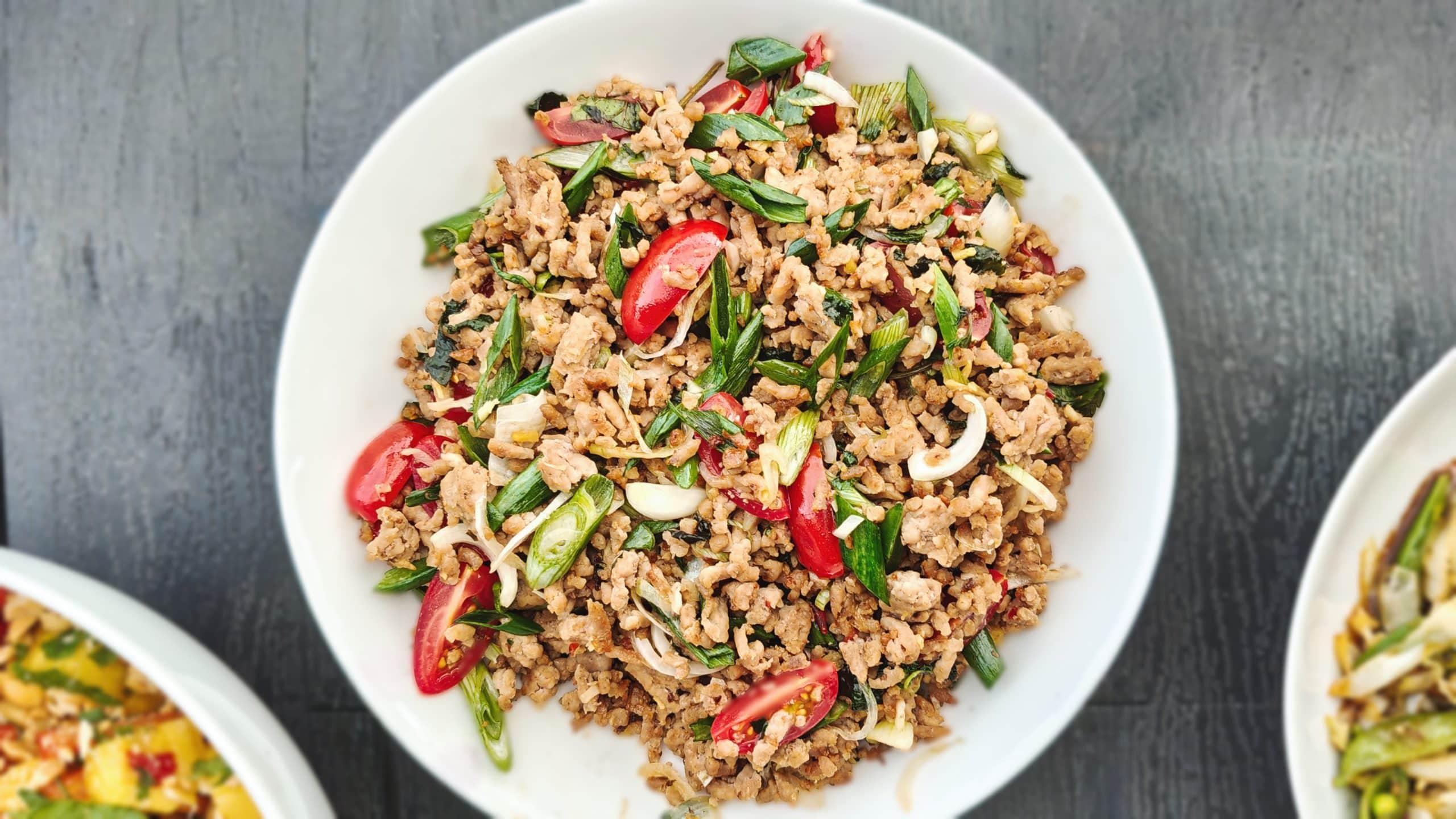
Take a meal of larb, pineapple salad, and stir-fried vegetables: The larb offers spice and umami, the pineapple salad brings sweetness and acidity, and the vegetables provide mildness and crunch. Together, they create something greater than the sum of their parts.
Every bite is a composition
What sets Thai food culture apart is the focus on each individual bite. You build your spoon with small amounts from several dishes: a bit of rice, a piece of meat, something fresh, something crisp. Every bite becomes a thoughtfully composed experience.
The spoon is the main utensil—forks are used to push food onto it. Knives aren’t needed since everything is already cut into bite-sized pieces. This makes it easy to bring together flavor and texture in every bite.
Etiquette and sharing
You take a little at a time, going back for more as you go—you don’t load up your plate. This ensures everyone shares equally and allows you to adjust flavors along the way. A cucumber salad, for example, might serve as a refreshing contrast in the middle of the meal.
Temperature and timing
Temperature matters, too. Larb is served warm so the aromas rise. Salads are cool, vegetables hot. These contrasts enhance the sensory experience.
Social and sensory
A Thai meal is about community and attentiveness. Everything is shared, which calls for conscious choices: What goes well together? What’s missing? This keeps your palate alert and your taste buds engaged.
Wholeness and variation
When cooking Thai food at home, think in terms of the whole table. Serve everything at once. Build bites with rice, sauce, freshness, and crunch. Share it with others. That’s the essence of an authentic Thai meal.
Ready to try out a real Thai meal? Find the recipes below.