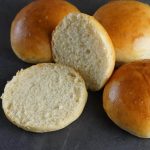
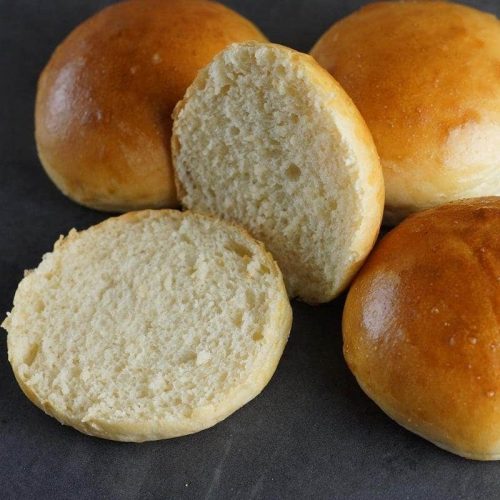
Buns baked using the Japanese method: Tangzhong. This makes these fluffy buns even more airy, delicious, and with a longer shelf life than regular buns.
Recipe for tangzhong buns
Buns baked using the Japanese method: Tangzhong. This makes these bear buns even more airy, delicious, and with a longer shelf life than regular buns.
For the past year, I’ve heard my husband talk about Tangzhong, but since he doesn’t bake himself, it has always been at the back of my mind when I would get the urge to try it. I intended to make it as a loaf of bread, but the day before my birthday, I got another idea. We usually have freshly baked buns in the morning when it’s a birthday in our little family. The problem is that we have two small children who don’t sleep much, and since my birthday was on a Saturday, I really wanted to sleep in (you know, until around 7 AM or so). So, I got the idea to bake these buns the day before.

Servings: pcs.
Tangzhong buns
Buns baked using the Japanese method: Tangzhong. This makes these fluffy buns even more airy, delicious, and with a longer shelf life than regular buns.
Equipment
- Saucepan
- Whisk
- dough scraper
- Stand Mixer
- Kitchen Scale
- Baking Tray
- Baking Paper
- Brush
- Bowl
- Oven
Ingredients
Tangzhong/the even
- 206 gram Milk
- 40 gram Wheat Flour
The Dumpling Dough
- 412 gram Milk warm
- 760 gram Wheat Flour
- 25 gram Yeast
- 6 gram Salt
- 50 gram Sugar
- 1 pcs. Egg
- 100 gram Butter
- 1 pcs. Egg beaten for brushing
Instructions
- Start by making your Tangzhong paste:
- Put wheat flour and milk in a small saucepan and whisk them well and thoroughly together.
- Turn on medium-high heat (9 out of 14 on my stove) and let it thicken while whisking occasionally.
- It takes a bit of time, so be patient. When it boils, it thickens a lot, and you need to whisk thoroughly.
- Turn off the heat and let it cool. For example, use a dough scraper to scrape it into a bowl, which you then place in the fridge.
- When the paste is at room temperature (about 20 degrees Celsius (68 degrees Fahrenheit)), start making the dough.
- Put the warm milk in a mixing bowl along with the yeast. Stir it together before adding sugar, salt, egg, and flour.
- Put the paste in the bowl and turn on the mixer. Let it run for about 5 minutes on one of the lower settings.
- Cut the butter into smaller pieces and add a few pieces at a time to the dough while the machine is still kneading - you might want to turn up the speed a bit now.
- Now let the machine run until the dough releases from the sides - this can take anywhere from 15-20 minutes, so be patient.
- If you have a good mixer, it can be done faster.
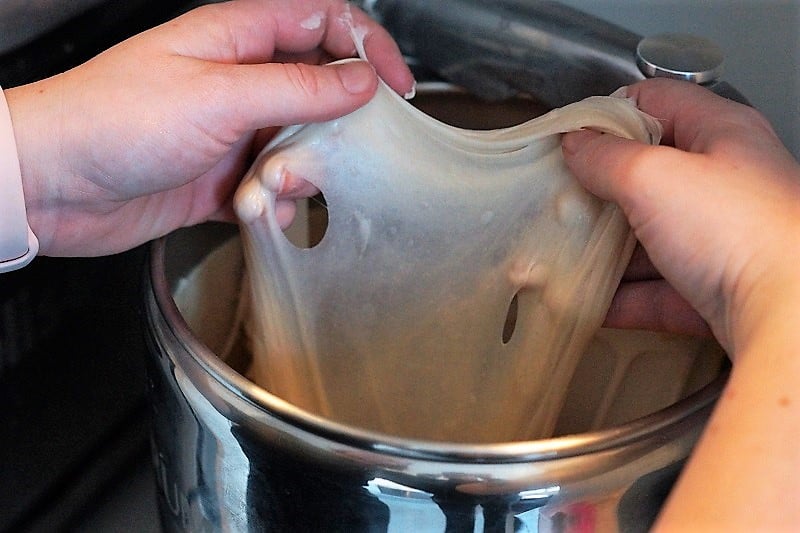
- The dough is ready when it can pass the gluten test, i.e., you can take a lump of dough and stretch/pull it. Wet your hands with cold water before doing the test. It passes the test if you can stretch it far without it breaking.
- Then put the dough onto a floured countertop.
- Get out a baking scale and weigh balls of about 80 grams each.
- Roll them into buns and place them on 2 baking trays lined with baking paper. I got 20 out of my portion.
- Cover with clean dish towels and let rise for 1-2 hours.
- Brush the buns with egg on top and bake them in the oven for about 15 minutes at 200 degrees Celsius (392 degrees Fahrenheit) conventional oven.
- Knock on the bottom of the buns; they should sound hollow - then they are ready.
- Let them cool on a rack - enjoy.
Notes
In this tangzhong toast bread, I have used the same technique with great success.