
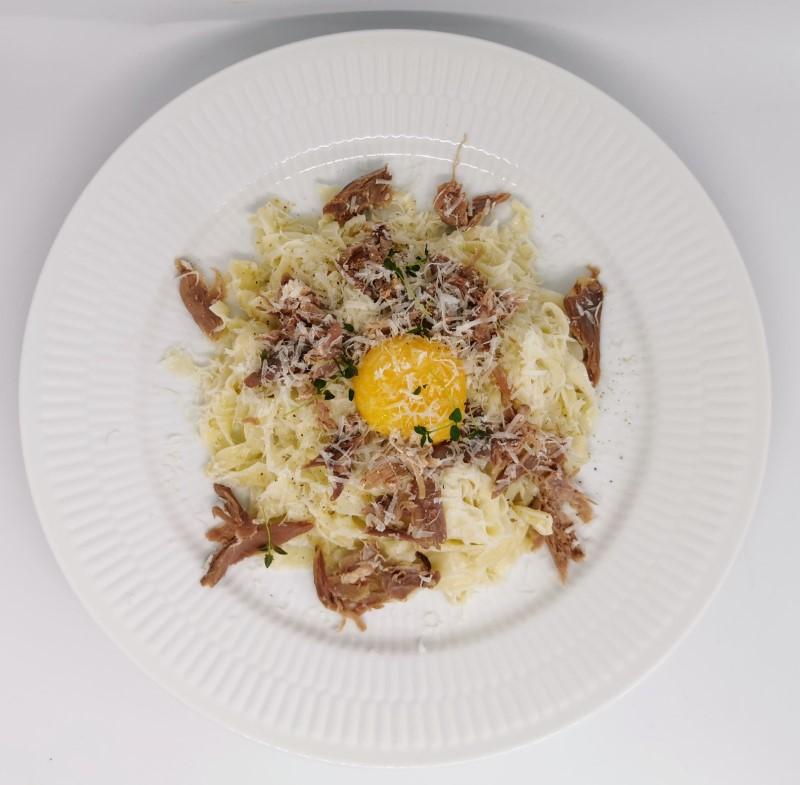

Recipe for pasta with confit duck and egg yolk
You’ve likely heard of confit duck legs (see the recipe for Confit de Canard here and a sous vide version here) – but what about confit egg yolks?
Confiting means “preserving,” and it is a preservation and cooking method from France. Essentially, it involves cooking the food in fat.
Confit duck legs are known to be tender, juicy, and full of flavor.
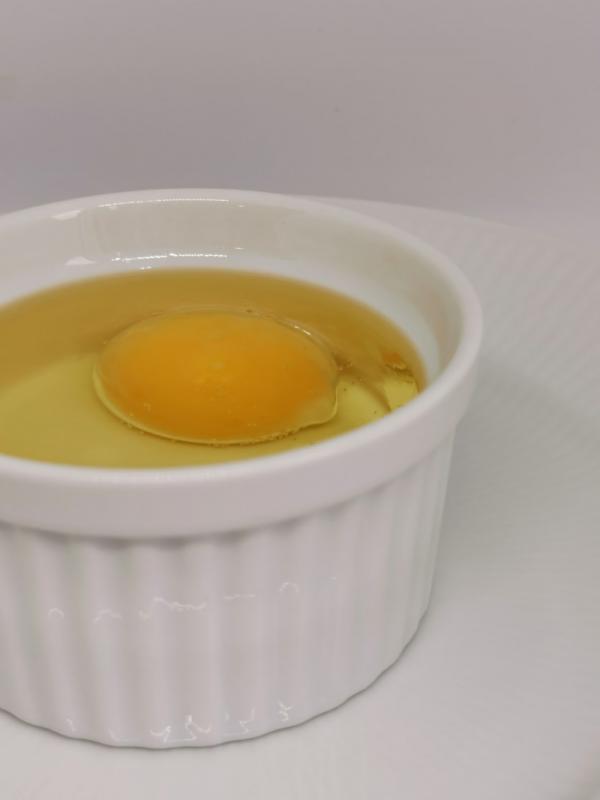
Similarly, confit egg yolks have more flavor and texture. It’s absolutely amazing – and incredibly easy.
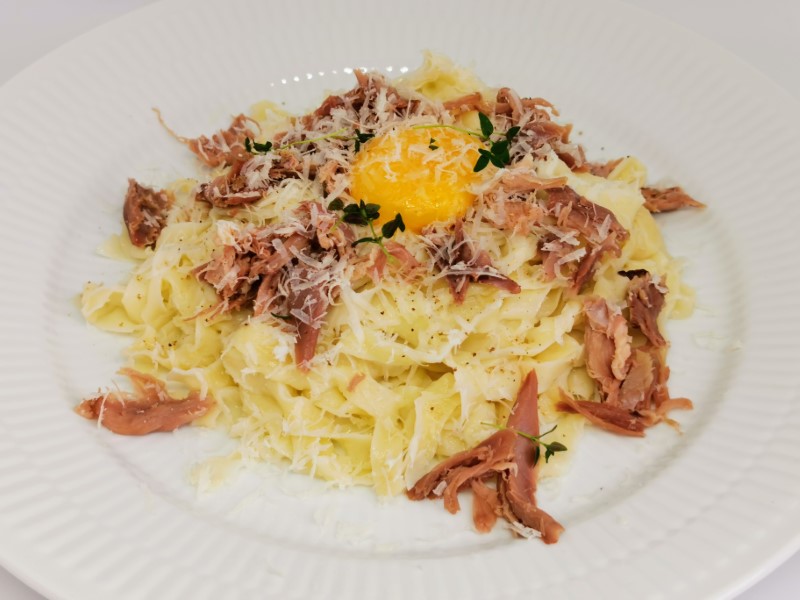
Here, I served both with a delicious homemade pasta, topped with grated Parmesan and crispy fried sage leaves. It tasted fantastic!
If you don’t want to venture into making your own pasta, you can also use fresh pasta from the supermarket 🙂
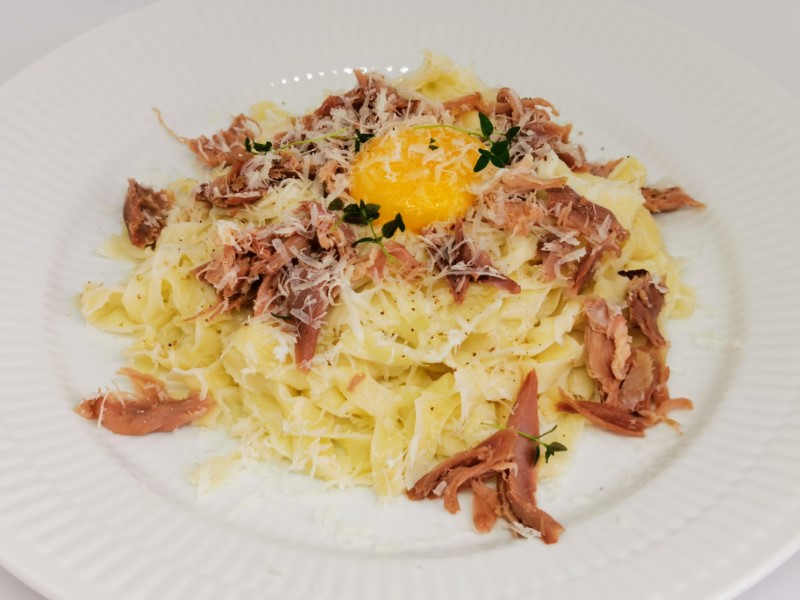
Pasta with Confit Duck and Egg Yolk Recipe
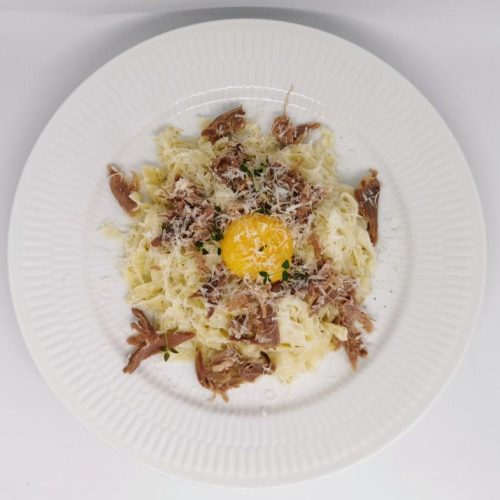
Ingredients
Confit egg yolk
- 2 Egg Yolk
- 90 gram Oil neutral in taste
Homemade pasta
- 2 Egg
- 200 gram Tipo 00 Flour you can also use durum or wheat flour
- 1 pinch Salt
- Olive Oil
Duck confit
- 2 Duck Leg confit - find link to the recipe in the instructions
Topping
- Sage Leaves amount as needed
- Oil neutral in taste
- Parmesan good quality and in abundant quantities!
- Pepper from mill
Instructions
Confit Egg Yolk
- The confit egg yolks can easily be made a few hours in advance, as long as you leave them in the oil until they are to be served.
- Preheat the oven to 65 degrees Celsius (149 degrees Fahrenheit).
- Place each egg yolk in its own small bowl - I used two small ramekins.
- Pour the oil over the egg yolks so they are covered. Add more oil if there isn't enough to cover them.
- Place both bowls with the egg yolks in the preheated oven.
- Let them sit for 60 minutes.
- Pour the flour onto the kitchen counter and make a small well in the middle for the eggs.
- First sprinkle the salt into the well.
- Crack the eggs into the well on top of the salt.
- Use a fork to whisk the flour into the eggs, little by little. Use one hand to push the flour towards the eggs while gently whisking with the other hand.
- Switch to using your hands when you are 2/3 through the flour - at this point, it's too difficult to use the fork as the dough is becoming too firm.
- Knead the dough thoroughly with your hands. It typically takes between 5 - 10 minutes, so it can be quite strenuous for your hands. Use the heel of your hand. This makes kneading considerably easier. The dough is ready when the surface is smooth and nice.
- Brush the oil over the dough.
- Then wrap the dough in cling film or place it in a plastic bag.
- Let it rest for 30 minutes - preferably longer.
- Then pour the dough out onto a flour-dusted counter.
- Roll out the dough and add more flour as needed - it takes quite a bit of extra flour. The dough should be rolled out as thinly as possible.
- Dust the rolling pin with flour and place the ultra-thin pasta dough on the rolling pin.
- Roll the rolling pin over the counter a few times with a light pressure.
- Spread flour on the counter and roll out the pasta on it.
- Fold the pasta dough over itself 4 times. This makes cutting the pasta into slices easier and faster.
- Now cut the pasta to the desired width. I usually cut my pasta to about 1 centimeter in width, but it depends on the dish. For a pasta Bolognese, for example, it is very nice to cut the pasta into wider slices.
- Pour water and a bit of salt into a pot and bring the water to a boil. It should be a rolling boil.
- Add the pasta to the boiling water.
- Let the pasta cook in the water for 4 minutes.
- Remove the cooked pasta from the water with a pasta spoon.
- If the pasta is not to be cooked immediately after cutting it into slices, toss all the pasta slices in abundant amounts of flour so they do not stick together in the meantime. This way, the pasta can easily wait to be cooked.
- Preheat the oven to 200 degrees Celsius (392 degrees Fahrenheit) with fan.
- Line a baking sheet with parchment paper and spread the sage leaves on it in a single layer.
- Pour the oil into a small bowl and brush the oil on the sage leaves.
- Place the sheet in the now hot oven.
- Let the sage leaves bake. They will shrink and become crispy. This takes between 15 - 20 minutes.
- Remove the crispy sage leaves from the oven and let them cool a bit.
- Portion the pasta.
- Distribute the shredded duck meat over the pasta.
- Place an egg yolk in the center of each pasta serving followed by a generous layer of grated Parmesan.
- Finish with the crispy sage and some freshly ground pepper.
- Serve - Enjoy your meal!
- Place the duck legs on the cutting board. I used confit duck legs in sous-vide from this recipe.
- Take two forks.
- Shred the meat off the duck legs using the forks.