
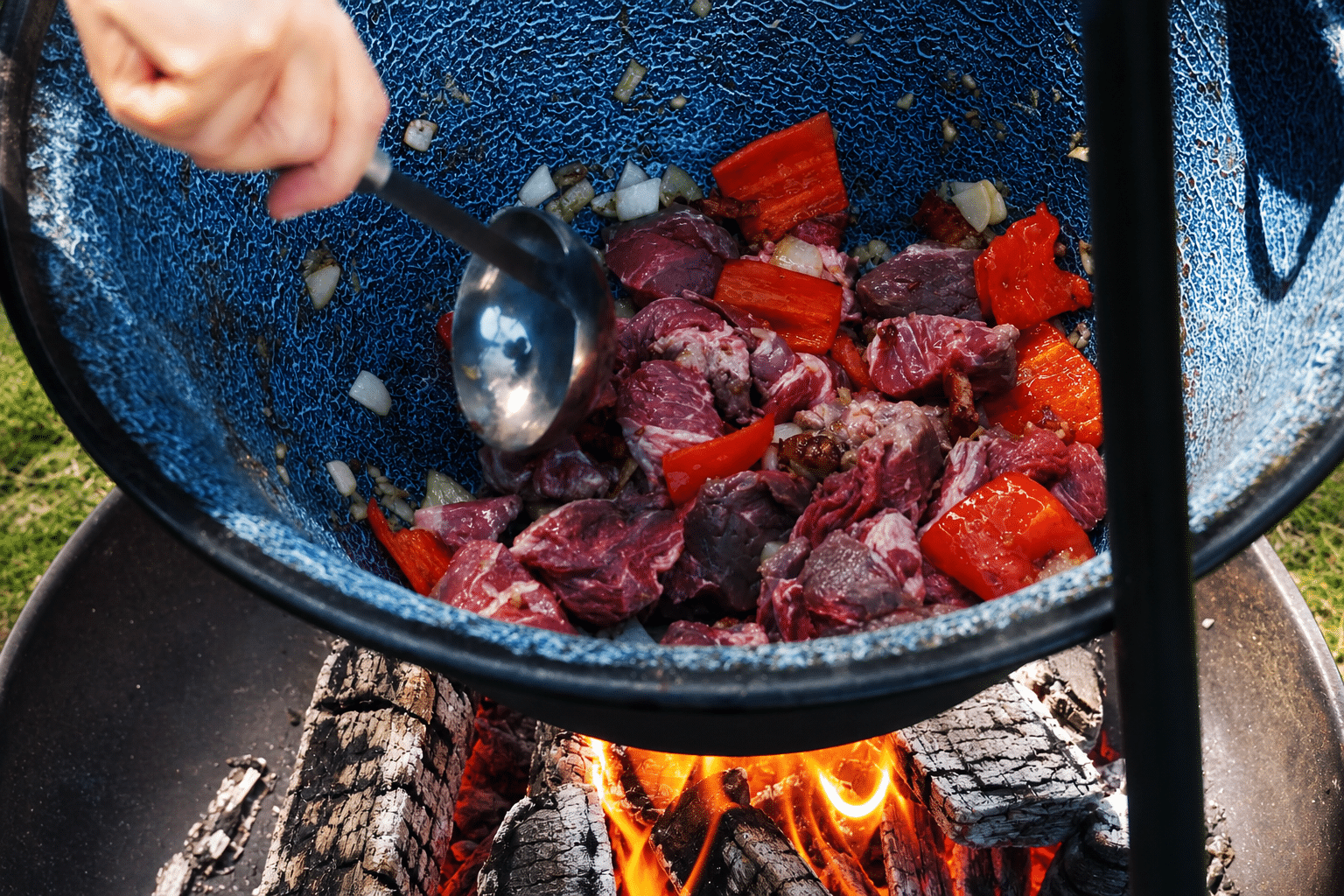

What most Americans call goulash is a creamy, tomato-sauced pasta and ground beef casserole – a decent weeknight dinner, but nowhere near what Hungarians actually eat. In Hungary, gulyás (you’ll also see it spelled goulash, gullasch, or goulash) is a soup: a deep brick-red, paprika-spiced broth full of slow-cooked beef, sweet bell pepper, carrots, and potatoes. It is one of the great winter soups.
The name predates the dish itself – “gulyás” meant “shepherd” in Hungarian, and the soup was something herdsmen cooked on the road. By the 1800s, sweet paprika had become central to the recipe, giving the broth its color and mild, slightly smoky depth. The creamy stew most people outside Hungary call goulash is actually a different dish entirely – Hungarians call it pörkölt or paprikás.
This recipe comes from my Hungarian friend Tiha, and it is exactly that: a proper soup, not a stew. It takes some time but very little effort, and the hand-pinched flour dumplings called szipetke, cooked right in the broth at the end, are the detail that makes it feel like the real thing.
Why this recipe works
The beef simmers for a full hour before the vegetables go in – long enough to become completely tender without falling apart. Using plain water instead of stock keeps the flavor clean and lets the paprika and caraway do the work, uncluttered by a commercial stock’s salt and other flavors.
Three tablespoons of sweet paprika is not too much. It colors the broth, perfumes the whole pot, and builds the flavor base – especially when you stir it into the beef and onions before adding any water. Use the best-quality Hungarian sweet paprika you can find; this is not a dish where the spice cabinet’s sad jar of generic paprika will carry it.
The szipetke dumplings are optional in a real pinch, but they’re worth making. The dough takes about three minutes, and pinching off small bits directly into the simmering soup is the kind of hands-on step that makes this worth spending an afternoon on.
Read more: Mala shrimp: how to make the Sichuan spicy-numbing stir fry at home
Ingredients
Serves 6
For the soup:
- 2.2 lbs (1 kg) beef chuck or brisket, cut into 1.5-inch (3-4 cm) cubes
- 7 oz (200 g) bacon or smoked lardons, finely diced
- 1 lb (450 g) onions, diced
- 14 oz (400 g) carrots, cut into 3/4-inch (2 cm) pieces
- 14 oz (400 g) potatoes, cut into 3/4-inch (2 cm) cubes
- 14 oz (400 g) mild bell peppers, cut into 3/4-inch (2 cm) pieces
- 3.5 oz (100 g) tomato, roughly chopped
- ¼ cup (60 ml) neutral oil
- 3 tablespoons (25 g) sweet Hungarian paprika
- 1½ teaspoons (3 g) whole caraway seeds
- 1.5 teaspoons (4 g) ground black pepper
- 1 tablespoon (15 g) fine salt
- 2 quarts (2 liters) water
For the szipetke (hand-pinched dumplings):
- 1 egg
- 3/4 cup (100 g) all-purpose flour
- 1/2 teaspoon (3 g) salt
Instructions
1. Cut the beef into 1.5-inch (3-4 cm) cubes and the bacon into small dice. Cut the carrots, potatoes, and bell peppers into 3/4-inch (2 cm) pieces. Roughly chop the tomato. Keep the vegetables set aside separately from the beef.
2. Heat the oil in a large pot over medium-high heat. Add the bacon and cook, stirring occasionally, until golden and the fat has rendered, about 5 minutes.
3. Add the diced onions, bell peppers, and beef to the pot. Brown everything together for 5-10 minutes, stirring now and then, until the meat has taken on some color.
4. Stir in the sweet paprika until it coats the meat and vegetables evenly. This step matters: cooking the paprika briefly in the fat deepens its flavor and brings out the color.
5. Add the caraway seeds, salt, and black pepper. Pour in enough water to just cover the meat. Bring to a boil, then reduce to a gentle simmer. Cover and cook for 1 hour.
Read more: Yakisoba at home: Japanese stir-fried noodles with chicken in a tangy Worcestershire sauce
6. Add the carrots, potatoes, and tomato. Simmer, loosely covered, for another 30-40 minutes, until the vegetables are tender and the beef is completely soft when you press it with a spoon.
7. While the vegetables simmer, make the szipetke: mix the egg, flour, and salt together with your hands into a firm, slightly elastic dough. It should hold together cleanly and not be sticky.
8. In the last 10 minutes of cooking, pinch off pea-sized pieces of dough directly into the simmering soup, one at a time. They cook through in about 8-10 minutes and will float to the surface when done.
9. Taste for salt, adjust, and serve.
Tips and variations
Paprika is the whole point: Use good-quality Hungarian sweet paprika. The difference between a fresh, deeply colored paprika and a stale generic one is dramatic in a recipe built around it. If your paprika smells dusty rather than sweet and slightly smoky, replace it.
Read more: Albondigas: the Spanish meatballs in tomato sauce that are impossible to stop eating
Best beef cuts: Chuck and brisket both work well – both have enough fat and connective tissue to stay tender and add body to the broth over a long simmer. Lean cuts like sirloin or round will tighten up and stay tough.
Adding heat: The soup as written is mild, with only sweet paprika. If you want heat, serve it with Erős Pista (a Hungarian hot chili paste, found at Eastern European grocery stores or online) on the table for stirring in by the spoonful. A pinch of hot paprika in the pot also works.
The dumplings should be uneven: Szipetke are small and irregular – that is exactly how they should look. The pinching motion gives them an uneven surface that catches the broth. Don’t try to roll them smooth or shape them into neat balls.
Make it ahead: This soup keeps well in the refrigerator for 3-4 days, and the flavor deepens overnight. If you plan to make it ahead, hold off on the szipetke and pinch them in when you reheat the soup – they’ll stay firmer that way.
Serving: In Hungary, gulyás is traditionally served with bread. A thick slice of rye or sourdough on the side is all you need. For the full experience, serve pálinka (a Hungarian fruit brandy) alongside, as a traditional finisher.