
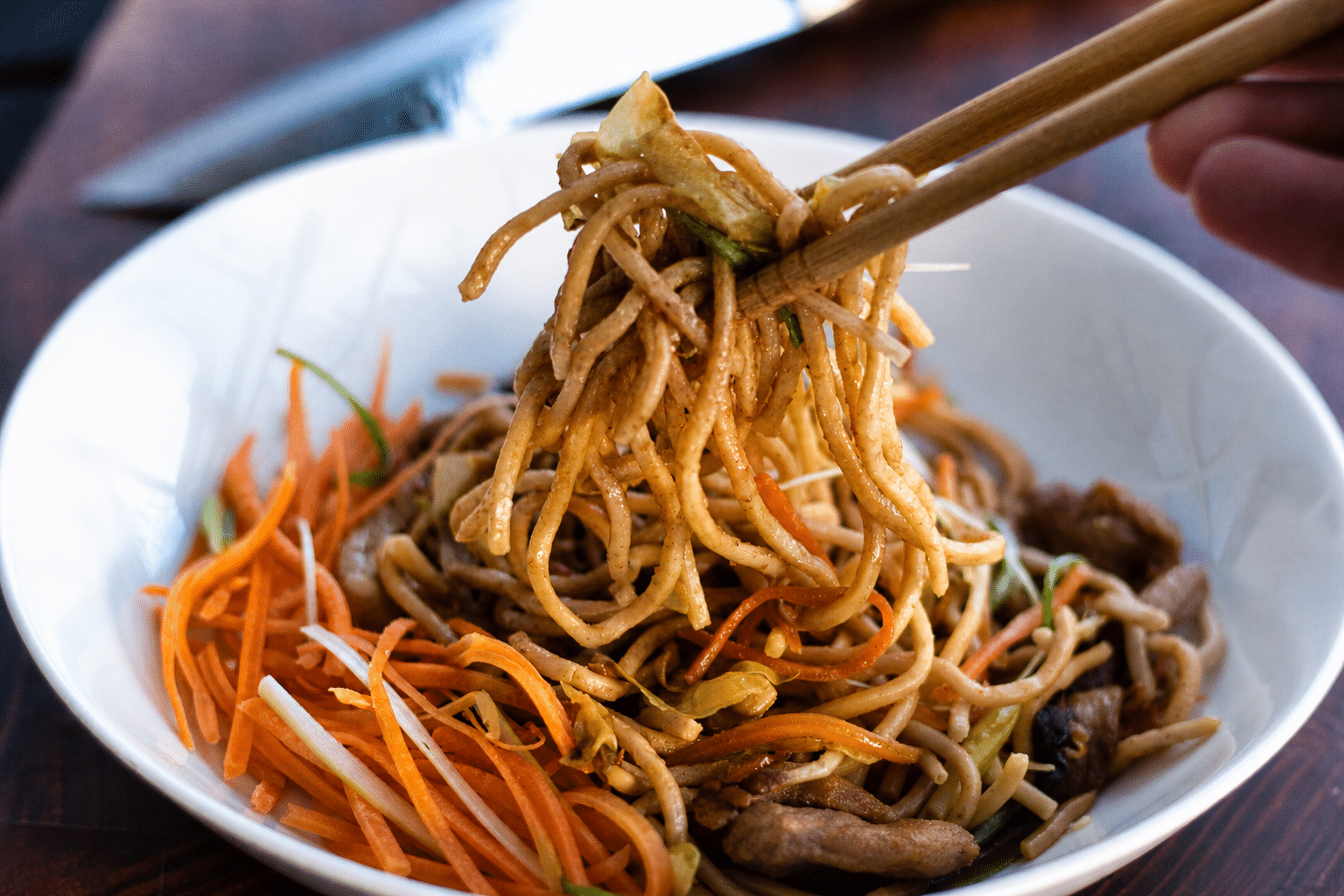

That’s a shame, because it comes together fast, the sauce is dead simple, and the result is exactly the glossy, savory-sweet noodle dish you remember. This version pairs chicken with cabbage, carrot, bell pepper, and mushrooms, all tossed in a sauce built from ketchup, Worcestershire, soy, and oyster sauce. It’s a full weeknight dinner that tastes like you spent more time than you did.
The word yakisoba literally means “fried noodles” – “yaki” for fried, “soba” for noodles. Despite the name, the dish uses wheat noodles rather than buckwheat soba. It grew out of Chinese stir-fry technique but developed a distinctly Japanese character, especially at festivals and street stalls where yakisoba is a staple.
Why this recipe works
The sauce is the whole thing. Ketchup and sugar bring sweetness, soy sauce and oyster sauce bring salt and depth, and Worcestershire plus rice vinegar cut through with tang. Mix it ahead of time, pour it over the hot noodles, and it caramelizes against the pan into a glossy coating that ties everything together.
The other essential move: toss your cooked noodles in oil before they touch the wok. This is the step most home cooks skip, and it’s what separates separate, silky noodles from a clumped mass. Ramen noodles from the grocery store work perfectly here. So do fresh wheat noodles from an Asian grocery store.
Ingredients
For the sauce:
- ¼ cup (60 g) ketchup
- 3 tablespoons (45 g) Worcestershire sauce
- 3 tablespoons (45 g) soy sauce
- 2 tablespoons (30 g) oyster sauce
- 2 tablespoons (30 g) sugar
- 1 tablespoon (15 g) rice vinegar
For the stir fry:
- 12 oz (350 g) ramen noodles or fresh wheat noodles
- 1⅓ lb (600 g) chicken breast
- 5 tablespoons (70 g) neutral oil, such as canola or vegetable, divided
- 3 cups (300 g) green cabbage, thinly sliced
- 1½ cups (200 g) carrot, julienned (about 2 medium)
- 1 large red bell pepper (about 180 g)
- 3 cups (250 g) mushrooms, sliced
- 1 cup (150 g) scallions, cut on the bias
- ¼ cup (60 g) ginger-garlic paste, or 2 tablespoons each fresh grated ginger and garlic
For serving:
- 2 tablespoons (30 g) pickled ginger (beni shoga)
- 1½ tablespoons (15 g) roasted sesame seeds
- About 15 g (roughly 4-5 sheets) nori, torn into strips (optional)
Instructions
1. Make the sauce. Stir together ketchup, Worcestershire, soy sauce, oyster sauce, sugar, and rice vinegar in a small bowl until the sugar dissolves. Set aside.
Read more: Albondigas: the Spanish meatballs in tomato sauce that are impossible to stop eating
2. Cook the noodles. Boil noodles in a large pot of water for 2 minutes. Drain, rinse under cold water, and toss with a drizzle of neutral oil to keep them from sticking. Set aside.
3. Prep everything. Cut chicken into thin strips. Slice cabbage into ¼-inch strips. Julienne the carrot and scallions. Cut bell pepper into strips about ¼ inch wide and 1½ inches long. Slice mushrooms ¼ inch thick.
4. Cook the chicken. Heat half the oil in a large wok or heavy skillet over high heat until shimmering. Season chicken with salt and pepper. Cook for about 4 minutes, stirring occasionally, until golden and cooked through to an internal temperature of 165°F (74°C) at the thickest point. Transfer to a plate.
5. Build the base. Add the remaining oil to the pan. Add ginger-garlic paste and stir-fry for 20 seconds until fragrant.
Read more: The sous vide trick that keeps pork tenderloin juicy and ever-so-slightly pink, every single time
6. Cook the vegetables. Add cabbage, carrot, mushrooms, and bell pepper. Stir-fry over high heat for 3 minutes until just tender with a little bite. If the pan feels crowded, cook the vegetables in batches – steam is the enemy of a good stir-fry.
7. Bring it all together. Return the chicken and noodles to the pan. Pour the sauce over everything and toss vigorously for 2 minutes, letting the noodles coat evenly and the sauce caramelize slightly against the hot pan.
8. Serve. Stir in the scallions at the last moment. Dish up hot, topped with sesame seeds, pickled ginger, and nori if you’re using it.
Tips and variations
Heat is everything. High heat is what makes stir-fry work. Too low and the vegetables steam and go limp instead of picking up any char. Get the pan fully preheated before anything goes in – a large skillet works fine if you don’t have a wok, just make sure it’s genuinely hot.
Read more: Homemade gyoza with the crispy bottom and steamed top that restaurants serve
On noodles. Ramen noodles (fresh or dried, available in most grocery stores) are the easiest option. Fresh wheat noodles from an Asian grocery store are even better. Either way, toss them in oil after draining – this is non-negotiable for noodles that don’t clump the moment they hit the pan.
Switch the protein. Shrimp, pork strips, beef, squid, or firm tofu all work in place of chicken. Keep roughly the same timing, about 4 minutes over high heat for most proteins.
Add richness or heat. A drizzle of chili oil or a spoonful of Japanese mayonnaise on top at serving pushes the dish toward richer and spicier. Worth trying on the second bowl.
Storage. Leftovers keep in the fridge for up to 3 days. Reheat in a hot pan with a small splash of water to loosen the noodles.