
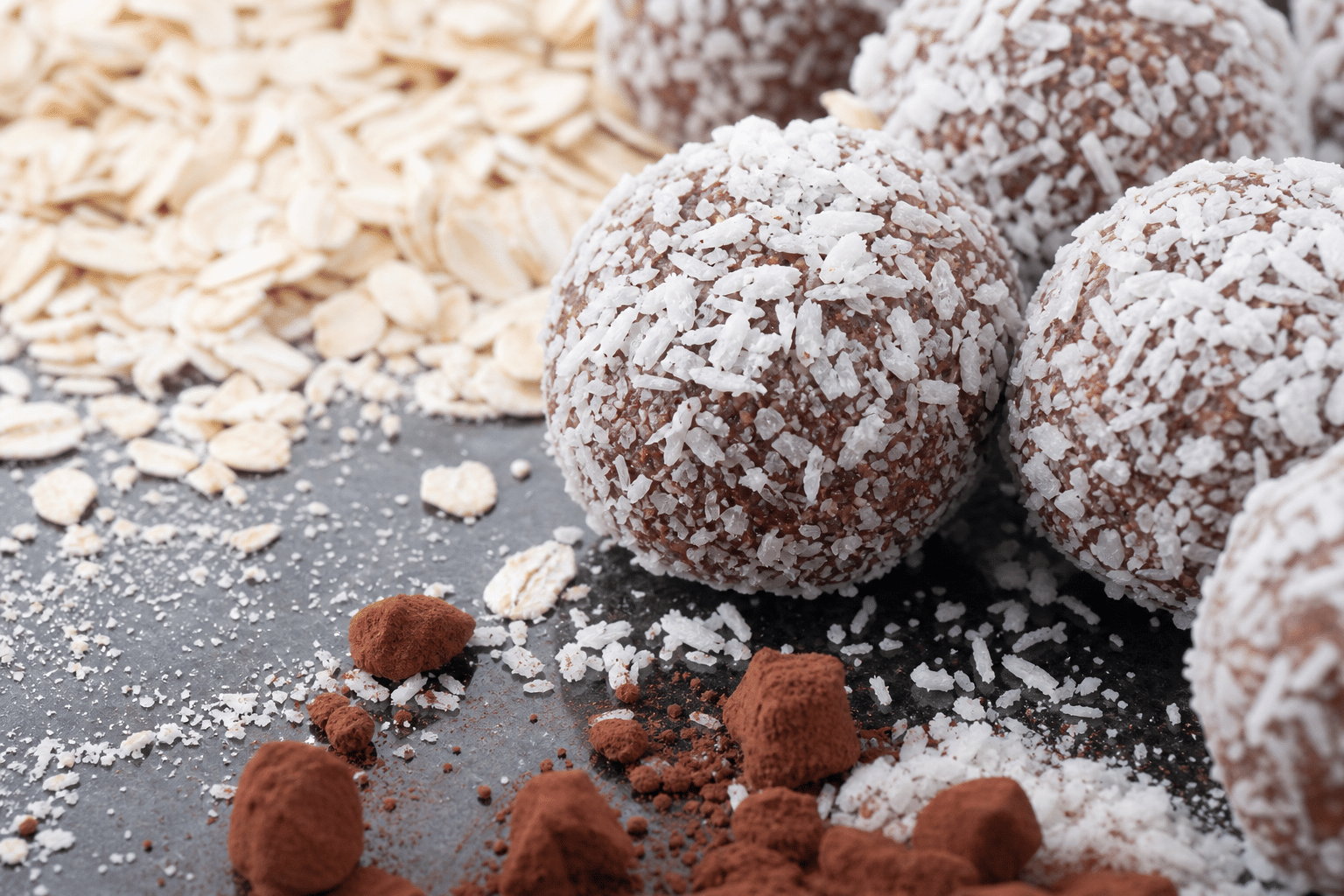

In Denmark, havregrynskugler are as much a part of Christmas as the tree itself. The name roughly translates to “oat balls,” and that’s exactly what they are: small rounds of cocoa-oat dough rolled in shredded coconut, made without any heat at all. Every Danish child grows up making them, and the classic version calls for instant coffee. This grown-up upgrade swaps that in for finely ground espresso beans, adds orange zest and juice, and stirs in grated dark chocolate. The result is richer, brighter, and genuinely good enough to give as a gift.
What I love about these is that there’s nothing to cook. You mix, work in the butter with your hands, roll, and refrigerate. About 20 minutes of actual effort, then the fridge firms everything up. And they last up to three weeks refrigerated, which makes them one of the most practical edible gifts to have ready in December.
Why this recipe works
The key upgrade over the classic version is the espresso. Finely ground espresso beans (not instant, not brewed coffee) give you concentrated flavor plus a barely-there texture that disappears into the dough but leaves real depth behind. You steep the grounds in just a small amount of boiling water, making something closer to a tiny, very concentrated shot than actual brewed coffee.
The orange does two jobs. The zest contributes perfume without adding liquid; the juice, stirred in with the coffee, cuts through the cocoa and butter and keeps the whole thing from tasting heavy. The grated dark chocolate adds texture and a slight bitterness that balances the powdered sugar.
Working the butter in by hand is not a chore: it is the fastest way to get a uniform dough, and you can feel exactly when the mixture has come together.
Ingredients
Each ball is about 10-12g (about 1/3-1/2 oz); the recipe makes a generous batch
- 3 1/3 cups (300g) rolled oats
- 1 1/4 cups (150g) powdered sugar (confectioners’ sugar)
- 6 tablespoons (35g) unsweetened cocoa powder
- 1 tablespoon (15g) vanilla sugar (see Tips for substitute)
- 1 oz (25g) dark chocolate, finely grated
- 1/4 orange (zest and juice, about 1 tablespoon juice and 1/2 teaspoon zest)
- 1 1/2 teaspoons (4g) finely ground espresso beans
- 2 tablespoons (25ml) boiling water
- 1 3/4 sticks / 14 tablespoons (200g) unsalted butter, cut into cubes, slightly softened
- About 2 1/2 cups (200g) unsweetened shredded coconut, for rolling
Instructions
1. Put the rolled oats, powdered sugar, cocoa powder, and vanilla sugar in a large bowl and stir to combine.
Read more: Zabaglione with limoncello and raspberries: the Italian dessert you can make in 25 minutes
2. Finely grate the dark chocolate and the orange zest directly over the bowl. Stir until everything is evenly distributed.
3. Put the ground espresso in a small cup. Pour the boiling water over it and let it steep for 1 minute.
4. Squeeze the juice from your quarter-orange and stir it into the coffee. Pour this liquid evenly over the dry ingredients and mix to distribute.
5. Add the butter cubes. Use your hands to press and squeeze everything together until you have a cohesive, slightly sticky dough with no dry patches.
Read more: Real Hungarian goulash soup: tender beef, sweet paprika broth, and hand-pinched dumplings
6. Pinch off portions of dough and roll into small balls, each about 10-12g (roughly the size of a large grape, about 1/3-1/2 oz). Roll each ball in the shredded coconut until fully coated, then set on a plate or tray.
7. Refrigerate for at least 1 hour until firm.
Tips and variations
Coffee: Finely ground whole espresso beans are the ideal: real aroma plus a slight texture that integrates into the dough. Pre-ground espresso also works. Avoid instant coffee and brewed coffee. Instant makes the flavor one-dimensional, and brewed adds too much liquid.
Vanilla sugar substitute: Vanilla sugar is a standard European pantry item but harder to find in the US. Substitute 1 tablespoon of regular granulated sugar plus 1 teaspoon of pure vanilla extract, stirring the extract in with the coffee-orange liquid in step 4. Vanilla sugar is also available at some specialty grocery stores and online.
Read more: Mala shrimp: how to make the Sichuan spicy-numbing stir fry at home
Coconut coating: Use unsweetened shredded coconut, sometimes labeled “desiccated coconut.” This is not the same as American coconut flour, which is a fine, dry baking powder that would not work as a coating here.
Skip the orange? Technically possible, but the juice is part of what balances the richness of the butter and cocoa, and the dough will be noticeably drier without it.
Coating variations: Finely chopped toasted nuts or coarse sugar both work if you want visual variety on a gift plate.
Storage: Keep in an airtight container in the refrigerator for up to three weeks. They also freeze well: just thaw overnight in the refrigerator.
For gifting: Layer them in a small box or tin between sheets of parchment paper. You can make a full batch two weeks before Christmas and they will still be at their best when you hand them over.