


What Are Carbohydrates?
Carbohydrates are a group of energy-yielding nutrients primarily found in plant-based foods such as grains, vegetables, and fruits. There is also a small amount of carbohydrate in milk and dairy products.
Carbohydrates are also known as saccharides, which can be divided into:
- Simple sugars (e.g., glucose, fructose, and sucrose)
- Starch (easily digestible)
- Slow- or non-digestible carbohydrates, also known as dietary fiber
Some carbohydrates affect blood sugar levels – dietary fiber does not.
A Bit of Carbohydrate Chemistry
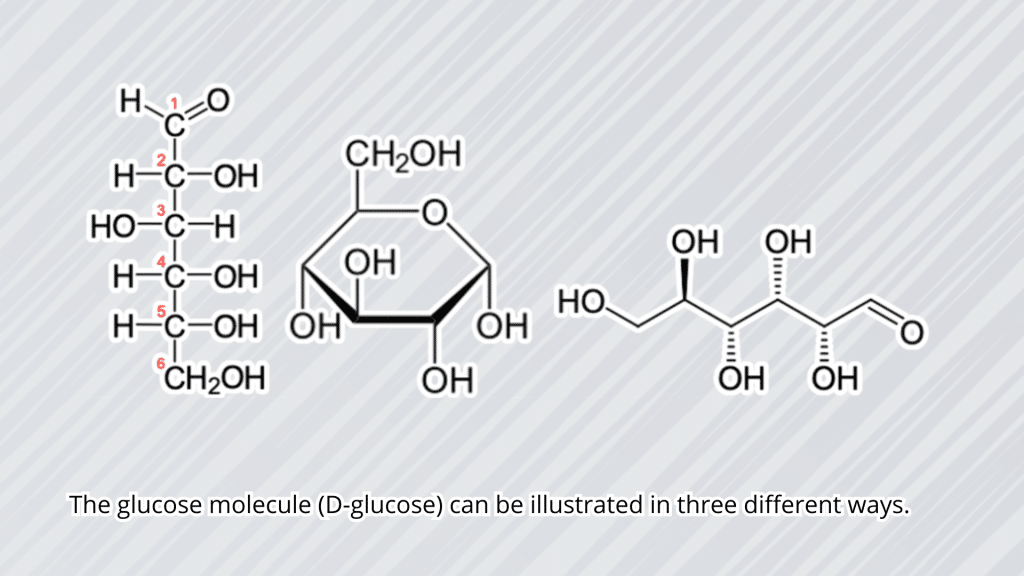
Carbohydrates (or carbohydrates, as chemists call them) are chemically composed of carbon and water – typically following the general formula (CnH2On).
The most important naturally occurring sugars are:
- Monosaccharides: pentoses (n=5) and hexoses (n=6)
- Disaccharides: built from two monosaccharides (n=12)
Carbohydrates are polyhydroxy aldehydes or ketones. Aldehydes can easily be oxidized to acids or reduced to alcohols.
💡 Did you know?
“Carbohydrate” is an imprecise term – chemically, it covers a wide range of very different compounds.
Chemical Groups in Carbohydrates

Aldehydes are known, for example, from the breakdown of ethanol (CH3CH2OH; alcohol) in the liver, where the intermediate is acetaldehyde (CH3-CHO), which is both toxic and causes headaches – something many experience on New Year’s Day! Even more dangerous is methanol (CH3OH; wood alcohol), which breaks down into the highly liver-toxic formalin (H-CHO). Several people have died recently in both Laos (November 2024) and Turkey (January 2025) from drinking contaminated alcohol distillates.
- Ethanol (CH3CH2OH) → Acetaldehyde (CH3-CHO) → headache
- Methanol (CH3OH) → Formalin (H-CHO) → deadly
When distilling alcohol from a fermentation process, methanol evaporates first, starting at 65 °C and gradually increasing to 78.3 °C. If the distiller does not discard the first fraction, the final product will contain methanol; but discarding too much reduces the yield – money talks!
⚠️ Methanol poisoning has led to deaths in both Laos (2024) and Turkey (2025).
Distillers should discard the first fraction (65–78.3 °C) – otherwise, they risk methanol contamination.
Ketones (-C=O-CH₂OH) can relatively easily be reduced to an alcohol (-CHOH-CH₂OH), but it requires stronger oxidizing agents to break the carbon chain and form an acid (-COOH + HCOOH).
Glucose is an example of a polyhydroxy aldehyde, while fructose is a polyhydroxy ketone.
🧪 Fructose in the body:
Fructose must be converted into glucose in the liver before it can be burned by muscles.
Therefore, high-fructose corn syrup in soft drinks adds extra strain to the liver, and excessive intake can lead to the development of non-alcoholic fatty liver.
Monosaccharides
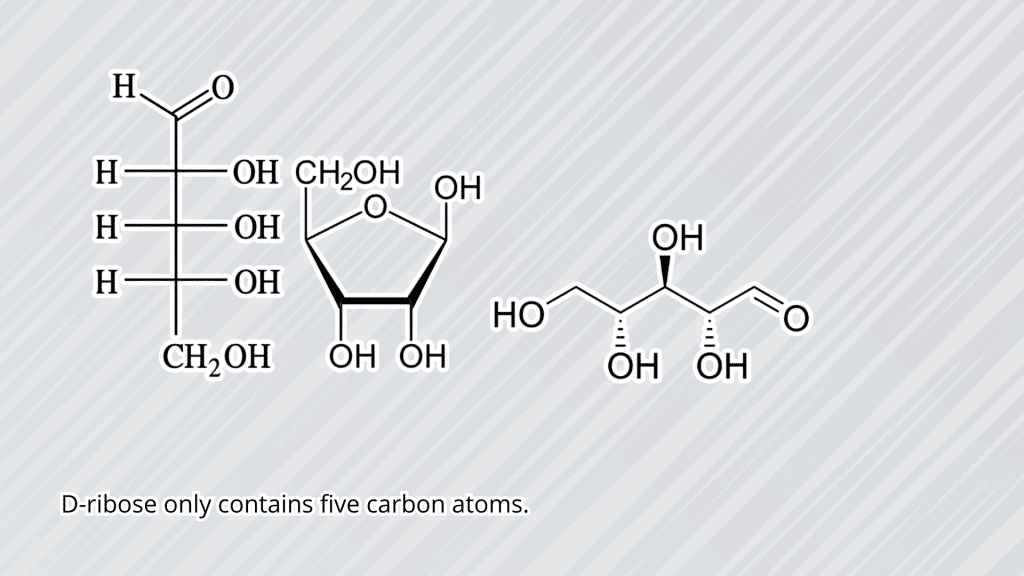
There are theoretically four different pentoses (sugars with five carbon atoms), but only three are found naturally in food:
- Ribose – found in DNA and RNA
- Arabinose – in plant cell walls
- Xylose – in cartilage and connective tissue
Pentoses are generally difficult for the body to metabolize and cannot be processed by yeast cells. Ribose and xylose are important structural components in the body, while arabinose contributes to dietary fiber, giving the large intestine something to work on.
Chemically, there are eight different aldehyde hexoses (sugars with six carbon atoms) and four keto hexoses, but the naturally occurring aldehyde hexoses are:
- Glucose
- Mannose
- Galactose
The only naturally occurring keto hexose is:
🧬 Pentoses and Hexoses
Pentoses (5 C atoms): ribose, arabinose, xylose
Hexoses (6 C atoms): glucose, mannose, galactose, fructose
Glucose is produced in plants during photosynthesis.
D-glucose is also known as grape sugar or dextrose when purchased as a food additive. It is obtained from the diet and also synthesized in the liver and kidneys. Normally, only small amounts of free glucose are found in food, primarily in fruits and honey. Most D-glucose is consumed in the form of starch, which the body easily breaks down into glucose.
D-glucose is found in the blood (blood sugar) and is taken up by the body’s cells.
🧪 What glucose can do in the body
- Be broken down to lactate (lactic acid), then further to carbon dioxide and water – provided there is enough oxygen in the (muscle) cells
- Be stored as glycogen in muscle cells, to be used as an energy reserve (for sprinting, heavy lifting, etc.)
- Be used to build connective tissue and cell membranes, and be part of the synthesis of amino acids, fatty acids, etc.
Mannose is present as mannose-6-phosphate in cell membranes and acts as an internal signaling molecule in cells as D-mannose.
Galactose, like mannose, is part of connective tissue and cell membranes. It is found in breast milk as D-galactose.
Disaccharides

When two monosaccharides are joined in nature, they form a disaccharide. In theory, there are many possible combinations, given the number of naturally occurring monosaccharides, but the most nutritionally significant disaccharides are:
🍬 Key disaccharides:
- Sucrose = glucose + fructose (table sugar)
- Lactose = glucose + galactose (milk sugar)
- Maltose = two glucose molecules joined in the same way as in starch – we can digest it
- Cellobiose = two glucose molecules joined as in cellulose – we cannot digest it
Polysaccharides
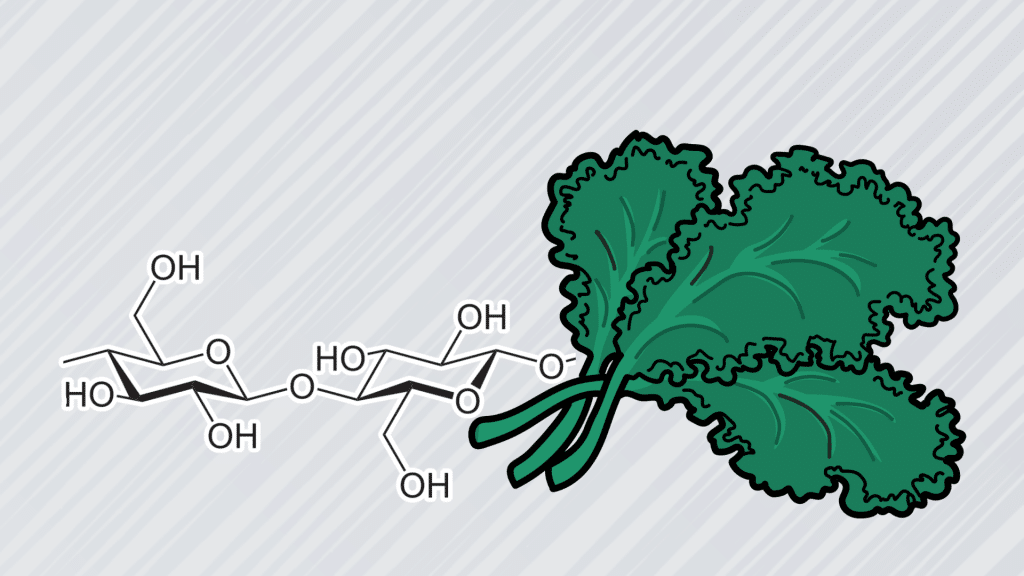
The three most important polysaccharides in nature are cellulose, starch, and glycogen. All are made of glucose, but they are linked together in different ways.
🧩 Polysaccharides
- Cellulose: crystalline structure, stiffens plant cells
- Starch: nutrient storage in plants (easy to digest)
- Glycogen: energy storage in animals (liver and muscles)
In cellulose, glucose units are bonded in a way that gives a strong, crystalline structure. Plants use this to stiffen their stems. In fact, cellulose is found in most plants as an extra layer outside the fat membrane, which is made of fatty acids.
Cellulose is difficult to break down, and not all fungi can handle it, but specific bacteria and similar organisms can do so effectively. These cellulose-degrading bacteria are found in the rumen of cows, enabling them to convert grass into milk.
🌱 Cellulose in humans
- Humans have few such bacteria in their colon, so we can hardly break down cellulose-rich foods.
- Fiber protects our intestines and ensures healthy bowel movements, preventing constipation and hemorrhoids.
Starch is found in bread, grains, potatoes, root vegetables, rice, corn, and pasta. Starch accounts for about half of the carbohydrates in an average diet. It is a plant-based storage substance found especially in the seed endosperm, which provides energy to the sprouting seed. Humans have taken advantage of this in agriculture, especially with starch-rich grains like rice, corn, and wheat.
🌾 Starch Facts
- The seeds can be dried and stored for long periods, securing food during cold or dry seasons.
- Agriculture began around 8,000 years ago.
- Humans can easily break starch down into glucose and use it for energy.
Glycogen is stored in the liver and muscles when we consume more starch than we immediately need. In animals, glycogen serves the same role that starch does in plants.
🦆 Glycogen and Fatty Liver
- If too much glycogen accumulates in the liver, it is converted to fat.
- Migratory birds store fat in their livers from starch intake before flying south (foie gras).
- Humans can also develop fatty liver, especially from excess fructose.
Modified starch is used industrially. Natural starch is not very water-soluble and not always easy to use in food production. Therefore, it is modified through physical, chemical, or enzymatic processes to improve viscosity, chill stability, freeze tolerance, gloss, and/or acid resistance.
We do something similar in the kitchen when we make a roux by combining flour and butter and heating it (light or dark roux). We also modify starch when baking with yeast or sourdough. However, industrial techniques are far more advanced, involving high pressure, temperature, or enzymes.
🏭 Examples
- Some modified starches are available in supermarkets, such as gluten- and lactose-free cornstarch products.
- In small quantities, modified starch is not harmful.
- However, it is classified as an ultra-processed food.
Complex Carbohydrates

Various sugars in living cells — from bacteria, plants, animals, and fungi — can be bound to phosphate, encapsulated in cell walls, or exist as glycosides.
A glycoside is a sugar molecule bound to another functional group via a so-called glycosidic bond. Glycosides play an important role, especially in plants, where many species store chemical compounds as inactive glycosides. These can be activated through enzymatic hydrolysis, which removes the sugar part and activates the functional group — for example, to protect the plant against fungi and bacterial attacks. Many of these plant glycosides have served as the basis for modern medicines.
In some plants, a mix of pentoses and various hexoses are bound together in a complex network. This makes sugar molecules difficult for humans to digest.
🍇 Plants that are hard to digest
- Elderberries contain such a network of glycosides and alkaloids (nitrogen-containing organic compounds that affect humans and other animals). These can cause nausea, vomiting, and diarrhea unless the berries are cooked first, which breaks down the network.
- The same applies to many legumes, including dried beans. These must be soaked and cooked before consumption. Once prepared, they are excellent for the digestive system, as they act as dietary fiber.
Cooking Techniques with Sugar

Sucrose is used as a base substance in several fundamental culinary techniques:
- Pickling with equal parts sugar, vinegar, and water
- Gravlax-style curing, where salt and sugar (4:1) are sprinkled over fish or meat, effectively cold-cooking the protein
- Dry curing is a shorter process with salt and sugar, often preceding cold or hot smoking
- Fermentation is a process in which lactic acid bacteria oxidize glucose, sucrose, and maltose into carboxylic acids such as acetic acid, citric acid, and others
In flavor balancing, sugar plays a significant role in softening or rounding out salty, sour, and bitter elements in a dish. See also: The Six Basic Tastes.
Carbohydrates and Nutrition Guidelines

Globally, nutritional guidelines emphasize reducing the intake of added sugars and refined carbohydrates while encouraging the consumption of whole grains, vegetables, legumes, and fiber-rich foods. A consistent message across countries such as the United States, the United Kingdom, and Australia is that added sugars should not exceed 10% of total daily energy intake.
Added sugars—such as those found in high-fructose corn syrup, sucrose, and various sugar substitutes—are prevalent in soft drinks, breakfast cereals, sweet snacks, and ultra-processed foods. Overconsumption is associated with a higher risk of obesity, type 2 diabetes, fatty liver, and other chronic health conditions.
🚫 Products high in added sugars include:
- Sweetened breakfast cereals
- Soft drinks and sweetened beverages
- Confectionery and desserts
- Syrups, jams, and flavored yogurts
- Sugar-free cakes and pastries with added fructose
- Dried fruits like dates, figs, and raisins
Starch-rich foods like rice, pasta, and root vegetables are good sources of energy, as long as the body can metabolize the glucose efficiently. If not used, glucose can be converted to fat.
🥔 Tip from the kitchen
Chew a cooked potato thoroughly – salivary amylase begins to break down the starch, and you’ll notice a sweet taste developing.
Complex carbohydrates are encouraged more freely. These include foods that provide plenty of dietary fiber, which does not spike blood sugar and supports healthy digestion.
🌾 Foods rich in complex carbohydrates:
- Whole grain breads – especially varieties with minimal wheat content, such as coarse rye bread or breads with rye, oats, and barley
- Above-ground vegetables – such as cabbage varieties, beans, peas, and other green and juicy produce
🧠 Why it matters
Diets rich in complex carbohydrates are linked to lower risks of cardiovascular disease, diabetes, and certain cancers. They also promote satiety and support long-term metabolic health.
Putting Carbohydrates into Perspective

Carbohydrates include a wide range of nutrients – from simple sugars to indigestible dietary fiber. They serve various functions in the body, including energy provision, building blocks for cells, and digestive support.
Understanding the difference between rapidly absorbed sugars and slower-digesting carbohydrates like starches and fibers is crucial. Fast-acting sugars—especially those from added sweeteners like high-fructose corn syrup—should be consumed in moderation. In contrast, dietary fiber and unrefined carbohydrate sources offer well-documented health benefits.
A balanced approach to carbohydrate intake focuses on quality and variety rather than restriction. Choosing vegetables, whole grains, and minimally processed foods supports blood sugar stability and digestive health.
Inspiration from the Kitchen Chemist

Here are some recipes from the Kitchen Chemist that are rich in complex carbohydrates: