


Recipe for traditional danish rye bread (rugbrød)
Traditional Danish rye bread (rugbrød) offers a dense texture, deep flavor, and plenty of nourishment. This bread holds a firm place in Nordic kitchens and has done so for centuries. It stays fresh for days and uses wholesome ingredients like rye, barley, and seeds.
Why You Should Bake Traditional Danish Rye Bread
Unlike soft sandwich loaves, this bread feels hearty and satisfying. You slice it thin and top it with cheese, egg, or cold cuts — the classic Danish smørrebrød. Because of the slow fermentation, the bread develops a rich and slightly tangy flavor.
A Low-Glycemic, High-Fiber Option
Rye and barley contain fewer fast-acting carbs than wheat. Therefore, this bread supports a stable blood sugar level. In addition, the flaxseeds and sunflower seeds boost fiber and healthy fat content. These ingredients make it a filling and gut-friendly choice.
For example, one slice in the morning can keep you full until lunch. You can also freeze the loaf in slices, which makes it easy to grab a piece whenever you need it. As a result, it’s both practical and economical.
The long fermentation supports digestion and adds complexity to the taste. Many bakers return to this recipe again and again — not only for the health benefits, but also for the flavor.
How to Make This Classic Nordic Bread
Start the process by soaking grains and combining them with sourdough and rye flour. Let the mixture rest overnight at room temperature. On the next day, add malt, seeds, and salt. Then knead the dough and place it in a loaf pan.
After rising, bake the bread slowly at a low temperature. Finally, wrap it in a towel and let it rest overnight. This final step improves both texture and sliceability.
Traditional Danish rye bread doesn’t just taste good. It reflects a baking tradition that values patience, quality, and real nourishment.
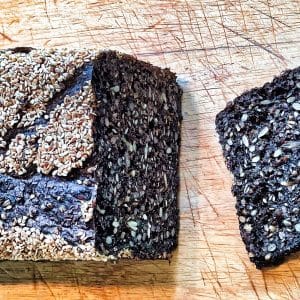
Traditional Danish Rye Bread (Rugbrød)
Equipment
- 1 Bread tin
Ingredients
Day 1
- 480 gram Whole Rye Flour 16 oz / 1 lb
- 160 gram Sourdough Starter 5.3 oz
- 320 gram Cracked Rye Berries 10.6 oz
- 140 gram Flaxseeds 5.3 oz
- 140 gram Sunflower Seeds 5.3 oz
- 3 gram Barley Malt Flour 1.8 oz
- 8 gram Baking Enzymes optional, ~0.2 oz
Day 2
- 12 gram Barley Malt Flour 0.7 oz
- 8 gram Baking Enzymes optional, ~0.2 oz
Instructions
Day 1
- In a large bowl, mix rye flour, 1¼ cups (10.1 fl oz) water, and sourdough starter until smooth.
- Refresh your sourdough starter with 2 tbsp rye flour and 4 tbsp water. Store it in the fridge.
- In a second bowl, combine cracked rye, flaxseeds, and sunflower seeds with 2½ cups (20.3 fl oz) water and 1 tsp salt.
- Cover both bowls and let rest at room temperature for 12–18 hours.
Day 2
- Combine both mixtures. Add 2 tbsp malt flour and optional baking enzymes. Mix for 10–12 minutes.
- Transfer dough to a greased 9×5″ loaf pan. Optionally sprinkle with sesame seeds.
- Let rise at room temperature for 2–3 hours, until dough reaches the top of the pan.
- Poke holes in the top with a skewer or fork.
- Bake at 340°F (170°C) for 90 minutes.
- Remove from pan, wrap in a clean towel, and let rest overnight before slicing.
Notes
It’s rich in seeds and fiber, and perfect for open-faced sandwiches (smørrebrød).
Keeps well for up to a week when wrapped and stored at room temperature.