
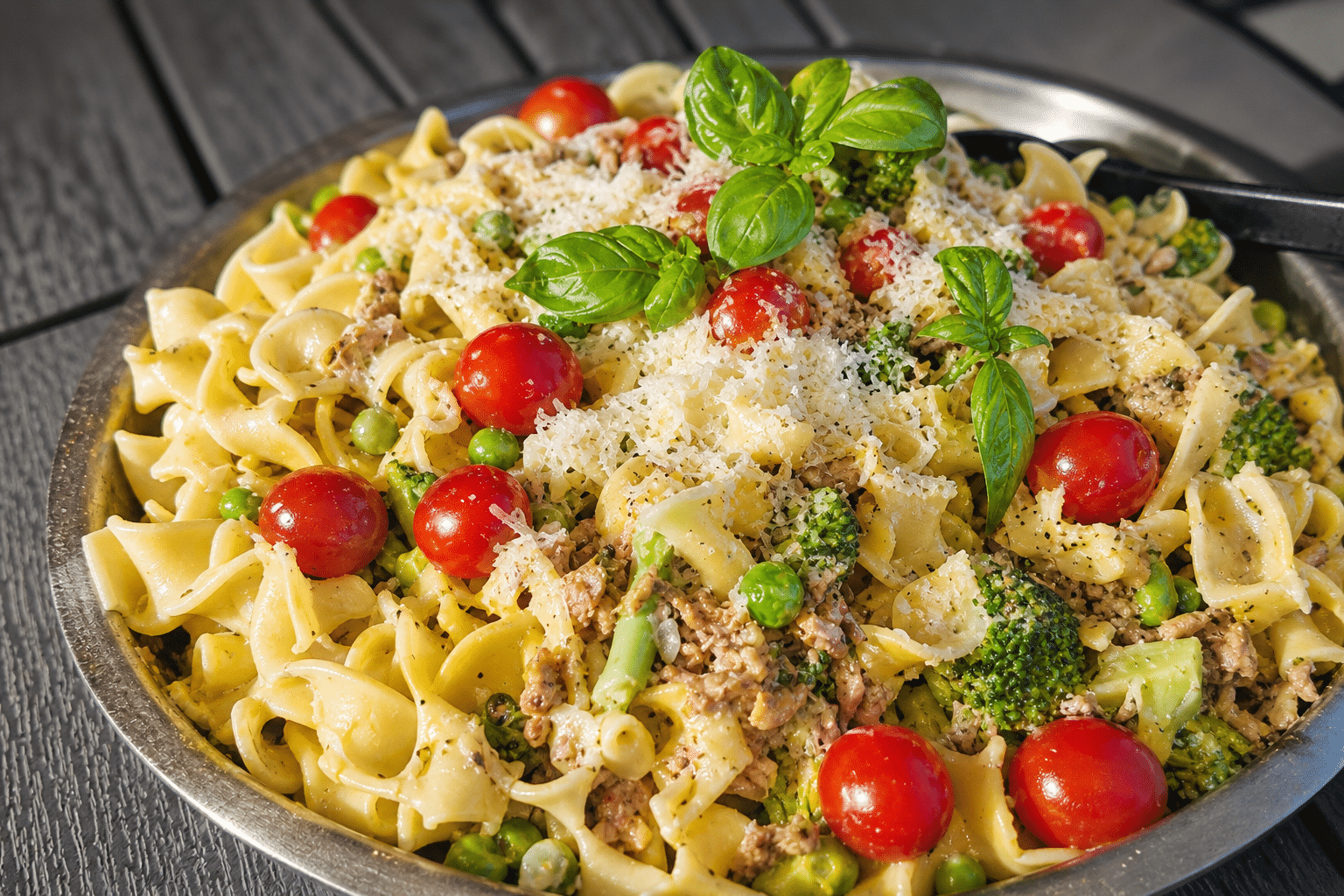

The dish builds on a smart idea: a creamy, lemony sauce that stays genuinely bright because you hold back the richest ingredients until the heat is off. Ground veal gives it real body without weighing things down, the broccoli – florets and all of the stem – stretches through every bite, and the finish is lively enough that you are not reaching for more wine just to cut through the richness. It is filling, fresh, and fast.
Why this recipe works
The move that makes this dish is the off-heat finish. Once you pull the pan from the stove, you fold in the peas, stir in the parmesan, tear in the basil, and scatter the cherry tomatoes. Nothing overcooks. The parmesan melts smoothly into the sauce rather than clumping, the basil holds its color and fragrance, and the tomatoes give little bursts of acidity rather than collapsing into the cream.
The lemon also does two separate jobs. The zest goes in during simmering and softens into the cream, adding a rounded citrus note. The juice goes in at the end for a sharper, more direct hit of brightness. That layering is the difference between a pasta that tastes lemon-y and one that tastes alive.
Ingredients
Serves 4
- 14 oz (400 g) pasta – rigatoni, penne, or any short shape
- 10 oz (300 g) broccoli (1 medium head – florets and stem both used)
- 1 1/3 cups (200 g) peas, fresh or frozen
- About 2/3 cup (150 ml) pasta cooking water, reserved
- 2 tablespoons (25 g) olive oil, plus 1 teaspoon for finishing
- 10.5 oz (300 g) ground veal
- 1 large onion (about 200 g), finely chopped
- 1 cup (250 ml) dry white wine
- 4 medium garlic cloves (about 12 g), finely chopped
- 1 cup (250 ml) heavy cream
- 2 lemons – zest of both, then juice to taste
- 3/4 cup (75 g) finely grated parmesan
- 1/4 cup loosely packed (10 g) fresh basil, roughly chopped
- 1 cup (150 g) cherry tomatoes, halved
- Salt and black pepper
Instructions
1. Bring a large pot of well-salted water to a boil. Cook the pasta for the minimum time on the package – you want it still al dente, since it finishes in the sauce. Before draining, scoop out about 2/3 cup (150 ml) of the cooking water and set it aside.
2. While the water heats up, cut the broccoli into florets. Peel the stem and dice it into small pieces – it softens at the same rate as the florets when cut small and has great flavor. Do not throw it away.
3. Heat 2 tablespoons of olive oil in a large, wide pan over high heat. Add the ground veal and brown it well, breaking it up as you go. You want real color on the meat, not just grey – this is where the flavor comes from. Set the cooked veal aside.
Read more: The crispy beef spring rolls Danes eat from street food stands, and how to make them at home
4. Turn the heat to medium. In the same pan, sauté the onion and the diced broccoli stem for 2 to 3 minutes until they start to soften.
5. Add the broccoli florets, then pour in the white wine. Let everything steam together for about 2 minutes – the florets should be just tender but still bright green.
6. Return the browned veal to the pan. Add the chopped garlic, cream, reserved pasta water, and the lemon zest. Stir to combine.
7. Let the sauce simmer for 10 minutes, stirring occasionally, until it thickens slightly and comes together. Season with lemon juice, salt, and pepper – taste as you go, since lemons vary in how much juice they give.
8. Add the drained pasta and toss well, cooking for a minute or two more until the sauce coats every piece.
Read more: New York City’s top 15 steakhouses by Yelp score, from Midtown chophouses to West Village gems
9. Turn off the heat and remove the pan from the stove. Fold in the peas – the residual warmth is enough to heat them through without making them soft and dull.
10. Stir in the grated parmesan and the chopped basil off-heat, so the parmesan melts into a smooth, creamy sauce and the basil stays vivid.
11. Scatter the halved cherry tomatoes over the top, drizzle with the remaining teaspoon of olive oil, and serve immediately.
Tips and variations
Use the whole broccoli. The stem is slightly sweeter than the florets and entirely worth eating. Peel it, dice it small, and it blends right into the sauce.
Read more: Individual lemon mousse cakes with a biscuit base: the dinner party dessert you make ahead
Reserve the pasta water before you drain. Set a measuring cup near the stove before you go anywhere near the colander – it is easy to forget in the rush, and you cannot un-drain your pasta.
Two lemons can vary a lot. Taste the sauce after adding the juice and add more if the dish needs a sharper note. The goal is brightness, not sourness.
Substitute ground turkey if needed. Ground veal is widely available at most supermarkets, but ground turkey works well here if you prefer it. Keep the technique identical.
Serve with cold white wine. A dry, unoaked white – Pinot Grigio, Sauvignon Blanc, or similar – plays nicely off the lemon and cream.
This dish will not wait. The pasta drinks up the sauce quickly once it sits. Bring it straight from the pan to the table.