
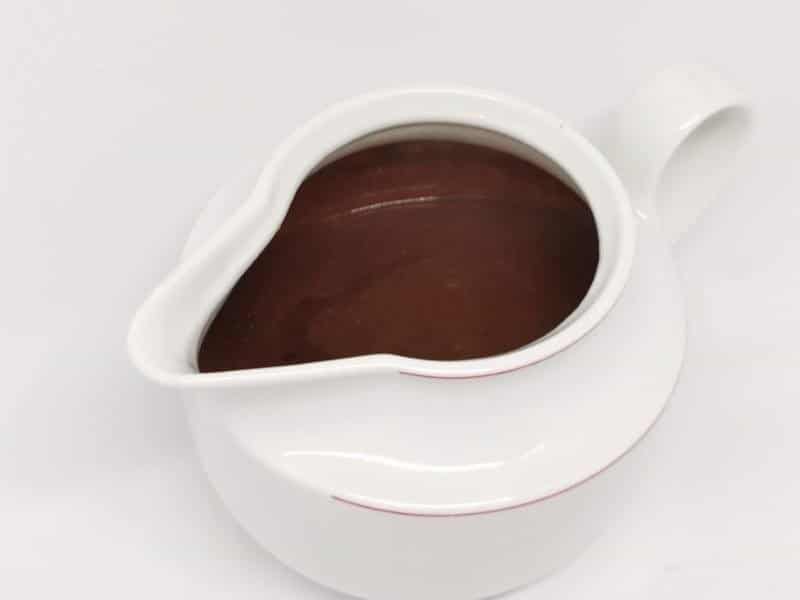

No matter how you prefer to cook your duck in the oven, the sauce is fantastic. This sauce is based on making it simultaneously with a roast duck as we use the duck stock from the oven. If you have extra time, we have instructions at the bottom of the recipe on how to make it with duck jus instead.
Recipe for duck sauce
Regardless of how you prefer to roast your duck in the oven, the sauce is fantastic.
This sauce is based on cooking it simultaneously with an oven-roasted duck, as we use the drippings from the duck.
If you have extra time, we have a guide at the bottom of the recipe on how to make it using duck stock instead.
The amounts of vegetables/root vegetables here are not critical, use whatever you have in the fridge; it’s a perfect way to avoid food waste.
This recipe is based on the duck being cooked for a minimum of 2 hours, as we take the drippings after 1 hour and spend 1 hour finishing the sauce. If the duck needs more time, that’s fine – the longer you spend on the sauce, the better it will be.
Servings: persons
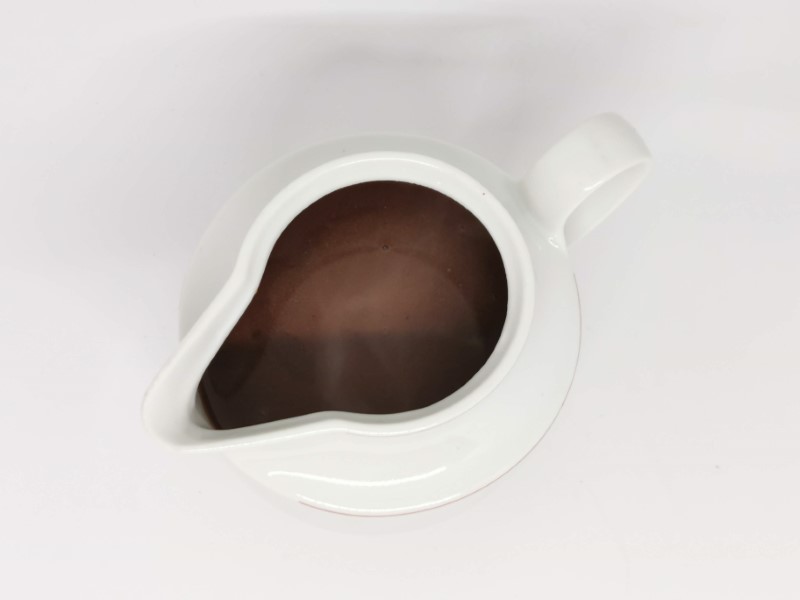
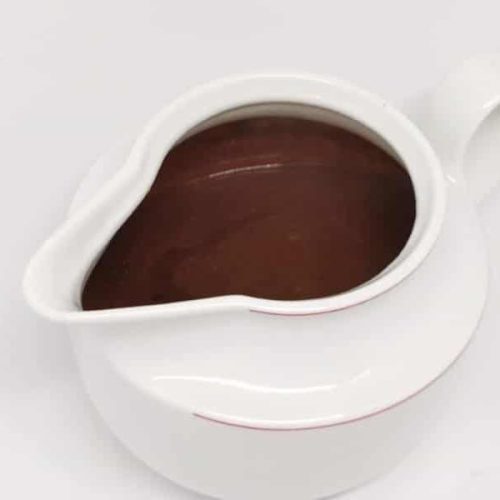
Duck Sauce
No matter how you prefer to cook your duck in the oven, the sauce is fantastic. This sauce is based on making it simultaneously with a roast duck as we use the duck stock from the oven. If you have extra time, we have instructions at the bottom of the recipe on how to make it with duck jus instead.
Equipment
- Oven
- Cutting Board
- Chef'S Knife
- Sauté Pan
- Sieve
- Pot
- Saucepan
- Bowl
Ingredients
Duck Fund
- 13.6 gram Oil neutral in flavor
- 15 gram Tomato Puree
- 3 pcs. Carrots
- 1/3 pcs. Celery
- 2 pcs. Celery Stalks
- 2 pcs. Onion
- 2 cloves Garlic
- 2 l Water
- 4 pcs. Bay Leaf
- 10-15 pcs. Peppercorns to taste
- 4 pcs. Thyme Stalks can be replaced with dried - use about 1-2 tbsp.
- 1 pcs. Whole Duck preferably with giblets/neck
Duck Sauce
- 300 gram Red Wine
- 100 gram Port can be replaced with red wine
- 100 gram Cream
- 500 gram stock the above-mentioned duck stock
- 100 gram Water
- 16 gram Cornstarch
- Salt and Pepper
- Gastrique can be replaced with a bit of sugar and vinegar
- Lemon Juice
- Gravy Color
Instructions
- Start by preheating the oven to the desired temperature. It doesn't matter if it's on the very low side (from 95-140 degrees Celsius (203-284 degrees Fahrenheit)) – the sauce will turn out just fine.
- If you have a roasting pan that can be used in both the oven and on the stove, the recipe will be a bit easier.
- Peel the onions, garlic, and cut them and the root vegetables into rough chunks.
- Place a roasting pan (or sauté pan) on the stove over fairly high heat (I used 11 out of 14 on my stove).
- Add fat and tomato paste to the pan so it browns a bit.
- Turn the heat down to medium-high (I used 9 out of 14 on my stove) and add celeriac, celery, carrots, onions, garlic, the duck giblets, and neck.
- Let it cook for 5-10 minutes while you prepare the duck.
- Add water (the amount depends on how much liquid you can fit. The most important thing is that the roasting pan does not dry out while cooking in the oven).
- Add peppercorns, thyme, and bay leaves.
- Place the duck on a rack in the oven and place the roasting pan below it so the duck can drip into it.
- After about 1 hour, take the roasting pan out and pour the contents through a fine sieve into a large pot.
- Now the stock needs to be reduced. Ideally for as long as possible, but a minimum of 30-40 minutes.
- Meanwhile, take a small saucepan and add red wine and port. Bring to a boil and reduce to about 1/2-1 dl.
- Add cream and duck stock to the saucepan with the reduced wine and let it simmer together for 5-10 minutes.
- Now the sauce needs to be thickened. You can do this with a classic flour mixture (water and wheat flour), but I prefer cornstarch and water. This also makes the sauce gluten-free if that's important for you or your guests. Mix cornstarch and cold water in a small bowl and stir well. Bring the saucepan to a boil before adding the cornstarch mixture, as it only thickens when it boils. Add half of the mixture while stirring and continuously add more if the sauce hasn't thickened enough.
- Let the sauce boil for a couple more minutes and during this time you can adjust the seasoning.
- Always start with salt and pepper and taste.
- Add a little lemon juice and gastrique (vinegar and sugar).
- Adjust again with the different flavors and add a bit of gravy browning if it needs a bit more color.
- Enjoy.
Notes
For those with extra time:
When you pour the duck stock from the roasting pan, replace the pot with a tall pitcher instead.
Cool it down (e.g., 30-60 minutes in the freezer), and the fat will settle at the top and solidify. You can now easily remove the fat with a spoon and, for example, use it for frying another time.
Reduce the duck jus to half, and it can now be used for a sauce. Since there is no fat in the jus, I recommend making a roux-based sauce instead:
Melt 2 tbsp butter in a pan and add 2 tbsp wheat flour. Whisk well and then add your duck jus along with cream and the reduced wine. Continue whisking and season with salt, pepper, lemon juice, and gastrique.
When you pour the duck stock from the roasting pan, replace the pot with a tall pitcher instead.
Cool it down (e.g., 30-60 minutes in the freezer), and the fat will settle at the top and solidify. You can now easily remove the fat with a spoon and, for example, use it for frying another time.
Reduce the duck jus to half, and it can now be used for a sauce. Since there is no fat in the jus, I recommend making a roux-based sauce instead:
Melt 2 tbsp butter in a pan and add 2 tbsp wheat flour. Whisk well and then add your duck jus along with cream and the reduced wine. Continue whisking and season with salt, pepper, lemon juice, and gastrique.