Recipe for slow-cooked leg of lamb
My take on a delightful slow-roasted leg of lamb, ensuring it retains all its juices and flavors.
My leg of lamb was Danish, and generally, I don’t think Danish lamb has as woolly a taste as, for example, New Zealand lamb. Therefore, I don’t use as many spices as I would with foreign lamb. In that case, I would use a lot more garlic, thyme, and rosemary.
When you ask yourself the question: “What sauce goes with leg of lamb?”, in my world, there is only one answer:
A béchamel sauce made from the lamb drippings. Here, I give you my trick on how to get the maximum good lamb flavor into your sauce.
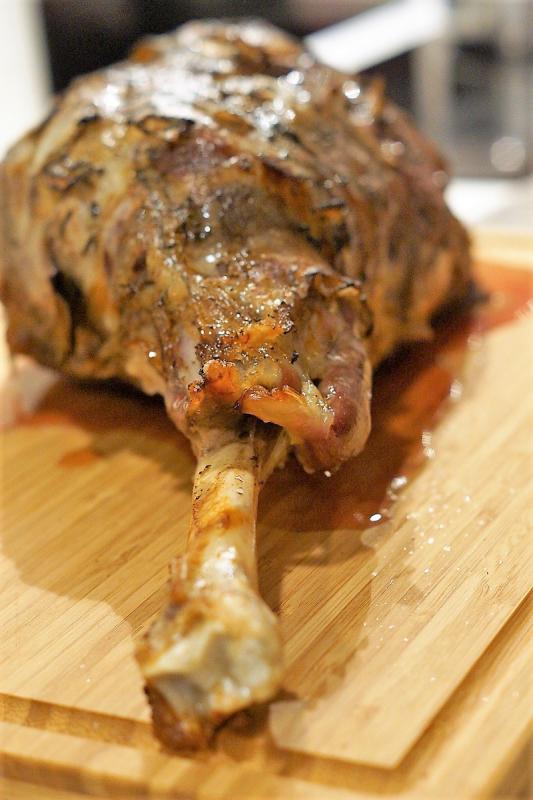
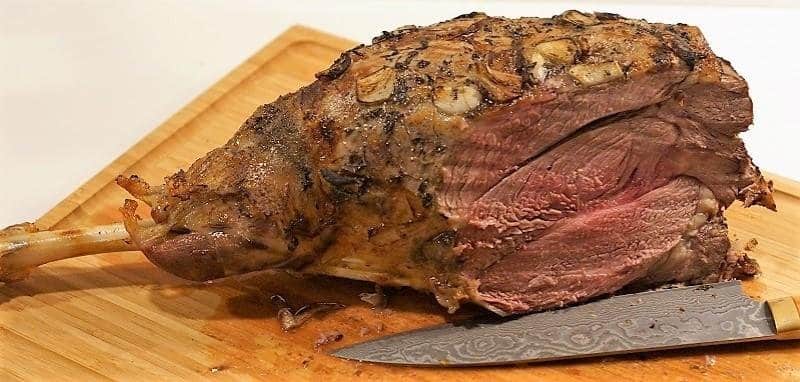
Equipment
- Oven
- Cutting Board
- Pre-Slicing Knife
- Chef'S Knife
- Potato Peeler
- Roasting Pan
- Meat Thermometer
- Gas Burner Optional
Ingredients
- 1 pcs. Leg Of Lamb
Oven-roasted leg of lamb
- Salt and Pepper
- 5 cloves Garlic
- Fresh thyme a handful
- 300 gram White Wine can be replaced with red wine
- 300 gram Red Wine
- 200 gram Water
- 100 gram Port can be replaced with red wine
- 3 pcs. Carrots
- 3 pcs. Onion
- 0.5 pcs. Leek
- 2 pcs. Lime or 1 lemon
Sauce for leg of lamb
- 28 gram Lamb Fat can be replaced with butter/oil
- 16 gram Wheat Flour
- 100 gram Milk
- 200 gram Lamb Stock can be replaced with stock/broth
- 100 gram Cream
- Gravy Color
- Salt and Pepper
- Vinegar I used apple cider vinegar
- Sugar
- Lemon Juice
Instructions
Roast Leg of Lamb
- Preheat the oven to 140 degrees Celsius (284 degrees Fahrenheit) (conventional oven).
- Get a large roasting pan.
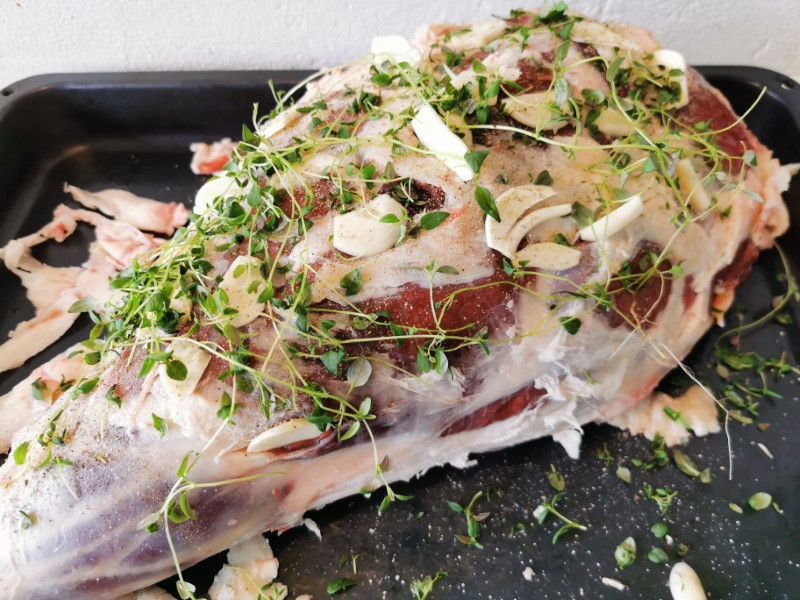
- Trim the excess fat from the lamb and place it in the roasting pan.
- Peel your garlic and slice it thinly.
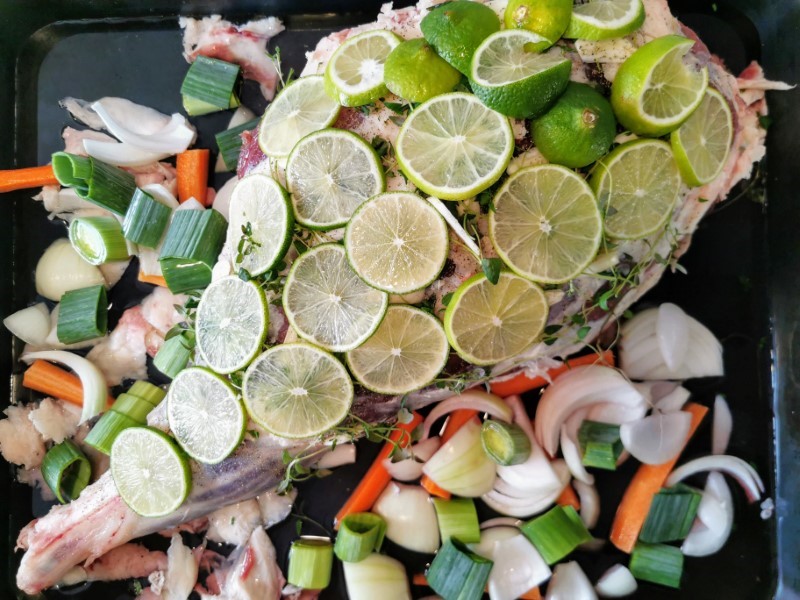
- Slice your limes thinly.
- Score the surface of the lamb and place a slice of garlic over the cuts.
- Season with salt and pepper.
- Add the fresh thyme on top and cover the lamb with lime slices.
- Peel the onions, carrots, and leeks and cut them into smaller pieces.
- Place the lamb in the roasting pan and add all the vegetables and wine/water.
- Put it in the oven with a meat thermometer. The thermometer should be right next to the bone, and we're aiming for a final temperature of 63 degrees Celsius (145 degrees Fahrenheit).
- Cook the lamb for 2.5 hours at 140 degrees and then take it out of the oven.
- Reduce the oven temperature to 110 degrees.
- Remove the cooking juices and pour them into a jug/tall bowl. Chill the bowl, and when the oven reaches 110 degrees, put the lamb back in the oven.
- When the meat reaches 63 degrees, take it out. It took me about 1 hour.
- Take the meat out of the oven and let it rest for 15 minutes.
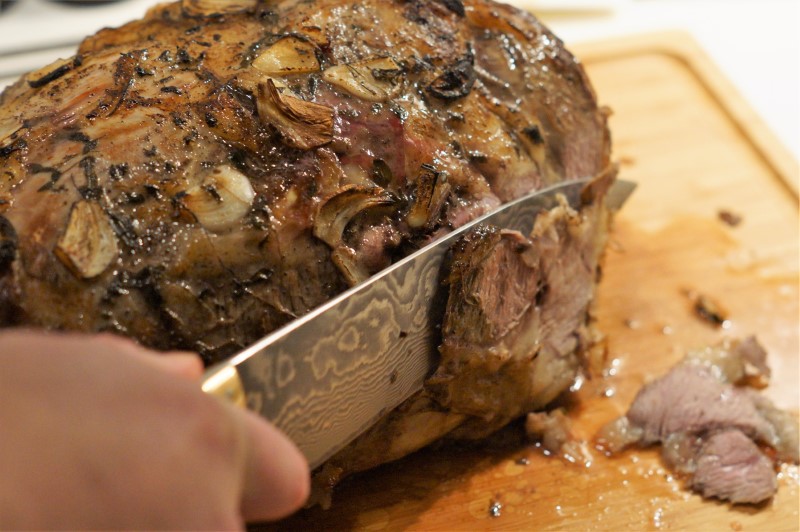
- If you have access to a blowtorch, you can give it a quick sear on top before slicing the meat. It has been cooked at a low temperature, so this can give it a bit of a crust.
- Slice the meat thinly and serve with flake salt.


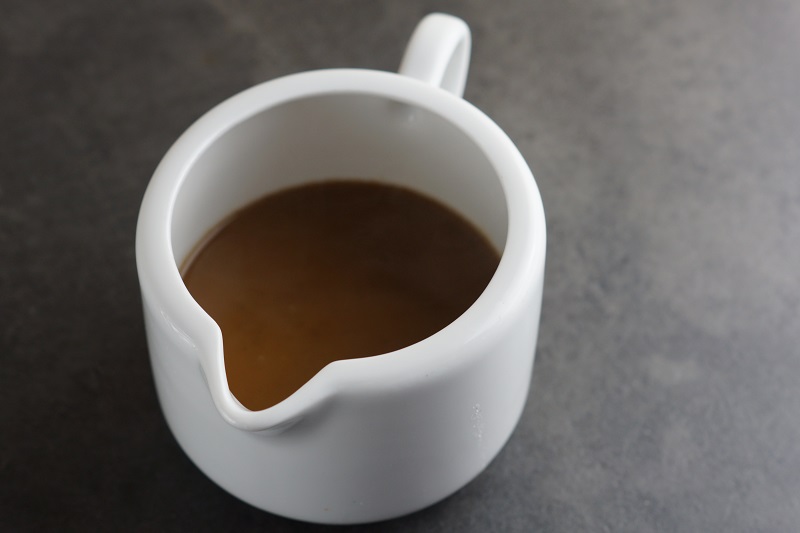
- Here, the sauce is made from the drippings of the lamb. The reason I let it cool a bit first is that the fat settles on top of the drippings, making it easy to remove.
- I went all in on the lamb flavor and used the fat instead of butter for my roux-based sauce. Of course, you can "just" use butter or oil.
- Melt the fat over medium-high heat in a saucepan/small pot. I used 9 out of 14 on my stove.
- Once melted, add the flour and whisk it hard to distribute it well. Let it simmer for 2-3 minutes to cook the flour taste out of the sauce.
- First, add milk while whisking vigorously to avoid lumps. Then add the drippings (use stock/broth if you don't have any), and let it simmer for a couple of minutes, stirring regularly.
- Now add the cream and browning.
- Let it simmer for a couple more minutes and then season the sauce to taste:
- Start with salt and pepper, a bit of sweetness (sugar/red currant jelly), a little vinegar, and lemon juice. Use more of these ingredients if you feel something is missing.
- Let it simmer for a couple more minutes, and the sauce is ready.
- Enjoy.