
Recipe for sphere (pearl) for oysters
Don’t we all dream of finding a pearl in an oyster?
With the help of molecular gastronomy, you can make your guests’ dreams come true.
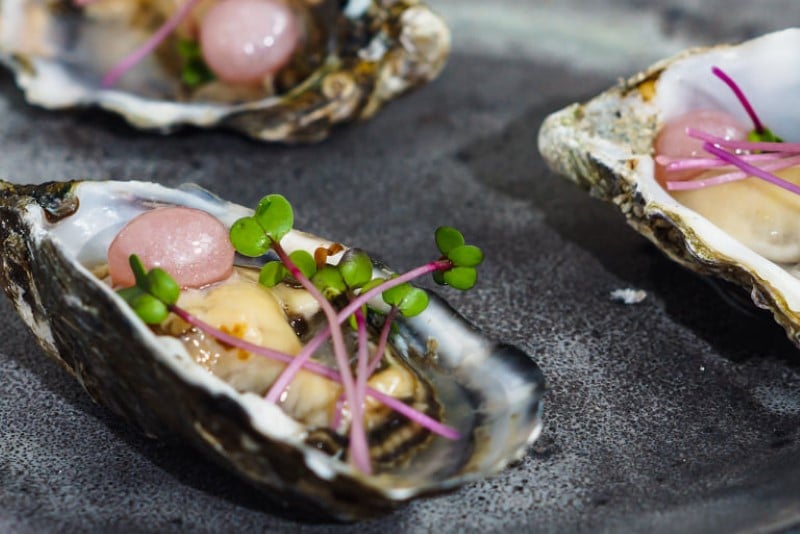
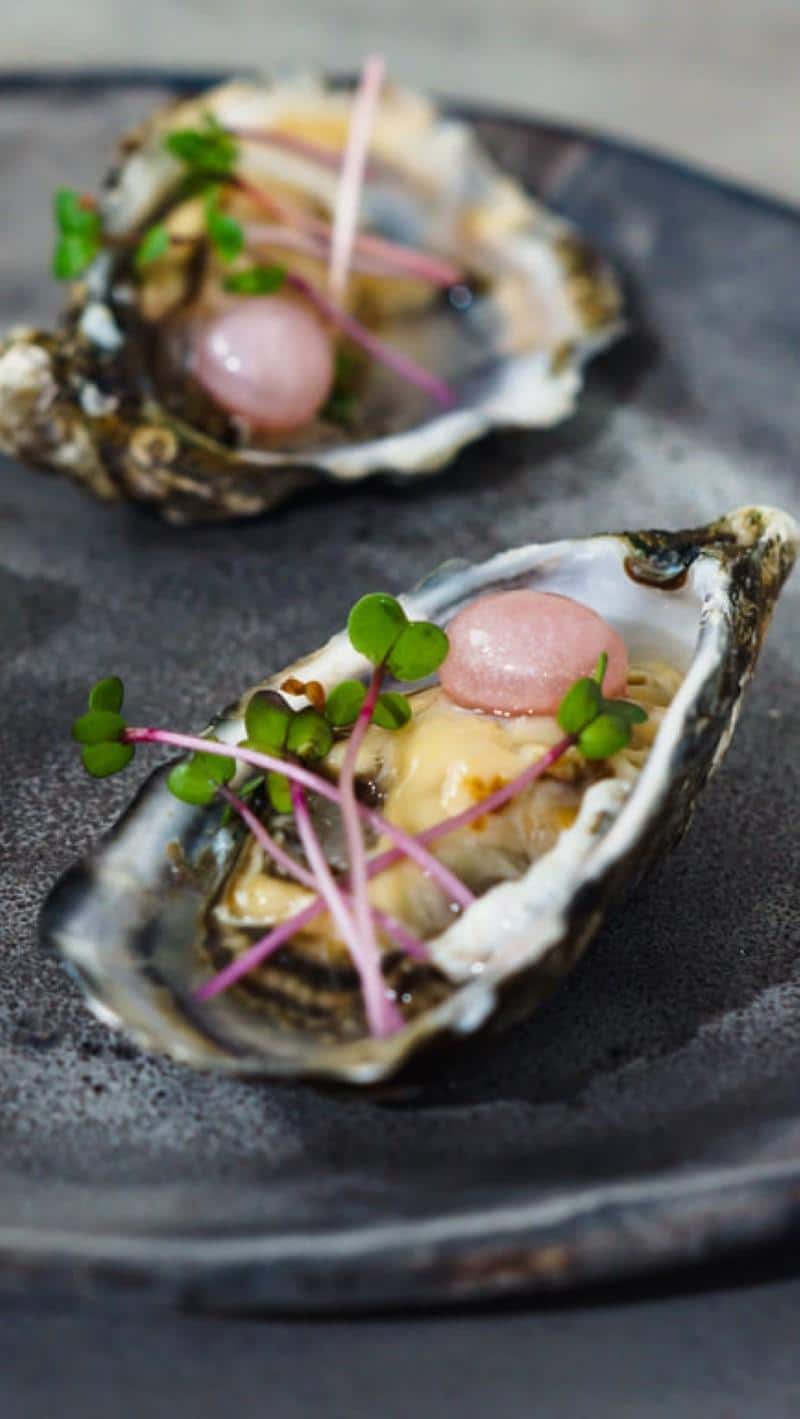
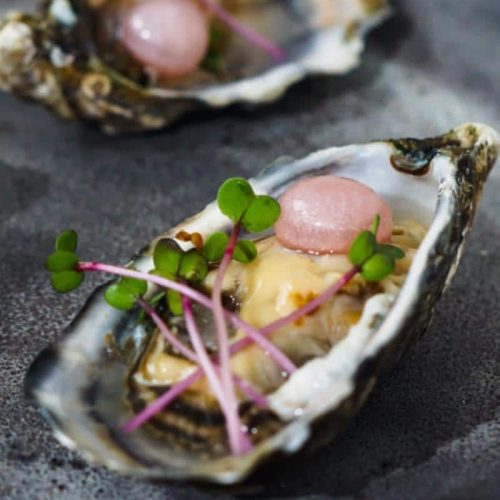
Here, we’ve created a sphere of a fine vinegar and sugar syrup, which is delightfully tangy and rich in the mouth, pairing perfectly with an oyster.
The classic preparation of oysters typically includes white wine vinegar, shallots, lemon juice, and sometimes Tabasco sauce. Our version with the oyster, the sphere, and a bit of microgreens on top provides almost the same flavors, and with the surprising pop when you bite into the pearl, you have an excellent option for a delicious starter or appetizer.
The recipe was developed by Githa Bennorth, a cookbook author and culinary developer. These spheres were created in connection with a GastroFun PREMIUM film shoot.
Sphere (pearl) for oysters
Equipment
- Immersion Hand Blender
- Bowl
- Silicone Mold
Ingredients
Perl for oysters
- 50 gram Vinegar an edible rose vinegar was used here
- 100 gram Sugar Syrup 50% sugar, 50% water
- 600 mg Garnish Glitter shine, pearlescent dust
- 37 gram spring water or demineralized water
- 5 gram Calcium Lactate
- 400 mg Xanthan Gum
Sodium alginate bath
- 5 gram Sodium Alginate
- 1 l spring water or demineralized water
Calcic bath
- 6.5 gram Calcium Lactate
- 1 l spring water or demineralized water
Instructions
Sodium alginate bath
- Add sodium alginate to the spring water. Use an immersion blender to blend the liquid, this can easily take up to 2 minutes. The goal is to dissolve the powder.
- Let it stand for 24 hours so the air evaporates.
Oyster pearls
- Mix vinegar, sugar syrup, and spring water in a bowl/immersion blender glass.
- Then add calcium lactate, pearlescent dust, and Xanthan Gum. Make sure it is poured in the same spot in the middle of the glass.
- Take your immersion blender and see if you can encapsulate all the powder with it at the top of the liquid and blend. Blend a lot at the top in the beginning, and then continue downward afterwards. The goal is to dissolve the powder, and this can easily take up to 2 minutes.
- The goal is to avoid air in the liquid, so let it stand for at least 12 hours so the air evaporates.
- Pour the liquid into a silicone mold. Here this silicone mold was used, which is flexible and can be used for freezing.
- Place the silicone mold in the freezer and let it sit for a couple of hours.
- Take the pearls out of the silicone mold and place them in the sodium alginate bath.
- They should be in the liquid for about 3 minutes (depending on size) and use a spoon to stir among the spheres so they do not touch each other.
- Prepare a bowl with plain water beside it. When the pearls are ready, use a small slotted spoon to remove them and place them in the water bath.
- When taking them out of the water, there might be a small amount of "tails" sitting on the pearls, which should be gently removed with fingers.
- Serve immediately.
Notes