
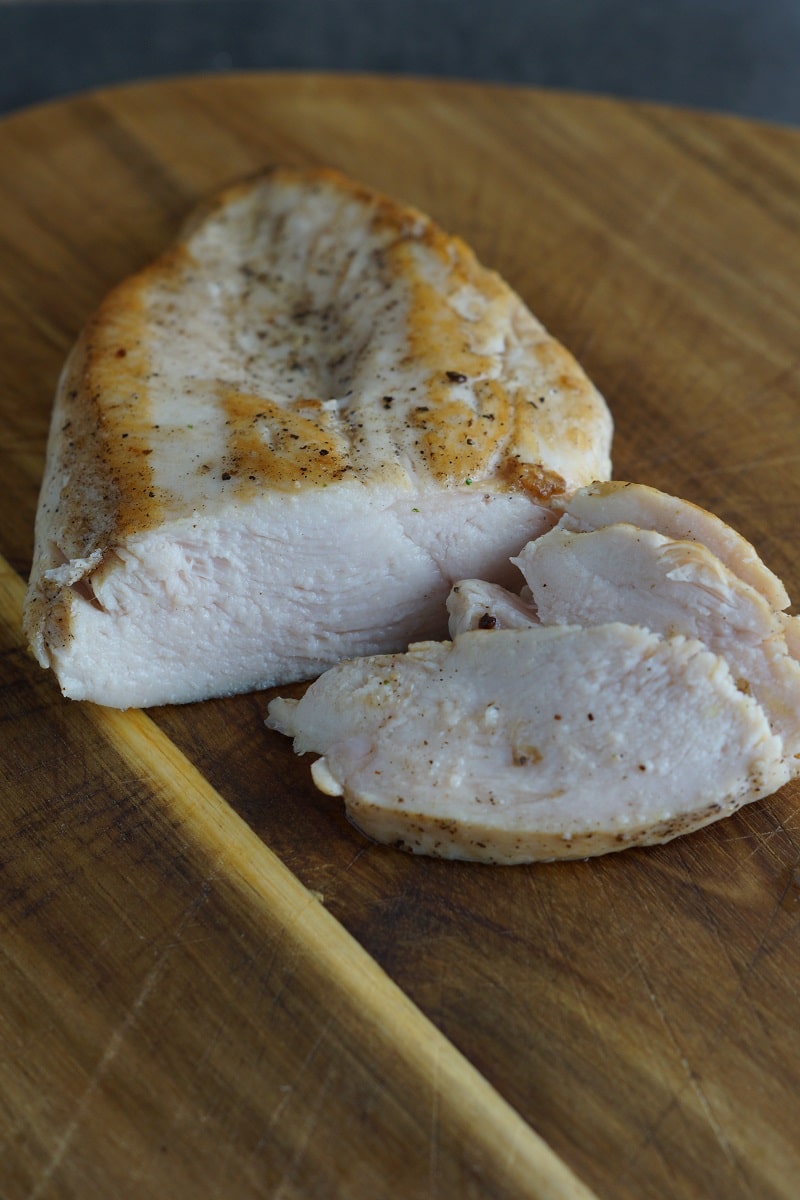


Recipe for sous vide chicken breast
Sous vide chicken breast. We Danes are absolutely crazy about chicken, and with good reason! Chicken is cheap, it’s easy to work with – and it tastes absolutely amazing.
This might be the juiciest chicken you’ve ever tasted! With the sous vide method, you are guaranteed a perfectly cooked piece of chicken – every time.
Here, I provide you with the method, and we’ll also take a closer look at why you should never use water-added chicken breasts when working with sous vide.
The advantage of chicken breast in sous vide
I can hardly count how many times I’ve roasted a really dry and boring chicken breast fillet. I also can’t count how often I’ve been served it by others, and I think it’s something most people can relate to.
Sometimes you get very surprised by how quickly the chicken breast actually cooks. 100% pure chicken is just easier to overcook than the “neutral-marinated” version (let’s call a spade a spade: water-pumped).
Sous vide times and temperatures for chicken breast
When we work with sous vide, it’s all about temperature and cooking time. As for the time, it doesn’t really matter if the meat gets five, ten, even twenty minutes “too long”, so it’s perfect if you generally have a hard time controlling the cooking time.
When we make chicken breast in sous vide, we use significantly lower temperatures than when we use traditional cooking methods. This might prompt some to ask: “What about salmonella and the like?”. I can understand that, but fortunately, it’s not something to worry about – as long as you don’t use water-added chicken breasts.
Good hygiene for sous vide chicken breast
Regarding salmonella, the official recommendations are that chicken should have a core temperature of 75 degrees Celsius to eliminate the risk of salmonella poisoning. This doesn’t sound very sous vide-friendly, as we usually use much lower temperatures in sous vide.
However, there is no need for concern! Here’s why: Cooking in sous vide takes much longer than traditional cooking. You can actually cook chicken at as low as 57 degrees, and the salmonella bacteria still won’t survive – primarily because the bacteria are exposed to the heat for much longer than when you roast or boil the chicken. However, it is important that you use 100% pure chicken and not water-added chicken.
Water-added chicken vs. 100% pure chicken
When chicken is cooked using the sous vide method, we use only 100% pure chicken. You should steer clear of anything labeled “water-added” or “neutral-marinated.”
Water-added chicken is brine-injected. This means there are lots of small holes in the meat. It’s not a problem to kill any potential salmonella bacteria if they are on the surface. The problem arises when these bacteria have the opportunity to get inside the meat. Here it will take longer for the heat to reach the bacteria. What makes sous vide chicken breast safe, as mentioned, is the longer cooking time.
Sous vide chicken breast sear
I could almost talk from here to tomorrow about all the benefits of sous vide, but there is one disadvantage: Namely, that chicken breasts don’t have any sear when they come out of the water bath. We need to add that afterward. We can probably agree that this little extra step is quite manageable!
You can sear chicken breasts in various ways: You can use a regular frying pan, a grill pan, a gas grill (or any other kind of grill), and you can even use a blow torch. The latter is pretty great for more “complicated” cuts with a very uneven surface (e.g., flank steak), and I’ve actually used it quite a bit for chicken breast as well.
I usually use ghee for frying, but you can also use a 1:1 mix of butter and oil. The advantage of ghee (clarified butter) is that the frying temperature is higher. A high temperature is super important because we want to give the meat as little time as possible. The meat is already cooked and ready to eat, so it’s just the surface that needs a searing hot kiss!
Accompaniments for sous vide chicken breast
There are a lot of things that pair well with chicken. That’s probably one of the reasons why chicken is so popular. If you want something light and fresh, you can make a really delicious salad, perhaps with baba ganoush. Salt-baked cabbage could also be an idea. If it’s grilling weather, I can recommend grilled cabbage with berry sauce or charred leeks with salsa romesco. You can also make smashed potatoes and tzatziki.
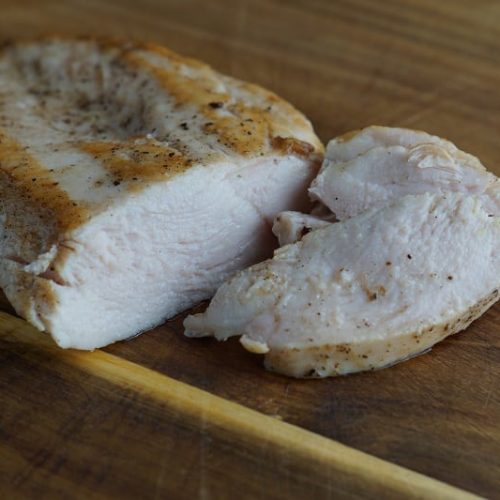
Sous vide chicken breast
Equipment
- Sous Vide
- Grill (optional)
- Frying Pan (optional)
- Gas Burner (optional)
Ingredients
- 4 pcs. Chicken Breast
- Salt To taste
- Pepper From grinder. To taste
Instructions
- Season the chicken breasts with salt and pepper.
- Vacuum pack the meat - preferably in bags with two pieces at a time.
- Pour lukewarm water into the sous vide machine (this shortens the heating time).
- Set the machine to 59 degrees Celsius (138 degrees Fahrenheit). Initially, I always set the temperature to 62 degrees, and since then I have alternated between 61 and 60 degrees. This time I decided to try 59 degrees, and it yielded a noticeably juicier piece of chicken - I have actually also seen some set the temperature at 58 degrees.
- Place the vacuum-packed chickens in the now 59-degree Celsius water.
- Cook the meat for 1 hour and 15 minutes.
- Take the fully cooked meat out of the bag and pat it dry - preferably with a clean tea towel or paper towel. I like to buy in bulk when chicken is on sale, and then I "sous vide" all of it at once. The chicken that will not be eaten on the same day is immediately frozen after cooking (and still in the vacuum bags). That way, there is delicious, juicy chicken ready to be thawed on a busy weekday.
- Before the chicken breasts are ready for serving, they need a bit of a delicious sear. Chicken breast fillets can be a bit tricky when it comes to searing because they are uneven, making it difficult to get a uniform sear. Since the meat is already cooked, it's also important not to give it too much sear (and thus further cook it), so the meat becomes dry. Here are a few suggestions on how you can sear the meat: Grill. The meat should be grilled at the highest possible heat. First, brush the meat with a bit of neutral oil before putting it on the grill - this helps to bring up the temperature so the meat gets a sear - even on surfaces that don't directly hit the grill.Blowtorch. A crème brûlée torch can actually also be used to sear your meat!Pan-seared in ghee. Ghee (clarified butter) can tolerate higher temperatures than butter alone - without burning.Pan-seared in oil/butter. First, add a neutral oil to the pan and heat it up. When the oil is hot, add the meat along with the butter.
- Serve your perfectly cooked chicken with your favorite sides and enjoy that you've cracked the code to delicious, juicy chicken breast meat 🙂