


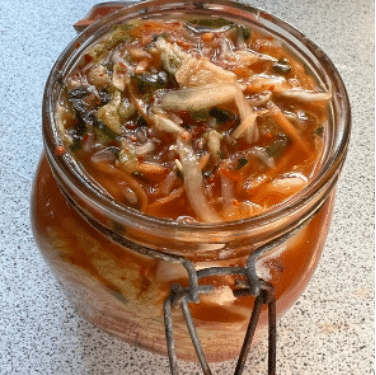
Unique to Korean cuisine is kimchi – a fermented, spicy napa cabbage, eaten as is or incorporated into Korean dishes. It can be bought, but it's more fun to make it yourself.
Recipe for kimchi
Kimchi, a culinary masterpiece from Korean cuisine, has been a cornerstone of Korean gastronomy for centuries. This fermented delicacy is more than just spicy napa cabbage; it is a taste of Korea’s history and culture. Although kimchi can be bought pre-made, homemade kimchi offers a unique satisfaction. Making your own kimchi is not just a culinary activity, but a deep experience that opens up a world of flavors crafted by your own hands. Read on to discover how you can bring this traditional Korean treasure into your own kitchen.
Servings: jar
Kimchi
Unique to Korean cuisine is kimchi – a fermented, spicy napa cabbage, eaten as is or incorporated into Korean dishes. It can be bought, but it's more fun to make it yourself.
Ingredients
- 1 pcs. Chinese Cabbage about 1 kg - remove the thick outer cabbage leaves
- 1 l Water
- 70 gram Salt coarse or sea salt
- 25 gram Table Salt to sprinkle
Kimchi pasta
- 4 gram Rice Flour optionally, grind some jasmine rice in a coffee mill
- 90 gram Water
- 35 gram Gochugaru Korean chili flakes
- 135 gram China radish julienne
- 5 gram Sea Salt finely
- 15 gram Fish Sauce
- 10 gram Shrimp Shell smoked and dried Greenlandic - ground into flour
- 25 gram Chives or wild garlic, cut into strips
- 35 gram Carrots julienne
- 10 gram Garlic finely chopped
- 10 gram Fresh ginger finely chopped
- 10 gram Cane Sugar
- 20 gram Onion blended or finely grated
Instructions
- Cut the napa cabbage into quarters and rinse it under running water. Ensure the stem remains intact.
- Dissolve the coarse salt in water in a large bowl (dissolve the salt in 100 ml of warm water and then add it to 900 ml of cold water). Dip the cabbage in the saltwater one quarter at a time and place them in a container for further salting. Take a bit of coarse salt and rub it over the thick white part of the cabbage. Gently open each leaf and sprinkle salt over the thick white part. Repeat this for the rest of the cabbage. Save the brine from soaking for later use.
- Put the salted cabbage in a large plastic bag (cut side of the cabbage facing up), and pour the brine from step 2 into the plastic bag, seal it, and keep the cabbage submerged in the saltwater. Set the cabbage aside for 6 hours to pickle. Turn the cabbage upside down every 2 hours.
- Once the soaking process is complete, rinse the cabbages under running water, especially the thick white part of the cabbage, to get rid of the salt. Place them in a colander and let them drain for 1 hour
Kimchi paste
- Mix rice flour with water in a pot and bring it to a boil over medium heat for 5-8 minutes until it thickens. Once the rice mixture is cool, place it in a bowl and mix it with the Korean chili flakes and shrimp powder
- Place the radish in a large mixing bowl with fine sea salt, fish sauce, and salted shrimp. Let it stand for 10 minutes for the radish to salt down. Add Korean chives, carrots, chopped garlic, chopped ginger, sugar, finely chopped onion, and the Korean chili flake mixture from step 5. Mix them well, and the kimchi paste is made and ready for use
- Place a quarter of cabbage on a plastic container and spread the seasoning over each leaf. (You only need to season one side of the leaf.) Repeat this step for the remaining three quarters of cabbage. Do not pull the cabbage leaves off the stem; leave them attached to keep it together
- Place the kimchi in an airtight container (and put the lid on). Let it sit at room temperature for 24 hours, then move it to the refrigerator. You can start eating it when it has cooled, but ideally, wait another 3-4 days to allow it to develop more flavor.
- Kimchi can keep for a long time in a sterilized pickling jar
Notes

