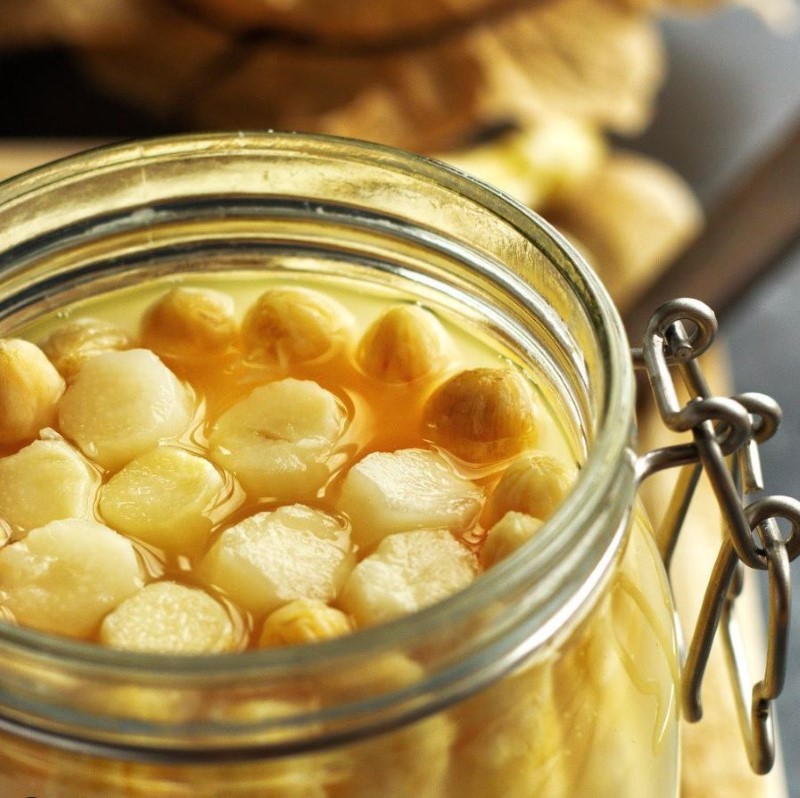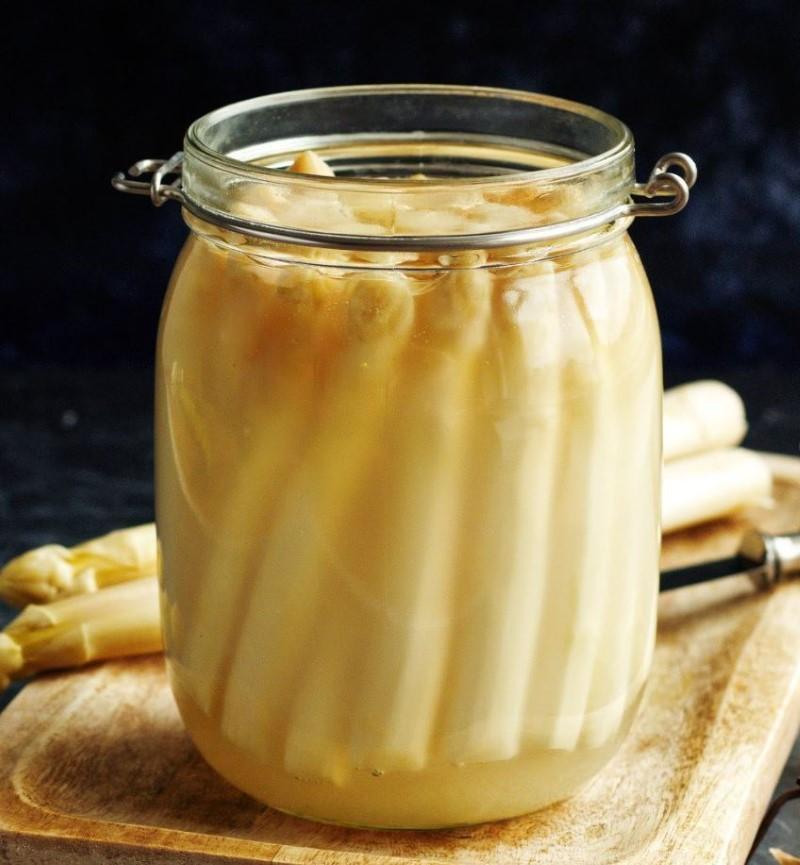

Recipe for fermented asparagus
As mentioned, the season for asparagus is quite short. By fermenting asparagus, we can enjoy the white gold from the Danish fields for longer.
So, we ensure to have a delicious supply for the less exciting seasons.
You might be familiar with sauerkraut and kimchi, where cabbage is massaged with salt to release the cabbage’s liquid. This recipe with asparagus uses a brine.
If you want to delve even deeper into fermentation, I highly recommend the two books Fermentering and Fermentering 2.0 from Aarstiderne.
They explore the depths of fermenting and the many stories of fermentation.
It’s fascinating reading, I can reveal.

Recipe for fermented white asparagus comes here
Equipment
- Cutting Board
- Chef'S Knife
- Canning Jar
- Pot
Ingredients
- Asparagus
- 30 gram Salt without iodine
- 1 l Water
Instructions
- Rinse and peel the asparagus, and cut or snap off the woody ends.
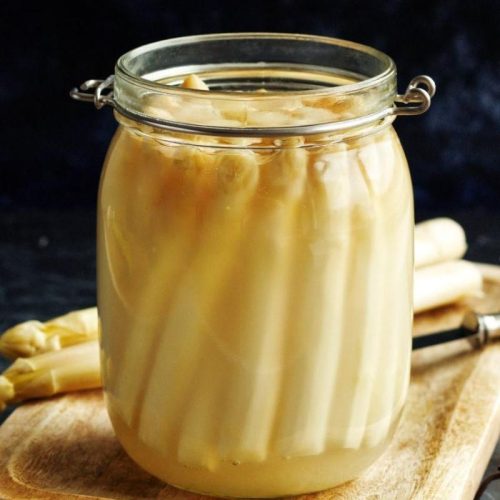
- Trim your asparagus so they can stand upright in the jar you choose to use (I recommend a clamp jar).
- There should be about 3 cm of free space up to the lid.
- Make sure to pack them tightly and snugly in the jar.
- Boil 1 liter of water with 30 grams of salt (preferably salt without iodine).
- Let it cool down and then pour it over the asparagus.
- Place a cabbage leaf on top of the asparagus as a lid, ensuring they are constantly submerged in the brine.
- Close the lid of the clamp jar, and now place it at room temperature, about 20 degrees Celsius (68 degrees Fahrenheit), in the shade/darkness without direct sunlight.
- Open the lid once a day for about the first week to release the pressure that builds up in the jar.
- After 1 week, it is no longer necessary to open the jar every day.
- You can then do it just occasionally.
- After about 10 days, they are ready.
- Of course, this depends on the temperature.
- If they are kept warm, the process goes quickly, but that does not necessarily mean the flavor is perfect.
- If they are kept too cold, the process will take longer.
- Taste them periodically to monitor the process.
- When they are finished, they should taste salty and sour.
- Use clean spoons/forks/tweezers when taking anything from the jar.
- Now place them in the refrigerator to stop the process (or, more accurately, slow it significantly).
- If you notice the brine overflowing when you open the jar during the first week, it is entirely normal.
- A good tip is to have some extra brine on hand if all the asparagus are not covered.??