
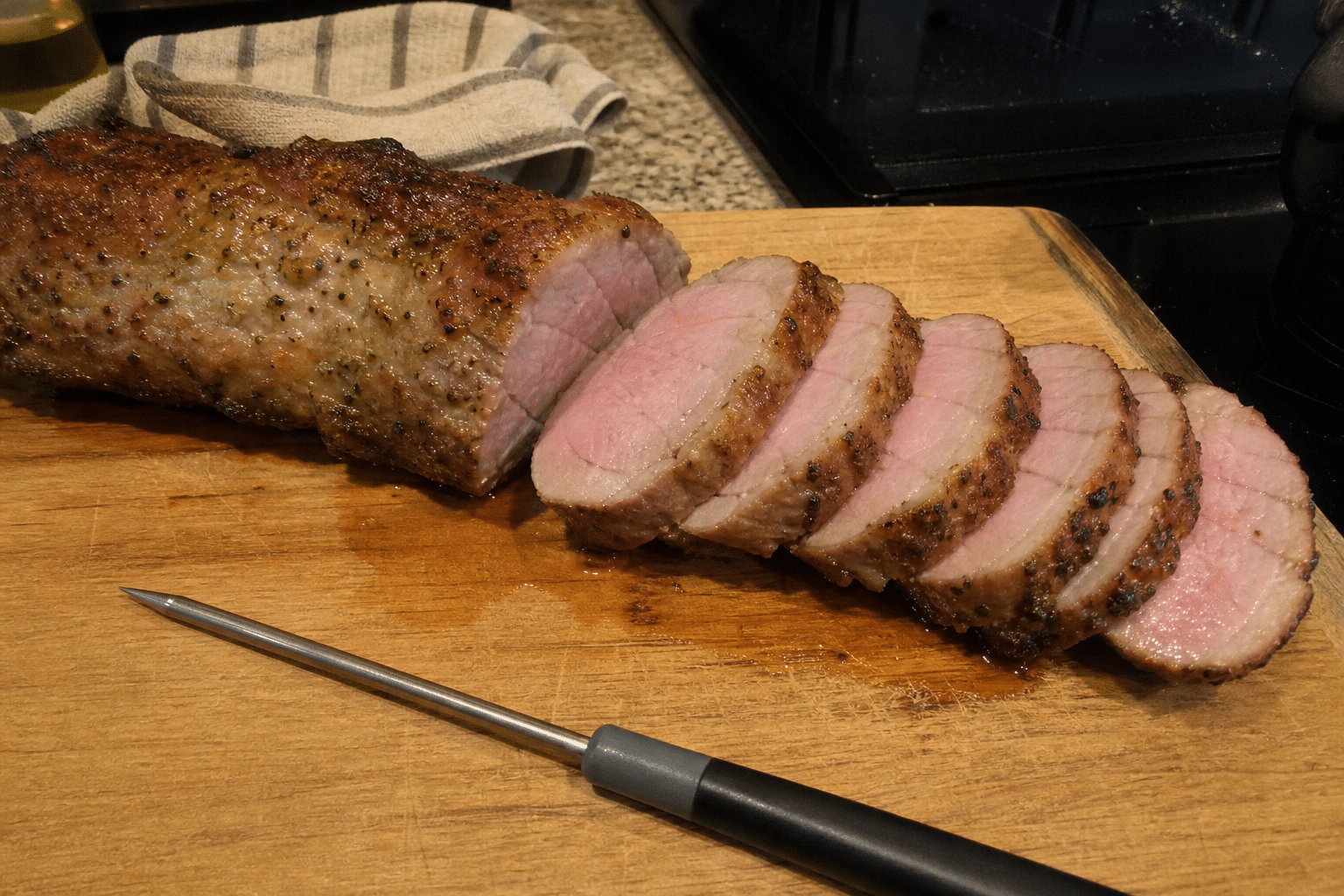

If you have been cooking pork until it turns completely white and firm, you have been overcooking it. The USDA changed its safe minimum cooking temperature for whole pork cuts from 160°F (71°C) to 145°F (63°C) in May 2011. Pork cooked to that temperature can still carry a slight pink blush at the center and be entirely safe to eat.
The result is meat that is juicier, more tender, and far better on the plate than the dried-out chops most home cooks were taught to serve.
The 2011 rule change and what it means
The USDA’s Food Safety and Inspection Service announced in May 2011 that whole cuts of pork, including chops, roasts, and steaks, are safe at 145°F (63°C) when followed by a 3-minute rest off the heat. The previous threshold was 160°F (71°C), a temperature that reliably eliminated pathogens but also reliably dried out the meat.
At 145°F with a 3-minute rest, the internal temperature holds steady or continues rising, which is sufficient to destroy harmful bacteria. USDA Under Secretary for Food Safety Elizabeth Hagen said at the announcement, as reported by CIDRAP: “With a single temperature for all whole cuts of meat and uniform 3-minute stand time, we believe it will be much easier for consumers to remember and result in safer food preparation.”
Read more: The best homemade meatloaf, with a tangy glaze and a texture that actually holds together
Why color tells you nothing
A pink interior in a cooked pork chop or roast does not mean the meat is undercooked. According to Michigan State University Extension, appearance is not a reliable indicator of safety or risk. Color in cooked pork depends on the cooking method, added ingredients, and other factors. Cured pork products like ham will stay pink regardless of how long they cook.
The only dependable tool is a meat thermometer inserted into the thickest part of the cut, away from bone. A reading of 145°F (63°C) confirms the meat is both safe and still moist.
The 3-minute rest is part of the safety standard
The rest period is not a suggestion. After pulling pork from the heat at 145°F (63°C), the meat needs three minutes of standing time before cutting. During those minutes the internal temperature holds steady or keeps climbing, completing the pathogen kill. Those same three minutes also let the juices redistribute through the cut, which is why properly rested pork tastes noticeably better.
Read more: The perfect roast chicken with crispy skin and herb butter, done in under 90 minutes
Cutting immediately after pulling from the heat shortchanges both food safety and the quality of what ends up on the plate.
Ground pork is a different rule
The 145°F guideline covers only whole muscle cuts: chops, loins, roasts, and steaks. Ground pork must still reach 160°F (71°C) throughout, with no rest time required.
Read more: How to roast a whole turkey for Thanksgiving and get it right every time
Grinding distributes surface bacteria through the entire mass of the meat. What might be a surface-only contamination risk in a whole cut becomes an interior risk once the meat is ground. The same reasoning applies to ground beef and ground turkey.
A note on trichinosis
One reason pork once required high cooking temperatures was trichinosis, a parasitic illness caused by the roundworm Trichinella. The disease has become rare in the United States. According to Michigan State University Extension, only 66 trichinosis cases were reported across all sources between 2002 and 2007, with 43 of those linked to pork.
How to hit 145°F reliably
- Use an instant-read or leave-in thermometer; visual cues are unreliable
- Insert the probe into the thickest part of the cut, not touching bone or fat
- Pull the meat when the thermometer reads 145°F (63°C) and rest for 3 minutes before cutting
- A faint pink tinge at the center, especially near the bone, is normal and safe at this temperature
- For bone-in roasts, probe close to the bone but not touching it; bone conducts heat and can produce a falsely high reading