

So, we’ve reached July, and that means we’re well into the official Danish summer.
The month of July is named after none other than the Roman Emperor Julius Caesar, but in the old days, we Danes used to call it, among other things, “The Worm Month.” The reason for this might be that during this month, people often saw adders basking in the baking sun, which traditionally characterizes July.
And that’s exactly how we prefer to see July: Sunny and with long bright nights, summer vacation with the kids, beach weather, and not least: Lots of lovely food on the terrace with all those we love the most.
And it’s precisely the food we will focus on now. Just as there are certain activities we associate with July, it’s also the month when lots of fantastic new Danish produce hits the shelves.
Advantages of Eating Danish Seasonal Produce

There are several advantages to eating Danish produce when it’s in season. For one, it is far better for both the environment and your wallet, and the produce is significantly more flavorful. The more flavorful the produce, the more prominent a role it can take on the plate.
A good example of this is the potato. New potatoes require nothing more than to be accompanied by something as simple as a bit of butter, some herbs, and asparagus – or a tasty fish from the grill.
It’s a different story with the “old” potatoes, which are usually mashed and/or drowned in much heavier and stronger gravies and sauces – as we do in the winter months.

Furthermore, it’s an easy way to introduce more variety to the dinner table – without having to think too much about it. As we all know, humans are creatures of habit, and we generally love our routines and sticking to what we know. If you’re making lasagna, you might typically stick to a classic version with minced beef, tomato sauce, carrots, onions, béchamel sauce, and lasagna sheets, but here it might be a good idea to grate a whole zucchini into the meat sauce when it’s in season anyway. You can also try omitting the lasagna sheets altogether and replacing them with vegetable ribbons made from zucchini or eggplant.
One thing is that it’s a bit dull to eat the exact same dishes over and over again. You will, therefore, experience much more flavor in your daily meals. Additionally, Danish produce is known for being of particularly good quality.
Another thing is that our bodies benefit from nutrients from different sources. Meanwhile, produce is at its healthiest while in season. It stands to reason that the shorter the path from nature to plate, the fresher the food is, and the more vitamins and minerals are retained.
If you want to do something good for the environment and Danish producers, here’s yet another reason to indulge in Danish seasonal produce.

Many of the choices we make daily are based on routines and habits: Whether you take the car, the bus, or the bike, whether you sort your waste, whether you use the dryer or the clothesline, and whether you make sure to avoid food waste. By basing your purchases on what’s in season here at home right now, you are helping to reduce the CO2 budget.
Additionally, you help keep the “gears” going here at home: Historically, Denmark is a true agricultural and fishing nation, and we are still some of the best (if not the best) in the entire EU. This is due to several factors, including our high-quality standards and favorable growing conditions. Especially our fisheries are extremely versatile. By buying Danish meat, fish, and vegetables, you help producers continue the fantastic work they do here at home – especially in the area of organic farming.
Now that you are hopefully convinced, you surely want to know what to go for in July. Let’s take a closer look now.
The Danish Produce in July
In the vegetable section, for example, you will find Danish cucumbers, carrots, kohlrabi, zucchini, corn, and fennel. Among berries, you can find raspberries, blackcurrants, and blueberries, not to mention the sweet Danish strawberries that can bring even a grown man to his knees!
Your fishmonger is ready to hand over lots of fish and other delicacies: including flounder, plaice, crab claws, and mullet, so it’s time to get going.
Below, we have highlighted some of our personal July favorites, so grab a pen and paper – or your smartphone. There’s plenty of background info, fun facts, and recipes waiting so you’re well-prepared for your next shopping trip.
New Potatoes

We have already mentioned the potato, and it’s not entirely random: Most of us can recognize the pleasure of biting into the wonderful and extra firm new potatoes. New potatoes are particularly firm in texture because they contain less starch and more water than the “old” potatoes.
Did you know, by the way, that new potatoes are actually unripe and old potatoes are ripe? It’s not often we prefer unripe vegetables, but this must be the exception! And yes, the potato is certainly a vegetable – at least botanically. The reason they do not count as vegetables according to official dietary guidelines is that they contain “too much” starch and too few bioactive substances.
This does not mean that potatoes are not healthy! Potatoes contain plenty of vitamins, and they are one of the foods that fill you up the most in relation to their calorie content.
If you eat the potatoes with the skin on, you will get plenty of fiber and B and C vitamins. In fact, it only takes 250 grams of potatoes to meet your daily requirement for vitamin C.
How can you use new potatoes?
Potatoes are a hit both for parties and when it needs to be easy during weekdays. New potatoes require very little preparation, and often they just need to be rubbed or scrubbed lightly before being boiled or steamed. You might almost call it sacrilegious to peel a new potato! The skin gives a wonderful flavor and a good bite to the potato, and it also ensures all the health benefits.
New potatoes are very suitable for steaming or boiling in water with lots of fresh herbs like lovage, thyme, or parsley. You can also serve them with truffle butter. If you’re hosting a barbecue evening, you can hardly avoid the classic cold potato salad, which certainly lets the new potatoes shine. There are several benefits to waiting to eat the potatoes until they are completely cooled. When the potato cools, the starch is converted to resistant starch. Resistant starch acts like dietary fibers, meaning it passes unchanged to the gut bacteria. Here, the bacteria can feast on the fibers, which means happy guts and good digestion.
Want to know more about potatoes? In this article, you’ll find everything you need to know about the beloved vegetable, and if you need tips on boiling the perfect potato, you can read here.
More recipes with new potatoes
Strawberries
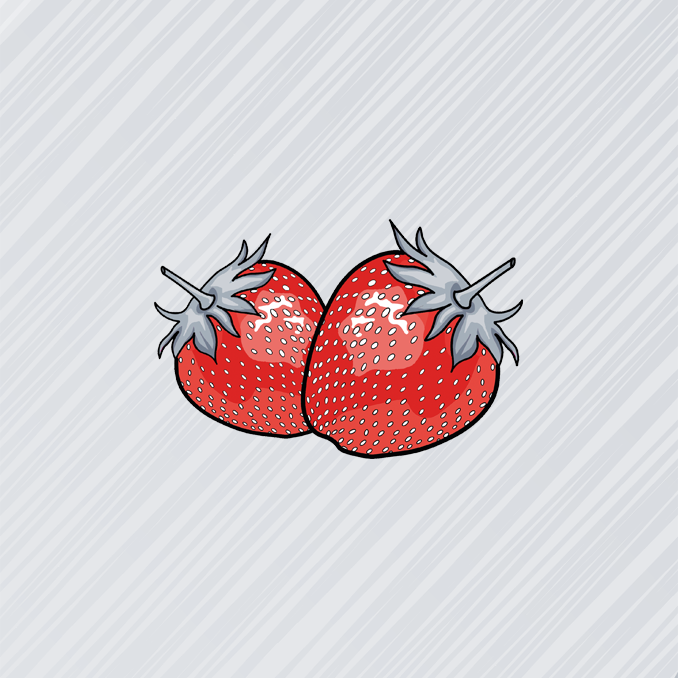
Almost nothing compares to new Danish strawberries! It’s what we Danes associate with genuine Danish summer in the best Morten Korch manner, and it really doesn’t matter whether they’re eaten straight from the plant or whether they’re indulged with a sprinkle of sugar, ice-cold cream, and maybe a bit of milk.
No strawberries can compare to Danish strawberries, and it’s hardly worth buying strawberries until the Danish season begins. The reason Danish strawberries are so much better than those we import is quite simple: Foreign strawberries have a long journey ahead of them before they reach Danish supermarkets, meaning they have to be harvested before they are fully ripe. When the strawberry isn’t allowed to ripen fully on the plant, it doesn’t absorb the many sugars that reside in the plant’s leaves. Foreign strawberries we find in Danish supermarkets are therefore often quite bland in flavor.
Want to learn more about strawberries and their origins? Read here.
How can you use strawberries?
It’s usually in the sweet kitchen that we use strawberries, but they are also ideal for a fresh summer salad, for example, paired with the salty and fatty grilled food.
They’re also perfect for breakfast, for example in a French toast.
If you really want to pamper your guests, you can also make a traditional strawberry tart with a delightful almond base and a layer of crispy chocolate and vanilla cream. Very few can say no to such a slice! Is there a vegan at the table? No problem! You can easily get away with serving a vegan strawberry tart without offending the rest of the company.
Strawberries also go well with meringue. You should definitely try pavlova, which is a meringue-based dessert typically topped with strawberries and lots of fresh berries. Here, you’ll find a pavlova filled with strawberries.
Should the evening be rounded off in a festive manner? Then perhaps it’s time for some cocktails and drinks. A strawberry daiquiri is ideal!
Are you a fan of preserving, or ready to learn it? Then you can, of course, dive into making jam, either the classic strawberry-rhubarb jam or one with strawberries and raspberries.
More recipes with strawberries
Corn
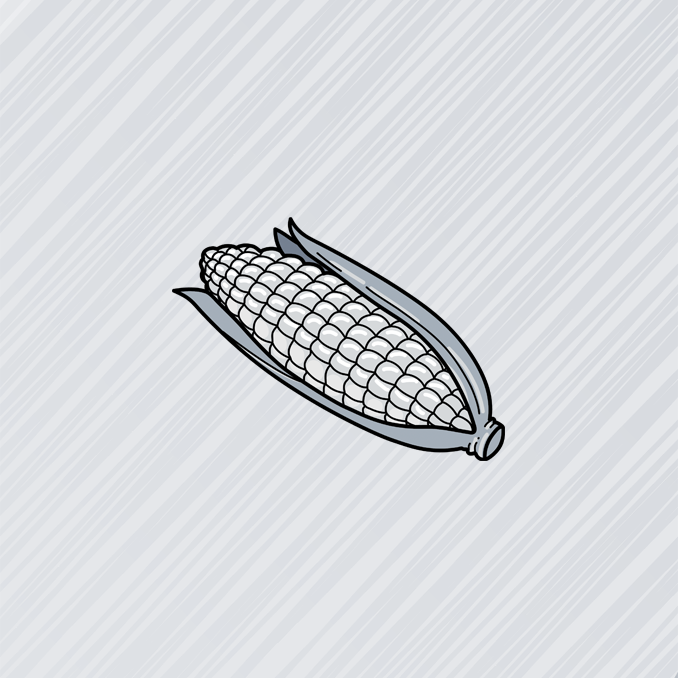
We don’t have to go more than 20 years back in time before corn was definitely not a common sight on Danish fields. Although corn is a pretty forgiving crop, it also requires certain temperatures that the Danish climate could not provide. However, the gradual changes in climate have made the situation different today.
Corn is a crop that is relatively easy for farmers to handle, and the yield is often much higher than it is for other crops like wheat. Therefore, the exotically looking plants now adorn large parts of the country.
But besides being a feast for the eyes, corn also pampers both taste buds and body. Corn is delightfully sweet with a soft, buttery taste that intensifies when cooked, and they’re filled with dietary fiber. Dietary fiber ensures a good feeling of fullness and keeps digestion in motion. In addition, corn is good for circulation since it contains plenty of potassium.
The corn plant originates from southern Mexico, where it has been cultivated for the last 10,000 years. The plant was an essential source of nutrition for the Native Americans. The Spaniards indulged in corn after their arrival in America in 1492 and brought it back to Spain. However, some Spaniards allegedly feared eating corn for fear of acquiring the Indian traits the explorers had developed during their stay in America. They were convinced that the traits must have been caused by corn consumption and not environmental influences.
Yes, those were certainly different times.
How can you use corn?
You can eat corn raw from the cob, but whole corn cobs are particularly suitable for cooking, for example, boiling, grilling, or baking. When corn is cooked, the taste becomes significantly sweeter, and there’s nothing quite like hot corn cobs with a dab of cold butter on top!
As we are well into grill season, it’s naturally ideal to toss the whole corn cobs on the grill. It’s a good idea to leave the husks on as a protective layer for the corn. However, you can also choose to remove the husks, cut them in half, skewer them, and grill them this way. Then you also have a good “handle” for the corn cobs.
If the corn cobs are going on the grill, you can draw inspiration from these grilled corn cobs.
Whether they are to be boiled, grilled, or baked, hot corn cobs are irresistible with a dollop of cold herb butter or a delicious green pesto with a bit of grated Parmesan on top. You can make the traditional green pesto with pine nuts, but you can also make a slightly cheaper version with sunflower seeds, which is still really delicious!
Corn cobs in sous vide, you say? No problem, just check out this recipe.
More recipes with corn
Pointed Cabbage

Cabbage is generally known for having a somewhat sharp and bitter taste, and bitterness is a flavor that requires acclimatization. Therefore, cabbage might not sound like something one would describe as downright delicate, but delicate is precisely what pointed cabbage is.
It’s not without reason that pointed cabbage is known as a good beginner’s cabbage. The taste is very mild, almost pea-like, especially early in the season. The season for Danish pointed cabbage is relatively short, so if you prefer pointed cabbage as mild as possible, you shouldn’t wait too long to buy it.
Besides being incredibly tasty, pointed cabbage is also extremely healthy for you. Despite its low-calorie content, it is packed with dietary fiber, vitamins, and minerals. Only 100 grams of pointed cabbage are enough to meet your daily requirement for vitamin C. Additionally, there is plenty of vitamin K and calcium to be found.
How can you use pointed cabbage?
Cabbage is generally suitable for long cooking, but pointed cabbage is a bit different. Pointed cabbage should preferably be flash-cooked if you don’t choose to serve it raw and finely sliced.
If it is to be cooked, you can strew it, steam it, pan-fry it in butter, or give it a lovely sear on the grill. The latter pairs really well with the typically salty grilled food. You can also try salt-baking it.
If you have a weakness for molecular gastronomy, or if you’re ready to try it, you should definitely try making grilled pointed cabbage served with truffle oil snow, confit potato balls, and salt-dried egg yolks.
More recipes with pointed cabbage

Peas

Hey, what’s up with peas? They’re those little green things that can roll!
And none can compare to the Danish ones. Our peas are nothing less than the best in the world, and we are also large producers of the green, firm pods. The Danish climate is optimal for peas’ growth conditions. Furthermore, Denmark is the only country in the world with a quality regulation that ensures our green gold is always of the highest quality.
Many of us associate Danish peas with summer and childhood. Most of us have probably shelled peas with playmates or family members several times. It’s definitely a snack you have to work for, but the effort is worth it.
How can you use peas?
Fresh Danish pea pods are a classic summer snack between meals, but they can also be shelled and added to salads, either raw or steamed.
You can also use peas for a green speltotto with hazelnuts and lemon juice. It is a recipe that can actually be made all year round, as you can also use frozen peas, but fresh Danish peas are unquestionably the absolute best.
More recipes with peas
Parsley

Parsley is possibly Danes’ favorite when it comes to herbs, and it’s hard to say new potatoes without also saying parsley. Because the two are almost inseparable, many of us probably also associate parsley as something quintessentially Danish. However, it has its roots in the Mediterranean countries.
The taste of parsley is mild and grassy, yet distinctive. It doesn’t overwhelm or overpower, making it a herb that’s hard not to like.
Besides tasting delightful, parsley is said to counteract garlic breath. Whether it’s true or not, you can let it stand the (tasty) test.
How can you use parsley?
Parsley and new potatoes go hand in hand. Whether the parsley is just sprinkled over the potatoes or used in parsley sauce, it perfectly complements the potatoes’ round, mild flavor. Parsley is not the most delicate herb and can therefore withstand being heated.
You can also make pesto or homemade parsley butter, and if you use garlic, parsley might just take the edge off the garlic breath.
More recipes with parsley
Blueberries
There are different varieties of blueberries, but in particular, three of them can be difficult to distinguish from one another:
- Common blueberries, which grow wild here and have a strong stain on teeth and clothing. These are what many Danes would call true blueberries, often only found frozen in supermarkets.
- American blueberries, which are a cultivated variety, particularly large and firm with greenish or whitish flesh. These are often found chilled in supermarkets.
- Bog bilberries, which are not commercially grown but grow wild in the Danish nature. Like American blueberries, these have light flesh.
All three varieties are classified as blueberries, so although some might argue it’s wrong to call American blueberries blueberries, it doesn’t go against the law.
Blueberries are classified as a so-called superfood. They are packed with phytoflavinoids, which protect the plant against bacteria, fungi, insects, and other threats. These properties can have a protective and antioxidant effect on our bodies. These properties supposedly help reduce the risk of cardiovascular diseases and cancer development.
Blueberries are perfect for those of you concerned with eating healthily daily.
The taste of blueberries can be described as sweet, very aromatic, and with a hint of bitterness.
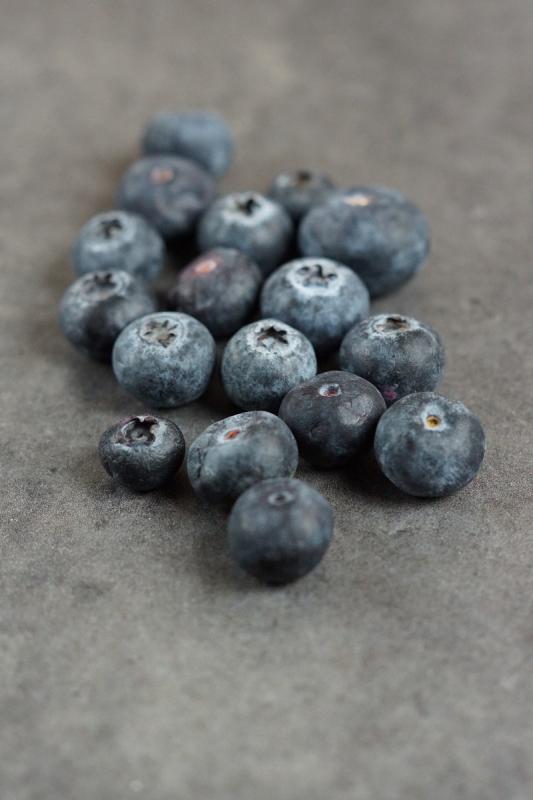
How can you use blueberries?
Blueberries can be eaten as they are, directly from the plant or package. They can be used in both sweet and savory dishes. In salads, they offer a wonderful sweetness, juice, and freshness, and they pair particularly well with feta and fresh spinach.
They’re also ideal for pancake batter or in muffins and cupcakes.
Try incorporating them into breakfast – it’s a real health boost from the start of the day. Maybe this “breakfast parfait” with chia seeds and blueberries could be something for you. They’re generally tasty to sprinkle over oatmeal or chia pudding.
More recipes with blueberries
Plaice
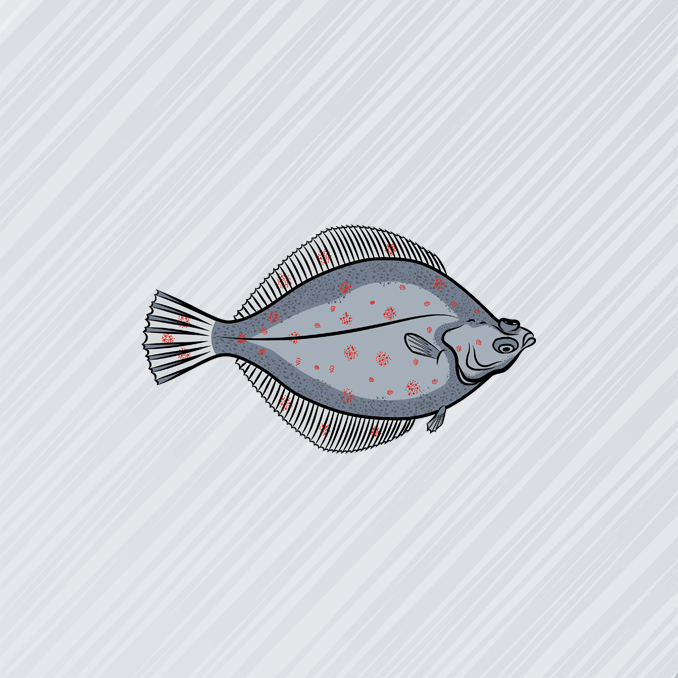
Fish is not so bad!
Denmark is a true fish nation with extremely versatile fishing. Because we can boast so many different, wonderful fish here, there are no really good excuses for not incorporating them more into our kitchens.
July is the season for plaice, and plaice is one of the most popular fish for eating in Denmark. The light flesh is firm, lean, and deliciously mild in flavor. Therefore, it is a good “all-around” fish that offends very few.
There is a lot to gain from buying plaice fresh from the fishmonger, and he is more than willing to clean and fillet it for you.
How can you use plaice?
When you come home with your fresh plaice, you can choose to steam, fry, bread, or grill it – whether it’s whole or filleted.
Some might find it less blasphemous or unfortunate to bread a fresh plaice from the fishmonger, but there is nothing wrong with that. The taste is quite different from the frozen ones you find in supermarkets.
Breaded fish fillet is a classic, but you can also bread a whole plaice! Serve with the season’s new Danish potatoes and parsley, as done here, and the taste of summer is just about home. A classic stjerneskud is also not to be scoffed at.
More recipes with plaice
Crab Claws

Crab claws are certainly not a traditional dish here in Denmark, but hopefully, that can change. But because crab claws are not the most popular here, they are instead exported abroad. It’s a bit of a shame because crab claws taste fantastic! The meat is juicy, mild, and aromatic.
Crab claws are also a cheap and very sustainable choice. Crab fishing is highly environmentally friendly, as it is gentle and does not destroy the seabed. The catch is made using so-called pots, a gentle method in crab fishing. And because fishing takes place close to the coast, and the boat stands still while the pots are emptied, crab fishing requires very little fuel.
If you are interested in knowing more about crabs and shellfish in general, you can read here.
How can you use crab claws?
Crab claws are easy to prepare, and the most common method is boiling. After this, you can choose to serve the claws as they are, so you have to pick the meat out of the claws yourself or you can pick the meat in advance and, for example, arrange it in a crab shell. Serve with a delicious salad and homemade mayonnaise – you can make many exciting variations of mayo, for example with cayenne pepper or with tarragon, saffron, or dill.
You can use crab claws for bisque or soup, and the crab meat acts as a flavor enhancer when making stock. You can also fry them and serve them with a rich shellfish mayo and crispy fries. It’s homemade “fast food” that packs a punch!
More recipes with crab claws
Carrots

Nobody likes a Carrot King, but ordinary carrots are something we Danes absolutely love. They are indispensable in the Danish kitchen and are also the most cultivated vegetable here.
Carrots come in orange, white, purple, and yellow varieties, but it’s definitely the orange one we Danes know best. The orange color comes from the beta-carotene content. If you eat a lot of carrots, the skin will even have a slightly orange-golden hue. The human body stores beta-carotene in fat cells and converts it to vitamin A. Vitamin A is important for the eyes, mucous membranes, and skin, and if you’re a man, it’s also an important part of sperm production.
Carrots are crispy and sweet, and you can snack on them freely. They are filling but with very few calories and are also packed with dietary fiber that keeps the digestion running. Additionally, they stabilize blood sugar and help prevent cardiovascular diseases and bowel cancer.
How can you use carrots?
Fresh and crispy carrots are a real pleasure to bite into, which is why they are also a popular snack in lunchboxes, on the go, or as a simple, healthy, and quick snack at home.
Additionally, carrots can be grated, for example, into meat sauce in lasagna, boiled, fried, or baked – and they are a prime example of what sous vide can do for vegetables!
Have you ever tried serving glazed carrots? They truly complete a roast beef and potato gratin. Also use carrots for sofrito or