
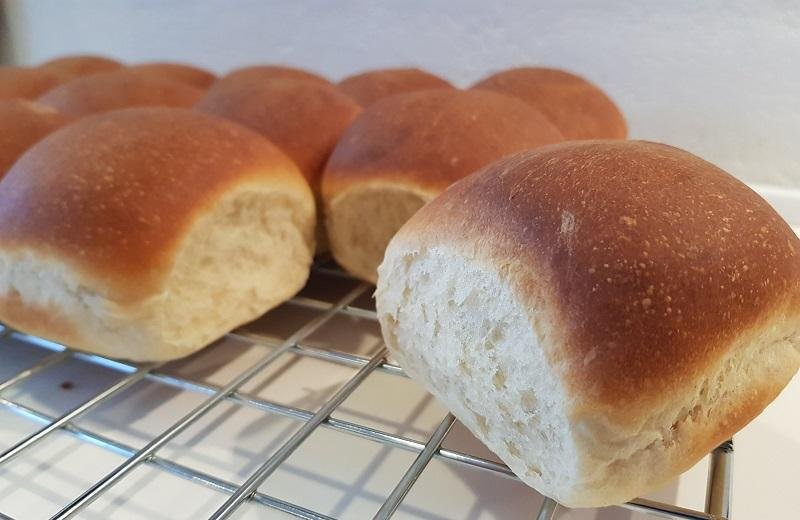

When do you eat “hveder” and why do you eat “hveder”?
“Hvedeknopper,” “hveder,” “warm hveder” – a beloved treat by many names. What they have in common is that “hveder” on Great Prayer Day is a cozy and homely tradition for many Danes.
The thought of warm wheat buns with butter can soften most hearts. Perhaps traditions around food are easier to maintain than others. In any case, warm “hveder” are still sold in supermarkets and by pastry chefs around Great Prayer Day. Many people also enjoy baking their own warm “hveder.”
Why do we eat warm “hveder”?
Great Prayer Day was introduced in the 17th century by a Danish bishop, making it a distinctly Danish holiday. It wasn’t until the mid-1800s that warm “hveder” truly became a tradition. The day’s original purpose was to consolidate various penitential and prayer days into one large prayer day. Great Prayer Day was announced the evening before with church bells. Until the services the next day were over, people were to fast and refrain from working.
This also applied to bakers, who would bake the so-called “hvedeknopper,” or wheat buns, the day before, which people could purchase in the evening. The wheat buns could then be warmed up the next day when the bakery was closed. However, it gradually became common to eat the freshly baked, warm “hveder” already on the evening before Great Prayer Day. A tradition that has survived to this day.
“Hveder” sell like hot cakes
The holiday and the tradition of warm “hveder” is over a hundred years old. For many Danes, Great Prayer Day now is merely a minor yet welcome extension of a spring weekend. But we still faithfully eat the warm “hveder.”
Although there are no exact figures, the Danish Confectioners, Bakers, and Chocolatiers Employers’ Association estimates that around two million warm “hveder” are sold each year in Denmark around Great Prayer Day. Even though the custom is a couple of hundred years old, Danes still love to eat the light, soft buns in connection with Great Prayer Day.
What about health?
Sometimes you have to face the fact that traditions do not go hand in hand with progress. One of the newer trends in health and diet is to avoid gluten-containing foods. Wheat, in particular, has been designated as a culprit in this dietary approach, much to many people’s dismay. They are caught in a dilemma between health and taste. And this is quite understandable; the smell of freshly baked wheat bread is utterly delightful to most people.
The Christian religious element has indeed seeped out of the tradition around Great Prayer Day and the warm “hveder.” But slowly, a new form of religiosity has crept in – at least regarding the buns. Approaches to diet, and not least gluten, can divide opinions among people. And if one advises in one direction or another, there is a risk of causing outrage with the given advice. Either with one group or the other. So, what about health? Well, a realistic piece of advice might be to avoid fanaticism. And above all, to follow dietary guidelines to eat varied. And here, there is indeed room for warm “hveder” the day before Great Prayer Day. And if a serving suggestion is requested, most people enjoy eating them with butter.