
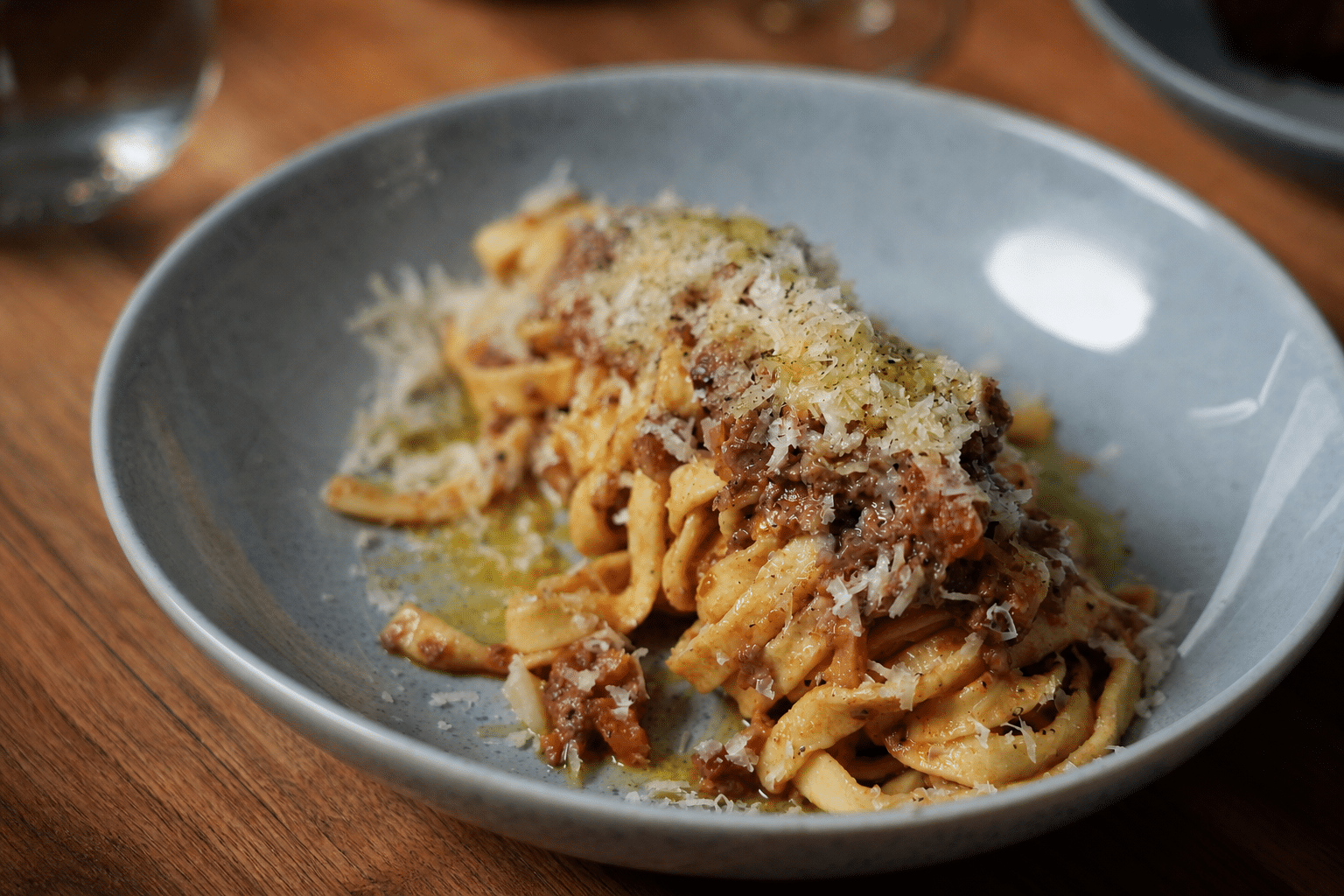

Bolognese might be the most misnamed dish in home cooking. The real thing is called ragù alla bolognese, and it comes from Bologna, in Italy’s Emilia-Romagna region. In 1982, the Accademia Italiana della Cucina worked with Bologna’s chamber of commerce to register a classic version of the recipe – which tells you just how seriously the city takes it.
What most people are actually cooking is a heavy tomato sauce with ground beef, piled over spaghetti. That’s a fine dish. It just isn’t Bolognese. And once you understand what goes into the real thing, the difference is obvious.
What most people get wrong
The pasta. Tagliatelle, not spaghetti. The flat, wide ribbon physically holds ragù in a way that round spaghetti doesn’t. The sauce is thick and meaty, and wide noodles grip it. Thin ones let it slide off.
The beef. Standard grocery store ground beef is too fine and usually too lean. You want coarser-ground beef with real fat in it – flank or shoulder works well. That fat carries flavor and gives the sauce its body. If your grocery store only sells fine-ground, ask the butcher counter for a coarser grind.
Pancetta, not bacon. Pancetta is cured pork belly, but unlike bacon it has not been smoked. That matters: smoke pulls the sauce in a direction it was never meant to go. If you can’t find pancetta at a deli counter or Italian grocer, plain cured pork belly is a better substitute than any bacon.
The milk. I know it sounds odd, but a splash of whole milk added near the end of cooking rounds out the sauce and softens the acidity of the tomatoes. It is the step most home cooks leave out, and for me it makes the clearest difference in the finished dish. Skip it and you get a noticeably sharper, flatter result.
Too much tomato. The original ragù is a meat sauce that happens to include tomato, not a tomato sauce with some meat in it. Tomatoes weren’t even in the earliest versions – they were added later. The recipe calls for about 1¼ cups (300g) for a sauce serving four people. Keep it restrained.
Read more: The Maillard reaction: why browning food changes everything about how it tastes
Not finishing in the pan. The pasta should finish cooking directly in the ragù, with a splash of starchy pasta water, so the sauce coats every noodle. Pouring sauce on top of drained pasta in a bowl is not the same thing, and the difference is noticeable.
Ingredients
Serves 4
For the ragù:
- 10½ oz (300g) beef, coarsely ground – flank or shoulder
- 5¼ oz (150g) pancetta
- 3 tablespoons olive oil
- 3½ tablespoons (50g) butter
- About ⅓ cup (50g) each: finely diced carrot, celery, and onion
- 1¼ cups (300g) tomato passata or whole canned tomatoes
- ⅓ to ⅔ cup (75-150g) dry white wine
- ⅓ cup (75g) beef stock, plus more as needed
- 7 tablespoons (100g) whole milk
- Salt and pepper
For the pasta:
- Just over 1 pound (500g) fresh tagliatelle
- About 5 quarts (5 liters) water
- 3 to 5 tablespoons (50-75g) salt
- ⅓ cup (75g) heavy cream – only if using dried pasta instead of fresh
To serve:
– Freshly grated Parmesan
Instructions
1. Finely dice the carrot, celery, and onion into small, even pieces. Finely chop the pancetta.
2. Set a wide, heavy-bottomed pan over medium heat. Fry the pancetta until it is crispy and its fat has rendered out.
3. Add the olive oil and butter to the pan and let them melt into the fat already there.
4. Add the vegetables and cook over low heat for about 5 minutes, until soft and translucent but not browned.
Read more: The burger sauce recipe that beats every bottled version, and takes three minutes to make
5. Raise the heat, add the ground beef, and cook until thoroughly browned. Break it up as it cooks – you want it loose, not in clumps.
6. Add the wine gradually, letting each addition evaporate before pouring in more.
7. Add the tomatoes, reduce the heat to low, and let the ragù simmer for 2 hours. Add beef stock a splash at a time as the sauce reduces, to keep it from drying out.
8. Stir in the milk and simmer for another 10 minutes. Taste and season with salt and pepper.
9. Bring a large pot of water to a boil. Add the salt generously – pasta water should taste noticeably salty. Cook the tagliatelle until just barely done.
Read more: Danish brunkager: the spiced slice-and-bake Christmas cookies that every Dane makes in November
10. Use tongs to transfer the tagliatelle directly into the ragù pan – do not drain it over the sink. Add a splash of pasta water and toss everything together over medium heat for a minute or two, until the sauce clings to every noodle.
11. Serve in deep bowls with a generous handful of freshly grated Parmesan.
Tips and variations
Keep stock nearby. The ragù needs attention during those two hours. Keep extra beef stock close and add a little whenever the sauce looks tight. It should stay loose and glossy the whole time, never thick and dry.
Dried pasta: Fresh tagliatelle is traditional, but good dried tagliatelle or pappardelle is an acceptable substitute. If you use dried pasta, stir in ⅓ cup (75g) of heavy cream when you combine the pasta and sauce – it compensates for the extra starch.
Leftovers: The ragù keeps in the refrigerator for up to 3 days and freezes well for up to 3 months. Like most long-simmered meat sauces, the flavor is better the next day.
The wine: White wine is traditional here, not red – another common misconception. A dry, unoaked white keeps the sauce clean and lets the meat flavor come through without competing with it.