
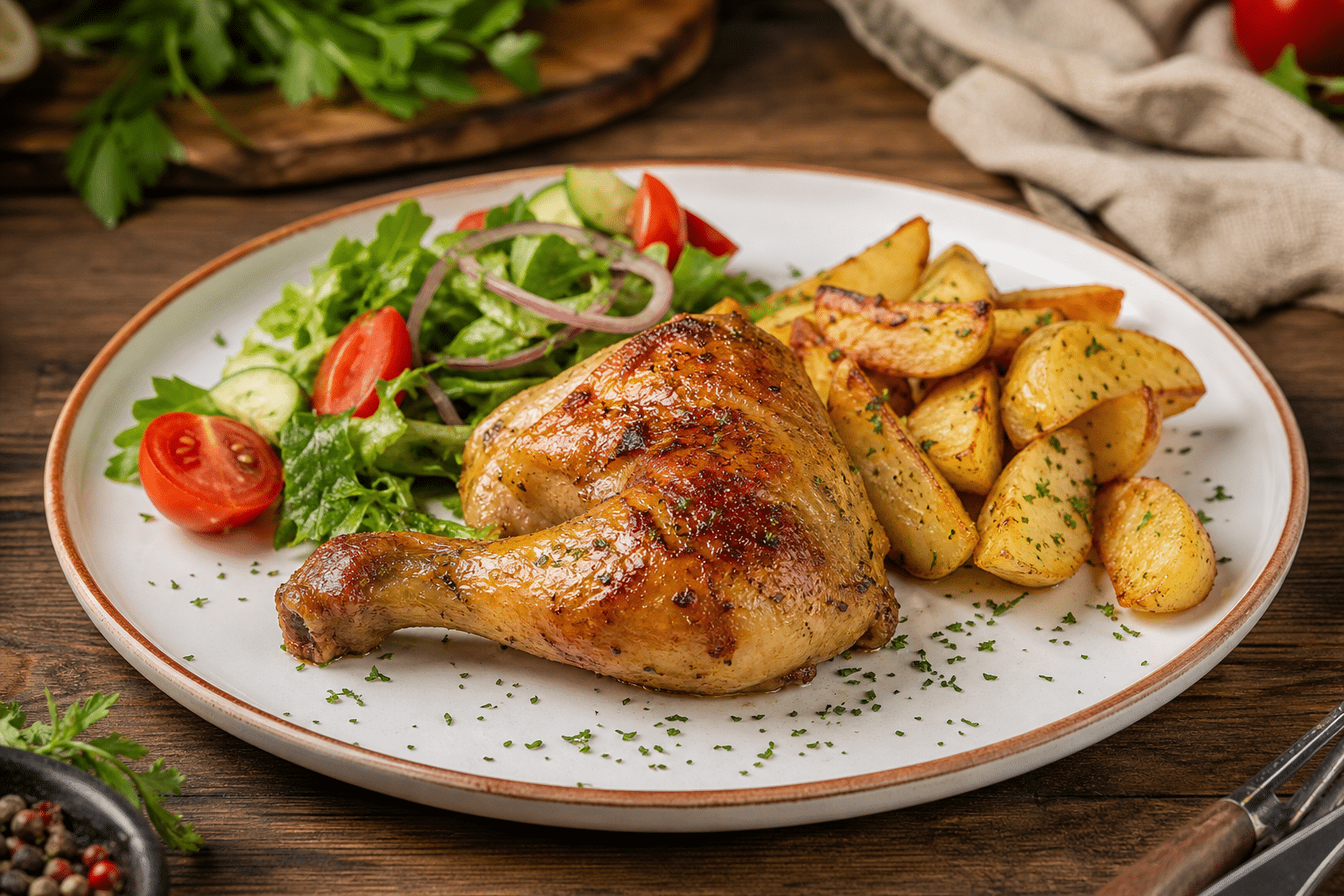

That difference has a name: the Maillard reaction. It’s one of the most important chemical processes in Western cooking, and it’s responsible for the crust on seared meat, the color of a bread heel, the depth in roasted coffee, and the golden skin on a roast chicken. Understanding it makes you a noticeably better cook.
What the Maillard reaction is
The Maillard reaction is a chemical reaction that happens when food browns. It can be triggered by pan-frying, high oven heat, grilling, or even a kitchen torch. The trigger is heat applied to the surface of food.
At the molecular level, here’s what happens: the carbonyl group of a sugar molecule reacts with the amino group of an amino acid. The result is a cascade of new molecules – several hundred different flavor compounds, all produced at once. Those compounds are what give browned food its distinctive aroma and taste.
The specific amino acid involved determines what the result smells and tastes like. That’s why a seared steak and a toasted bread crust are both products of the Maillard reaction but taste nothing alike – different proteins, different amino acids, different flavor compounds.
Read more: The burger sauce recipe that beats every bottled version, and takes three minutes to make
Maillard vs. caramelization
The two are often confused. Both involve heat and browning, but they are chemically distinct.
Caramelization is pyrolytic: it breaks larger sugar molecules down into smaller ones. The Maillard reaction is non-pyrolytic: it’s a reaction between two different types of molecules – amino acids and sugars – building new compounds rather than breaking old ones apart.
That distinction matters in practice. Caramelization gives you sweetness. The Maillard reaction gives you savory, complex, roasted depth. Same heat, completely different chemistry.
Read more: Danish brunkager: the spiced slice-and-bake Christmas cookies that every Dane makes in November
Who discovered it
The reaction is named after French chemist Louis-Camille Maillard, who investigated it in France in 1912. It turned out to be the foundation for a large part of the flavor industry. When a food manufacturer wants to replicate the taste of roasted meat or toasted bread, Maillard compounds are where they start – hundreds of distinct flavor molecules that can be isolated, combined, and used to build artificial flavorings.
Why it matters for sous vide
The Maillard reaction becomes especially important when you cook sous vide. Because sous vide uses a water bath at a controlled temperature, the surface of the food never gets hot enough for browning to occur – water prevents the temperatures the reaction needs. The result is meat that’s perfectly cooked through but pale and flavorless on the outside.
Read more: The five French mother sauces every home cook should know
The fix is a hot sear after the water bath. Most ingredients should be patted thoroughly dry before they go in the pan – any moisture on the surface will produce steam and delay browning. Dry the surface, get the pan very hot, and sear quickly.
Pork is worth calling out specifically. It benefits from browning both before vacuum-sealing and again after the water bath. The first sear starts the flavor development; the second finishes it.
The same reaction in the oven
High oven heat works on exactly the same principle. This is why recipes that want real surface color – roast chicken, a rack of ribs, a whole side of salmon – typically call for a hot oven rather than a low one. The browning isn’t cosmetic. It’s where most of the flavor is.