
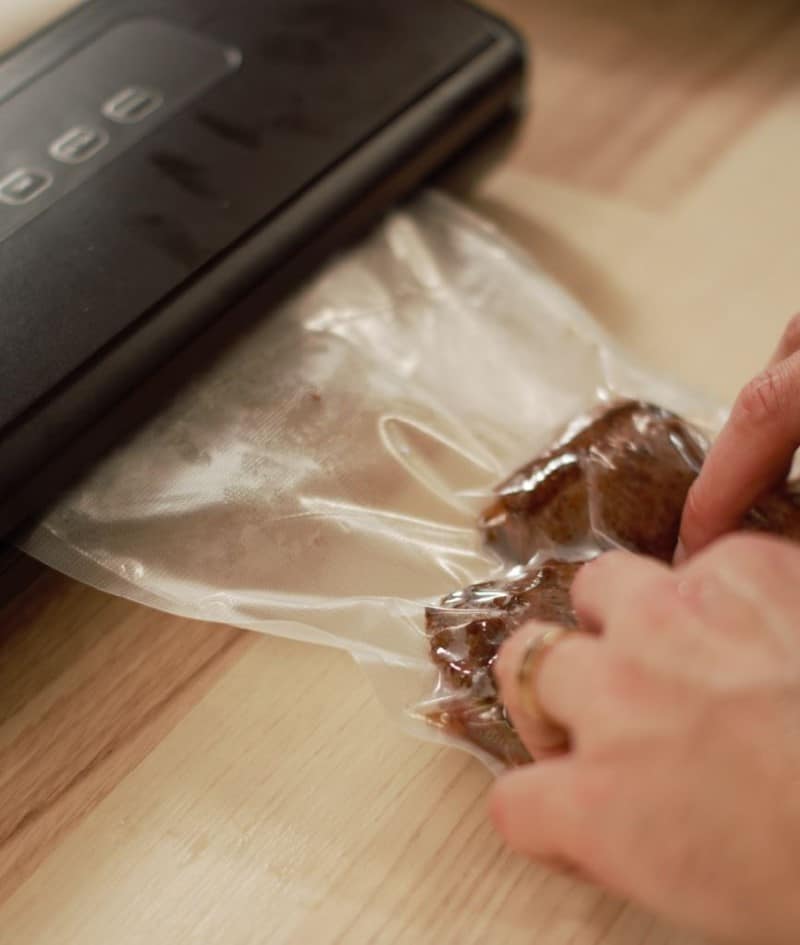

Why do we use a vacuum sealer?
Vacuum packing essentially means removing oxygen from a bag before sealing it. Bacteria and mold cannot grow without the presence of oxygen, which significantly limits the development of bacteria. This means the contents of the bag can stay fresh for a much longer time.
However, there are other benefits to vacuum packing your ingredients – for example, if you are using sous vide or dry aging. And that’s probably why you’ve ended up here.
Vacuum sealers and sous vide
When working with sous vide, ingredients are packed in bags, which are then vacuum-sealed and submerged in a container of water heated to a specific temperature. The idea of sous vide is that it’s the temperature of the water that cooks the ingredient, without them actually being in direct contact.
For the hot water to be able to cook the ingredient, it’s essential that there’s as little air as possible between the water and the ingredient.
That’s why the bag and its contents are vacuum-sealed. And for that, we need a vacuum sealer.
You can use regular freezer bags in a vacuum sealer, but it’s not recommended. For example, you can’t use freezer bags for sous vide because they can’t withstand the temperature, and in addition, freezer bags are smooth – not all vacuum sealers can handle smooth bags. Vacuum bags are much stronger than freezer bags.
Choose the right vacuum bag
There are two types of vacuum bags: Smooth and textured.
Smooth vacuum bags are typically smooth on both sides, while textured bags usually have both a smooth and a textured side. The purpose of the texture is to allow the air to “travel” out of the bag as it’s vacuum-sealed.
Textured vacuum bags are more expensive but are the most commonly used because they can be used with all types of vacuum sealers. Additionally, the textured bags are much easier to use than smooth vacuum bags.
Smooth vacuum bags are only used for chamber vacuum sealers or vacuum sealers with an external liquid collector.
Choose the right vacuum sealer
There are generally two types of vacuum sealers: The flat, elongated ones that most of us start with, and then there are chamber vacuum sealers.
The “regular” vacuum sealer
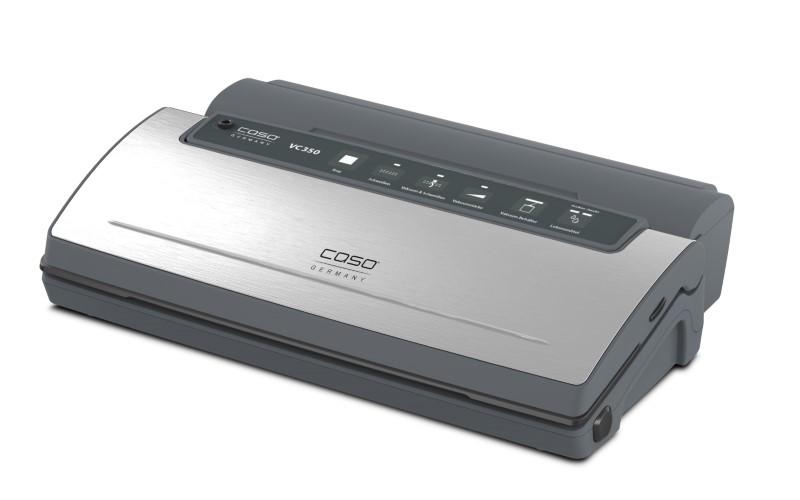
Most people start with a so-called “regular” vacuum sealer: The flat, elongated type. For these, textured vacuum bags are used.
The advantage of this type of vacuum sealer is that it’s relatively inexpensive to get started, and it also doesn’t take up a lot of space.
Some vacuum sealers come with an external container: A so-called liquid collector. These vacuum sealers take both textured and smooth vacuum bags.
A liquid collector is useful if you work a lot with liquids, such as sauces and marinades or dishes that contain liquid.
When buying a regular vacuum sealer, it’s good to keep the following in mind:
-
That the machine feels solid.
-
That the machine has a strong sealing capability for the bag.
-
That the machine has a function that both interrupts the machine and seals the bag.
-
Whether the machine comes with an external liquid collector or not.
The chamber vacuum sealer
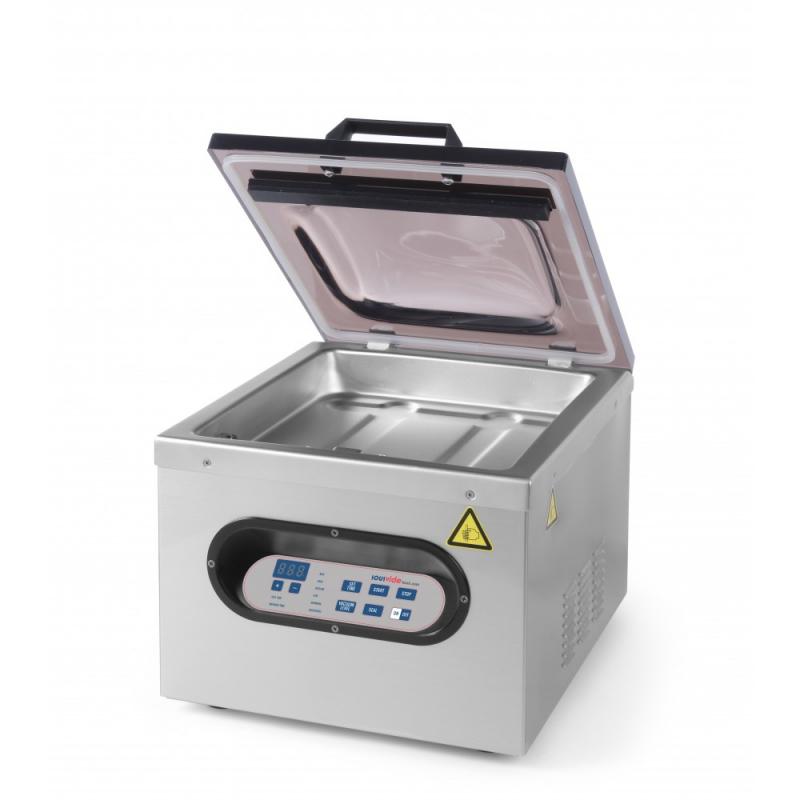
Chamber vacuum sealers are very powerful vacuum sealers, and this type is preferred by professionals. Chamber vacuum sealers can handle both textured and the cheaper, smooth bags.
A chamber vacuum sealer is so powerful that it can be used for quick pickling, for example. The chamber vacuum sealer creates such strong pressure that the pores in the ingredients open immediately, allowing a pickling process to take just a moment.
The advantage of buying a chamber vacuum sealer is that it is a much more powerful machine. It can also vacuum pack bags with liquid.
On the other hand, the machine also takes up much more space. Additionally, it can only vacuum pack bags that fit in size within the chamber. This is something to be aware of if you wish to vacuum pack/sous vide whole roasts or large cuts.
When buying a chamber vacuum sealer, it’s good to keep the following in mind:
-
How wide the sealing bar is. This affects how large the bags you can use.
-
Whether the machine has variable air intake. This means the air is initially let in slowly so that the ingredient isn’t “sucked out of shape”.
-
What different programs the machine has. Is there, for example, a specific program for marinades?
-
What the machine is made of. Steel is much more durable than plastic.
How to use a vacuum sealer
Place the ingredient in the vacuum bag and open the machine.
If using the regular vacuum sealer, place the open end of the bag so it lies within the rubber edge in the machine. It’s important to place the bag under the small hole inside the vacuum sealer.
Close the vacuum sealer until you hear a ‘click’, then press the button.
You can now choose whether you want to both vacuum pack and seal the bag, or if you just want to seal the bag. The latter is typically used for bags with liquids and sauces.
If the bag is both vacuumed and sealed, the air is sucked out of the bag, after which the machine seals the open end of the bag itself.
Vacuum sealers and dry aging
For dry aging, bags specifically developed for this purpose are usually used. While regular vacuum bags are completely airtight, dry aging bags are constructed in a way that allows the ingredient to breathe even when the bag is vacuum sealed.
Additionally, the bags are always smooth. This is something to keep in mind when buying a vacuum sealer if you want to work with dry aging. In such a case, it’s important to choose a vacuum sealer that can handle smooth bags.
Dry aging bags cannot be used for sous vide.