

Green or white, raw or cooked. Asparagus appears in various forms and dishes, whether you prefer the crispy, fresh green on top of your “shooting star” dish, or as a soft, white companion to chicken in a warm tartlet filling, the fresh shoots are a sign that spring has finally arrived.
What is asparagus?
With its mild aroma, asparagus is a popular supplement to many dishes, both cold and warm. The plant grows wild in Europe along river and beach banks, and asparagus is a perennial vegetable with erect – or slightly drooping – smooth shoots and scaly leaves.
What is the difference between green and white asparagus?
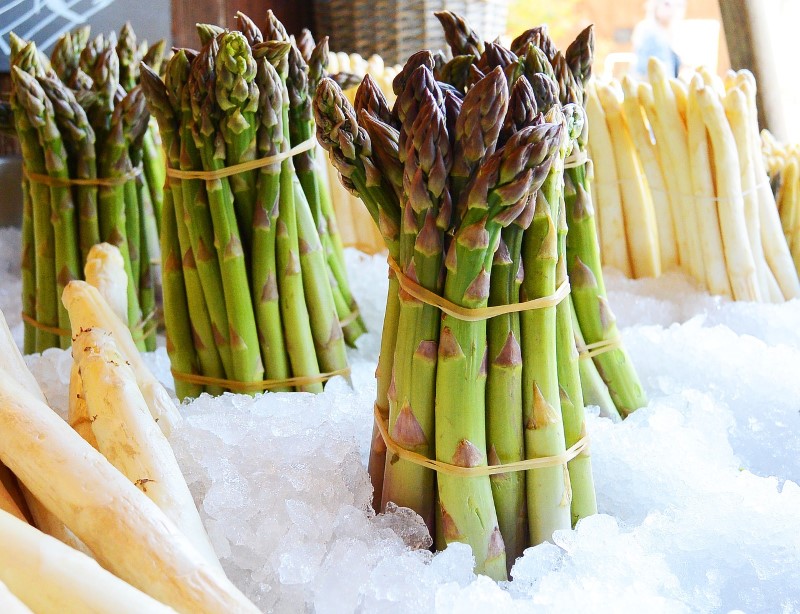
A white asparagus is simply a green asparagus that has not seen the sun. The difference between the two lies fundamentally in the cultivation method: While green asparagus has been allowed to grow freely and receive sunlight, the white ones have been covered with soil until harvest.
White asparagus also requires more work in terms of cultivation, as they need to be placed in a mound of soil, which is leveled after each harvest and re-established the following year – but it’s worth all the effort.
A white asparagus has a tough peel and therefore must always be cooked, whereas its green brother can be eaten both raw and cooked. Green asparagus has slightly more bitter compounds but is still sweet, while the white ones are more mild and delicate in flavor. Furthermore, the white asparagus becomes almost buttery in its consistency when cooked, just as we know it from a good tartlet filling.
Where and how is asparagus best grown?
Asparagus is a relatively forgiving plant in the sense that a single planting gives you asparagus for years.
It’s easily grown in the garden and thrives best in light, sandy soil. It is planted outdoors in early spring, preferably in a raised bed, where you have control over soil quality.
However, it is not harvested in earnest until two – sometimes even three – years later, as the plant would otherwise become exhausted and risk wilting. That’s why harvesting stops around Midsummer, and it can be tempting to keep going if shoots are still plentiful – but hold on! It’s worth it and is an investment in many years of good asparagus harvest.
When is the asparagus season?
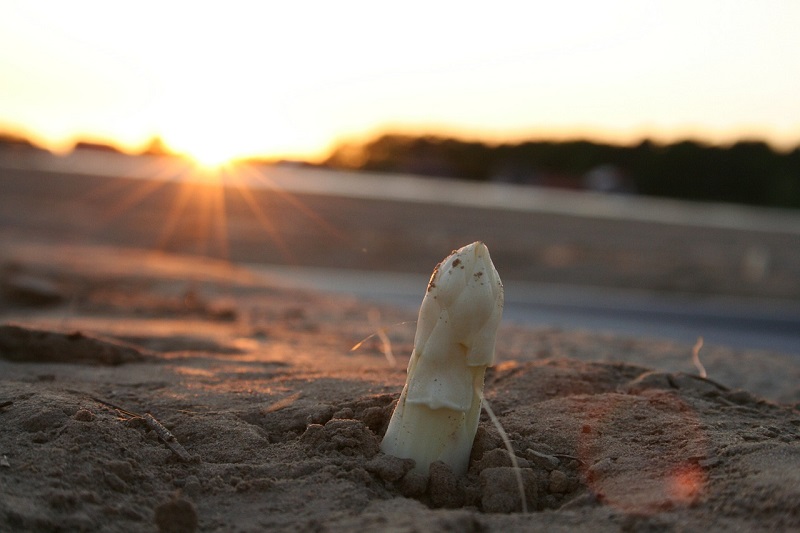
There is a reason why asparagus is a popular spring food. It is in season between April and June.
How is asparagus harvested?
Asparagus can be picked, cut, and trimmed during harvest. Only the shoots with closed and firm heads are harvested – if they have started to open, they are simply too tough to eat.
What pairs well with asparagus?
With its delicate pea-like flavor, asparagus pairs best with other elements that are relatively mild in taste. It could be the richness of eggs or the acidity from a hollandaise sauce. However, smoked, salted bacon can also serve as a cheeky contrast to green asparagus on the grill.
How is green asparagus prepared?
Crispy, soft, or al dente? Green asparagus is delicious both raw and cooked. The level of preparation depends only on your preferences and the dish they are to be included in. A raw green asparagus goes, for example, fantastically well in a fresh spring salad. Additionally, green asparagus can be steamed, boiled, baked, grilled – yes, it can even be cooked sous vide.
The lower part of the asparagus is hard and tough, so whether it is to be cooked or enjoyed as is, the end is always snapped off where it naturally yields.
Read more about how Neurogastronome Rasmus Bredahl prepares his asparagus, both green and white, here.
How is white asparagus prepared?
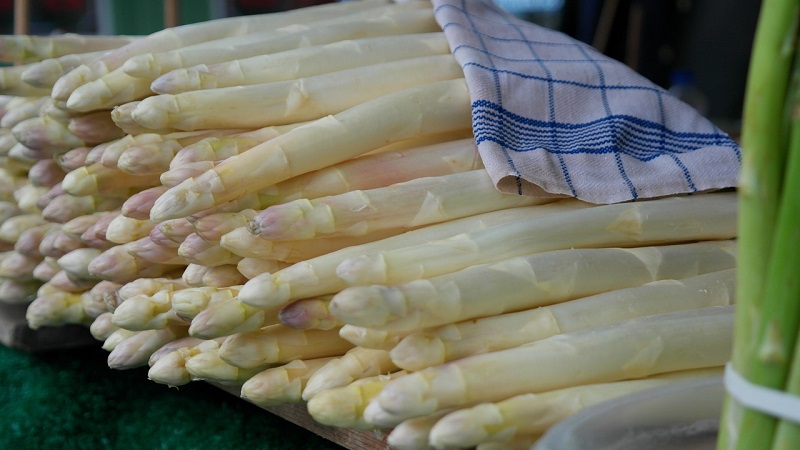
While green asparagus can be eaten both raw and cooked, white asparagus must always be cooked.
Furthermore, white asparagus should be peeled – if it “frays” where the end was snapped off, you need to give it another go with the peeler.