


History
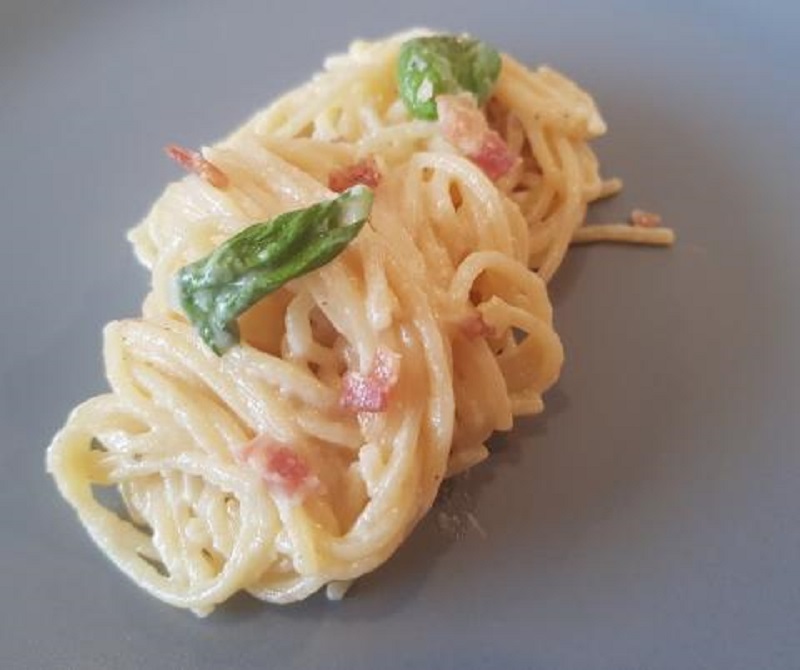
Most people are familiar with the Italian pasta dish “Spaghetti alla Carbonara.” The recipe is simple, and the ingredients are essentially spaghetti along with a bit of its cooking water, bacon, eggs, and pepper. The crispy bacon is mixed with the cooked spaghetti, and a sauce of egg yolks, cooking water from the spaghetti, as well as salt and pepper, is poured over. The heat from the spaghetti and cooking water will cause the egg yolks to coagulate (harden) slightly, resulting in a creamy sauce.
Traditional Spaghetti Carbonara

See the recipe here.
Pasta Carbonara (original)
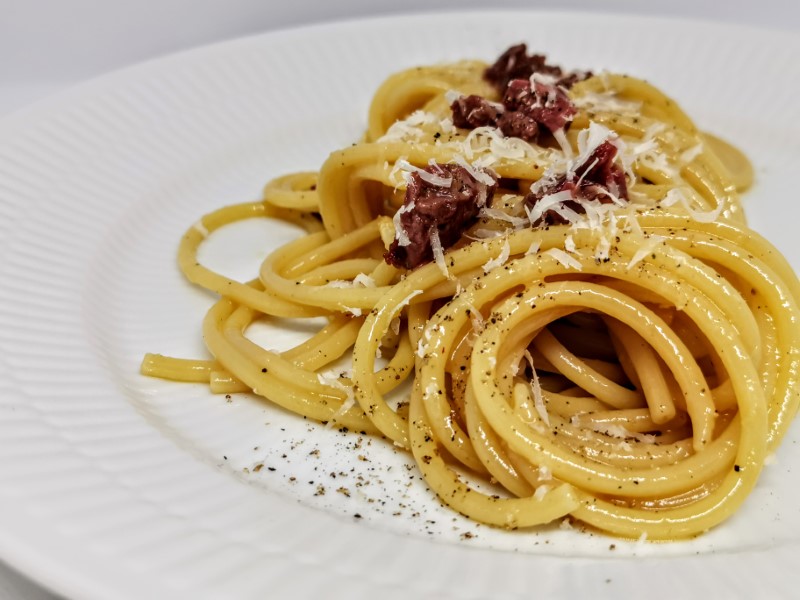
See the recipe here.
Pasta Carbonara

See the recipe here.
The dish is among the most well-known of all pasta dishes, and it has indeed achieved widespread popularity around most of the world. This naturally means that today there are many different variations of the dish, some of which are more authentic than others.
It originates from Italy, and the name means “charcoal burner’s spaghetti.” The exact origin of this somewhat peculiar name is uncertain, but there are several theories. One theory suggests that the dish was originally prepared over glowing coals, and that it is named after the method used for cooking it. Another theory is that the ample amounts of freshly ground black pepper resemble coal dust, hence its name.
The dish is perfect for busy families with children or others with limited time for cooking. From the time you start until the food is on the table, it takes a maximum of 25 minutes, and the dish is also inexpensive to make with ingredients we often have on hand already.
Originally, the dish consisted of the aforementioned few ingredients, but as its popularity spread, various recipes and ingredients have been added. Here are examples of ingredients that have found their way into the original recipe:
Onions and Garlic:
Some people sauté finely chopped onions and garlic along with the bacon when making carbonara. This can indeed add a really nice flavor to the dish, but make sure to sauté the onions after removing the bacon from the pan. This way, you can use the rendered bacon fat for the onions (which gives a fantastic flavor), and you also avoid the risk of burning the onions, as they can easily do at the higher temperature required for cooking bacon. for a in their carbonara, while others replace bacon or pancetta with cooked ham.
Here are examples of such recipes:
Spaghetti Carbonara
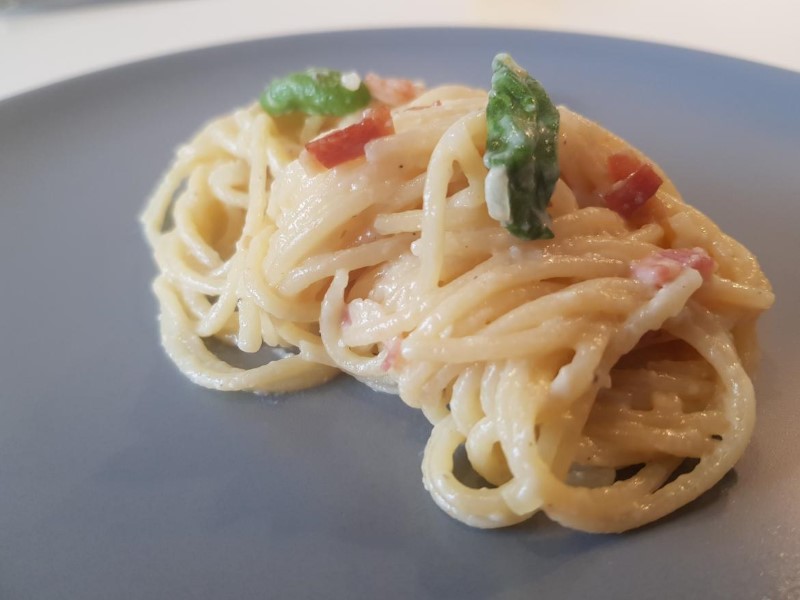
See the recipe here.
Carbonara

See the recipe here.
Heavy Cream:
Another common carbonara variation is to add heavy cream.
The cream is mixed with the eggs, contributing to an extra creamy sauce.
Carbonara with Smoked Bacon

See the recipe here.
Spaghetti Carbonara with Cream 50%

See the recipe here.
In our opinion, however, the dish can quickly become too heavy and rich if prepared with heavy cream. The trick to achieving the delicious, creamy sauce is that the eggs must not be heated to the point where they start to coagulate (harden) and turn into a grainy mass like scrambled eggs. The egg mixture should simply be stirred into the warm pasta, with a little cooking water added, after it has been removed from the heat. This way, you will get a creamy and delicious sauce even without using heavy cream.
Tip: If you’re skeptical about consuming raw eggs that are not 100% heat-treated, you can simply replace them with pasteurized eggs.
Bacon and Ham:
Originally, spaghetti alla Carbonara is made with pancetta, an Italian version of bacon that is not smoked. Pancetta has become something you can buy in many supermarkets, but until a few years ago, the product was almost unknown here. Many people still replace pancetta with bacon when they encounter it in a recipe, likely because they are not used to using it. This is perfectly fine, but try to buy a piece of pancetta the next time you come across it in a recipe – the result will be closer to the original recipe. Some choose to omit both bacon and pancetta entirely and instead make their carbonara with cooked and smoked ham. In this way, the dish becomes leaner, but it is far from the same as the real thing!
Penne Carbonara

See the recipe here.
Meat-Free Spaghetti Carbonara
If you have gluten allergies or desire a healthier or meat-free version of your spaghetti carbonara, we have this recipe:

See the recipe here.
If you feel inspired to serve this easy and delicious dish at home, be sure to click on our recipes here in the article.