
Sous vide is here to stay. Not that it’s a new invention, but the method is increasingly gaining popularity in private Danish homes.
And for good reason.
Below, you’ll learn a lot more about the infamous water bath and why you should consider making sous vide a natural part of your kitchen repertoire – every day.
What is sous vide?
Sous vide is French for “under vacuum” and is pronounced “su-vid”. Sous vide is also called LTLT cooking (low temperature long time).
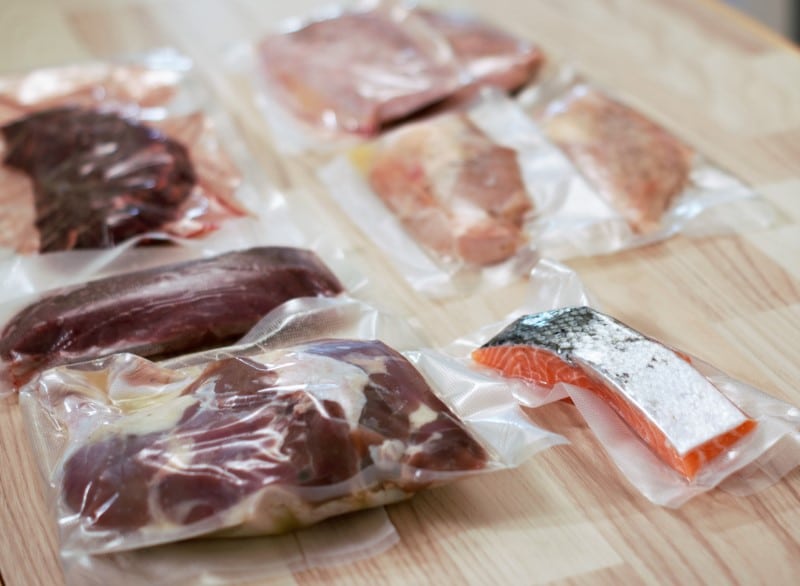
The method involves placing the raw material in a plastic bag, which is usually vacuum-sealed. The bag is then placed in a water bath at typically 55 – 60 degrees Celsius, allowing the raw material to cook very slowly for anywhere from 30 minutes – typically for fish – to up to 72 hours – typically for cuts with a lot of connective tissue, such as shank, tail, cheeks, etc.
The cooking takes place at significantly lower temperatures than other conventional cooking methods, while the extended cooking time ensures that the raw material reaches the same temperature from the innermost to the outermost fibers.
The basic principle of sous vide is that the raw material is exposed to a constant temperature. Therefore, water circulation is an essential part of the entire technique, as it ensures that the surrounding water never falls below the desired temperature. When the raw material is vacuum-sealed, the plastic bag fits tightly around the raw material, allowing as much contact with the water as possible.
Why should the raw material be cooked in a plastic bag?
If the raw material were simply “dumped” into the water and underwent the same LTLT cooking, it would become completely and utterly “boiled out,” losing both flavor, juice, and strength. This is almost self-explanatory. The raw material would also absorb some water along the way.
The plastic bag encapsulates everything in the raw material: Flavor, juice, strength, nutrients, color – everything. Therefore, you will also find that sous vide-cooked vegetables have a much deeper, more intense flavor and a completely different bite than if, for example, they had been steamed.
DOES the plastic bag need to be vacuum-sealed?
In principle, no. You can try to press as much air out of the bag as possible before sealing it, but you will never be able to remove as much air as a vacuum sealing machine can.
The advantage of having as little air in the bag as possible is that the raw material should have full contact with the surrounding water to optimize cooking. This ensures that every fiber in the raw material is cooked exactly as intended.
Because the whole principle of sous vide cooking is that the raw material is exposed to a constant water temperature, vacuum sealing is the absolute most ideal solution for you.
The origin of sous vide cooking
Cooking raw materials at very low temperatures was first described by the British, American-born Sir Benjamin Thompson, Count Rumford, in 1799. However, he used air as a heating element. The goal was to cook an entire roast in an apparatus originally developed for drying potatoes. According to Rumford himself, the roast was not only edible but nothing short of perfectly cooked and extremely flavorful.
The cooking of raw materials under vacuum, with or without heat, was developed by American and French engineers in the mid-1960s. The method aimed to extend the shelf life of raw materials, and, as Rumford had previously experienced with his method, the raw materials ended up with a significant improvement in flavor and texture. The pressure / vacuum sealing alone concentrated and intensified the flavor in, for example, fruit quite significantly, even without heating. During this period, vacuum sealing was also known as “cryovacking“.
In 1974, the French chef Georges Pralus adopted vacuum sealing and discovered that foie gras obtained a better texture and retained its original appearance and fat content to a greater extent when cooked under vacuum.
Somewhat parallel to Pralus, the French scientist Bruno Goussalt, based in Virginia, experimented with combining vacuum and low-temperature cooking, and he ended up developing set times and temperatures for a wide range of foods. Pralus and Goussalt ended up collaborating on the development of the sous vide method as we know it today, and Pralus is particularly regarded today as the “father” of sous vide cooking.
What is a sous vide device?
The constant and circulating water temperature characteristic of sous vide can be achieved in different ways: You can either use a sous vide machine, also called a sous vide bath, or you can “make do” with a sous vide stick.
Sous vide stick
A sous vide stick is a device that looks similar to a large immersion blender. The sous vide stick can both heat and create circulation in the water it is immersed in.
The stick is typically immersed in a regular tall pot filled with water, then set to the desired water temperature and cooking time. You can also use a plastic/metal/insulated box – even a floor bucket can do the trick.
Sous vide stick advantages:
- Easy to store away.
- Cheaper than a sous vide machine.
- Highly portable.
Sous vide stick disadvantages:
- Requires a separate container/pot.
- Much noisier than a sous vide machine.
- Not insulated (more energy waste).
Sous vide machine/bath
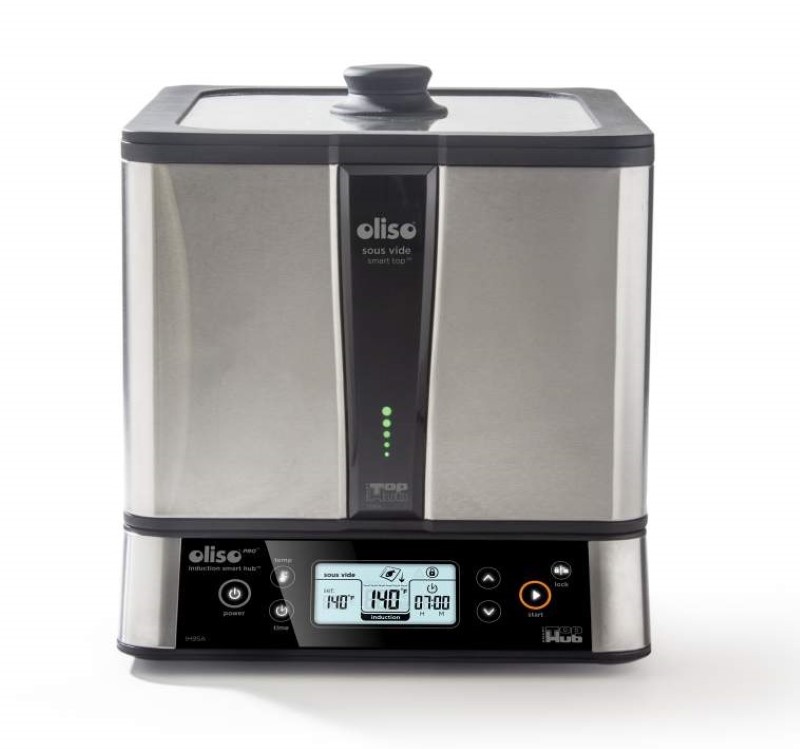
A sous vide machine resembles a large deep fryer. Unlike the stick, the machine has a built-in bath, heating element, and water circulator.
Sous vide machine advantages:
- Contains everything needed for sous vide cooking.
- Well insulated (less energy waste).
- Much quieter than a sous vide stick.
Sous vide machine disadvantages:
- Takes up more space than a sous vide stick.
- More expensive than a sous vide stick.
- Not quite as portable as a stick.
Should you choose a stick or a machine?
As you can see, there are both advantages and disadvantages associated with the sous vide stick and sous vide machine.
We, as known, are big advocates for incorporating sous vide cooking as a natural part of everyday life, as it is an incredibly easy way to eat delicious and perfectly cooked food every day – and not just for holidays and celebrations.
Sous vide is a cooking method that you will most likely quickly fall in love with and use in every conceivable and inconceivable (food) context. Our unreserved opinion is that the more often you use sous vide, the more it makes sense to invest in a sous vide machine. The reason is that the machine is simply much more pleasant to work with, and when the sous vide device is also to be used frequently, you will likely appreciate that the device is as quiet as possible instead of “humming over the whole kitchen” for hours or days.
Remember the crust!
Although the sous vide machine can certainly do more than the sous vide stick, there is still a “but”.
Common to both the stick and the machine is that raw materials, such as meat, naturally do not get a crust during sous vide cooking. To add a crust (through the so-called maillard reaction), the raw material must subsequently be browned on either a pan, grill, or with a blowtorch.
This means that neither the stick nor the machine are actually enough when you need to sous vide cook meat. At least not traditionally. The company Oliso has completely revolutionized the sous vide market.
Advertiser-paid content:
Sous vide machine and induction cooktop in one
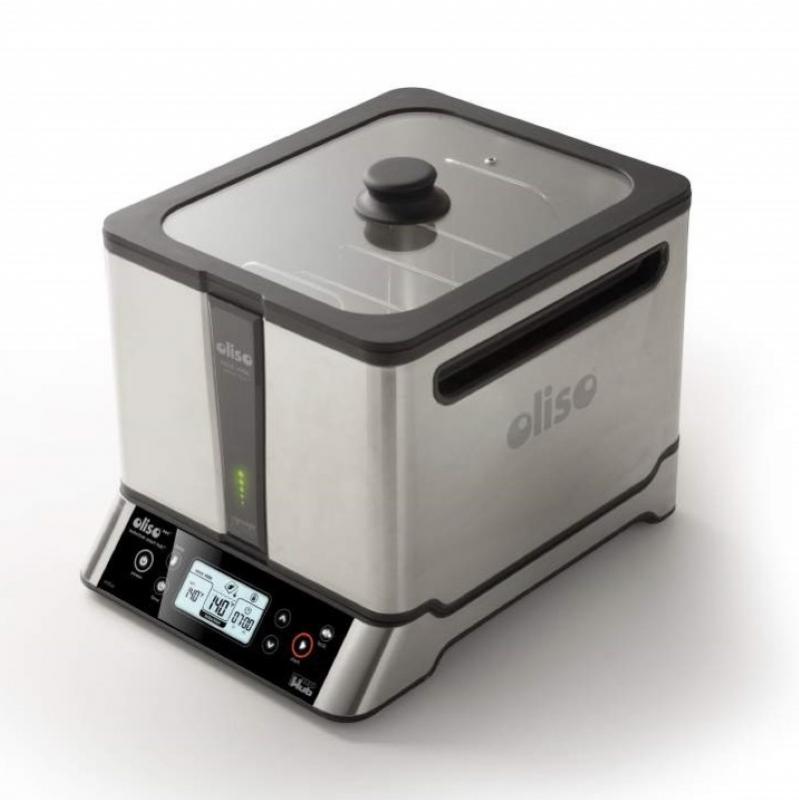
Oliso Smart Hub is a sous vide machine and induction cooktop in one product. When the sous vide cooking is completed, the bath can be removed from the heating element / smart hub, which instantly turns into a regular induction cooktop. This means you no longer need access to a stove or an external cooktop.
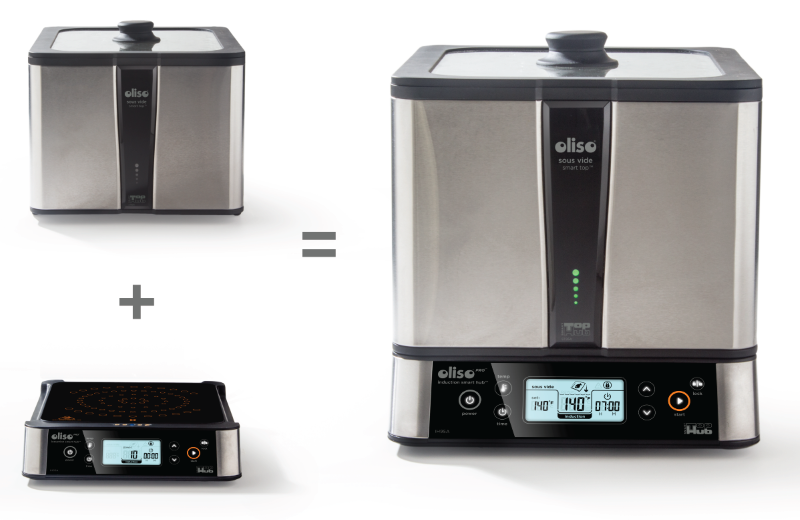
This is especially smart when you find yourself in situations where there is a lack of cooktops. The cooktop functions as a regular induction cooktop, which can naturally be used in other contexts than just browning the sous vide cooked meat.
The ultimate sous vide machine
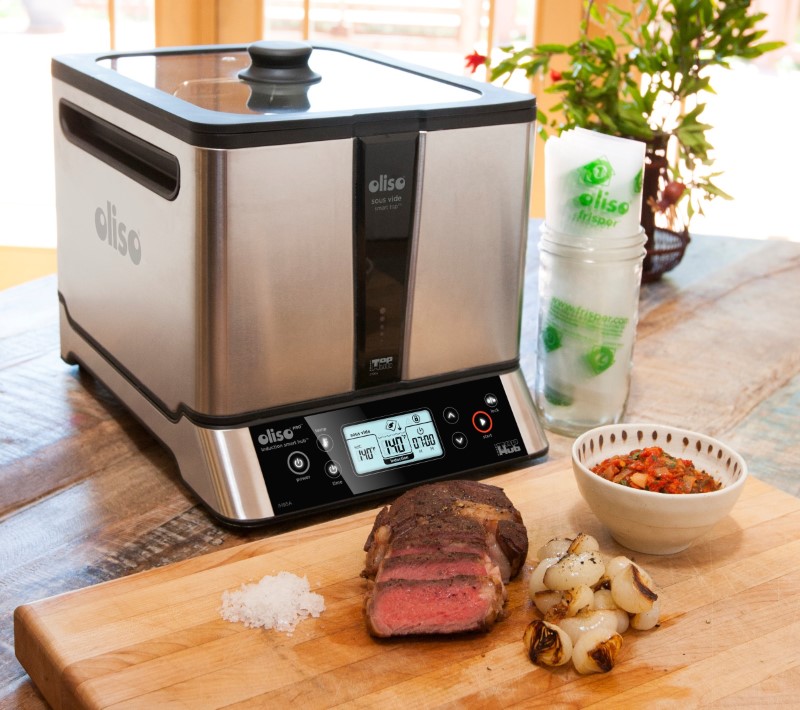
Noise level: The machine is quiet – as in extremely quiet, compared to other machines on the market. Since certain cuts of meat need to be cooked for up to 72 hours, it is quite significant that the noise level is at an absolute minimum, so the machine does not become an annoyance.
“Look and feel”: The machine is of incredibly high quality. You really feel that this is a superb craft. The lid has a rubber edge, making it feel nice to close – where other sous vide machines typically close with “metal against metal”. The lid also has a small hole to allow excess steam to escape.
Temperature range: 30 – 90 degrees Celsius. We’ve actually tried to temper chocolate in the machine, which requires a temperature setting of 28 degrees Celsius – unfortunately without success. The machine holds what it promises and does not go below 30 degrees Celsius.
Accuracy: Oliso Smart Hub can be set with an accuracy of just 0.1 degrees Celsius. Accuracy is indeed essential when we talk about sous vide.
Time setting: Up to 99 hours and 59 minutes.
Capacity: 10 liters.
Insulation ability: The glass lid is made of partially heat-reflective glass, and the bath is well-insulated to prevent unnecessary energy or steam waste.
Power: The smart hub / induction cooktop itself has a power of 1500 watts.
Automated switching: When the sous vide bath is not placed on the smart hub, the smart hub’s settings automatically switch to 0 – 10.
Cleaning: Since there is no cord on the bath itself, it suddenly becomes very easy to place the bath in the sink for cleaning.
What can you use a sous vide machine for?
The sous vide method is best known for perfectly cooking meat, but we almost dare to claim that you can cook all food products in a sous vide machine: Both fruit, vegetables, fish, poultry, sauces, dips – even the dessert – can be cooked in the water bath.
We believe that once you’ve invested in a really good sous vide machine, the method will captivate you to such an extent that you’ll want to use the machine for as much as possible. Therefore, we have gathered a lot of good suggestions below on how to make sous vide a natural part of both everyday and festive occasions.
Whole roasts: Sous vide is, as we know, an ideal cooking method for meat. When we cook whole roasts traditionally, it is often a process where achieving the perfect result requires monitoring the roast, temperature, and timer. With sous vide, you don’t need to worry about any of that – the roast takes care of itself, and it doesn’t matter if the roast stays in the water bath for half an hour too long. You are always guaranteed the exact same result every time, without putting in significant effort. Both the pork roast, brisket, venison back, culotte, and cuvette become perfect in sous vide. If you are the ambitious type, you should definitely try cooking your beef wellington in sous vide.
Steaks, chops, etc.: Sous vide is not only great for cooking whole roasts. Smaller cuts such as pork cheeks, neck chops, and ribeye steaks can be cooked in sous vide.
Potatoes and vegetables: As we have already mentioned, you will get a completely different flavor experience from the vegetables when you cook them in sous vide: Potatoes, Brussels sprouts, corn on the cob, carrots, and many other vegetables achieve an incredibly delicate texture and bite when cooked in sous vide.
Various side dishes: Try, for example, making a creamy butternut squash dip in your sous vide – or prepare egg custard for the Christmas or Easter lunch using the sous vide machine. It is quite easy and straightforward.
Beer: You can actually brew beer directly in a sous vide machine!
Yogurt: Yes, that’s right, yogurt too.
Sauces: If you find bearnaise sauce a bit tricky, sous vide might be the answer to your prayers: Bearnaise sauce in sous vide turns out perfect – every time.
Desserts: Desserts can also be prepared in the machine – for example, you can try making creme brulee or poached pears.
Poultry, fish, and shellfish: Whether it’s a whole chicken, hot wings, or turkey breast, the sous vide machine is the “man” for the job. Also cook halibut fillet, plaice fillet, monkfish cheeks, lobster tails, and cod loin to perfection!