
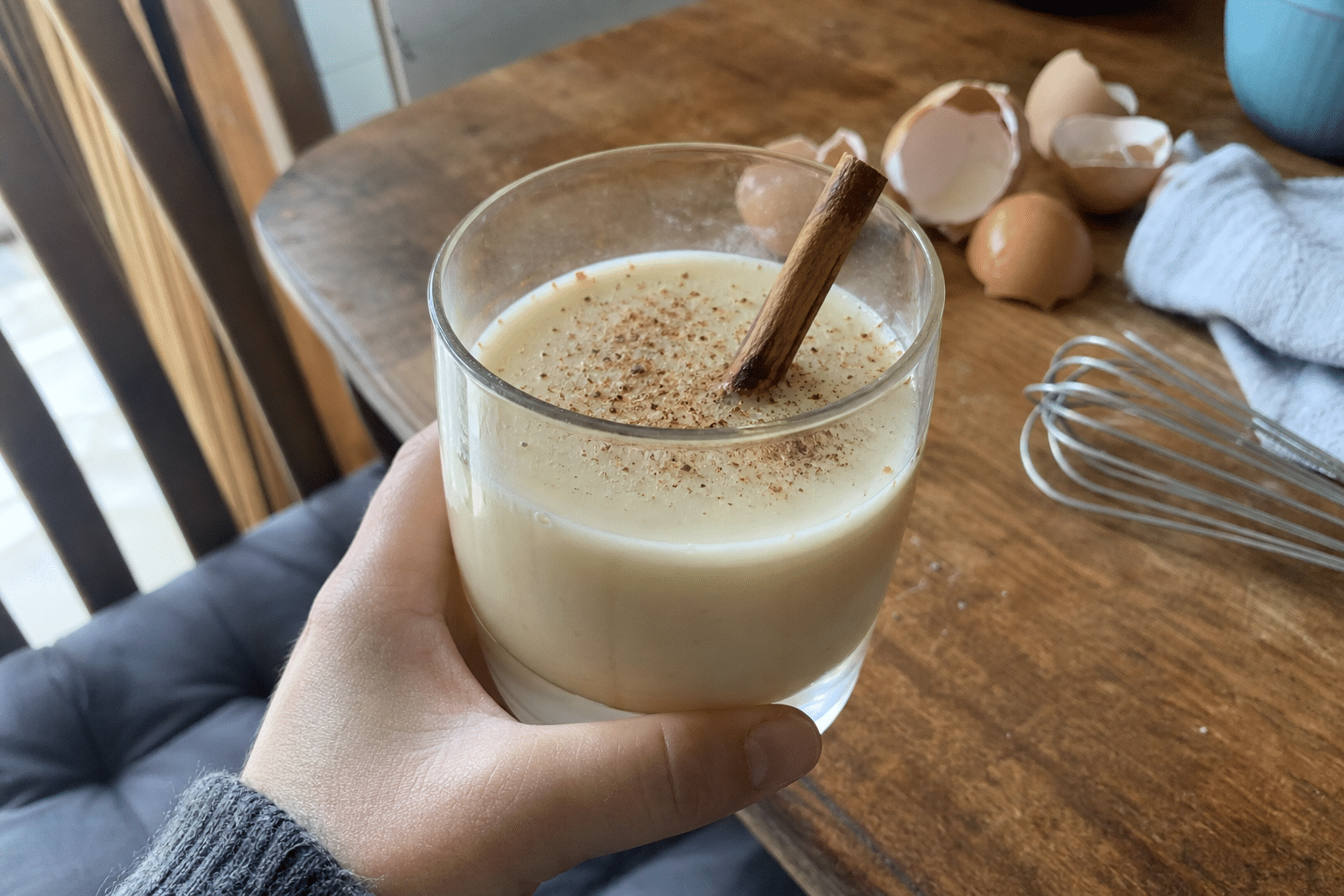

Homemade eggnog has earned a reputation it only half deserves. The safety concern is real: raw egg yolks blended cold carry a salmonella risk. The intimidation factor is not.
The cooked custard method solves both at once. You heat the egg yolk and milk mixture on the stovetop until it reaches 160°F (71°C), the safe minimum internal temperature for egg dishes according to the USDA FSIS Safe Minimum Internal Temperature Chart. Cooking also sets the mixture into a proper custard, giving you a texture and richness no store-bought version can match.
The FDA’s holiday food safety guidance advises that when making eggnog with raw eggs, cooks should “use pasteurized shell eggs, liquid or frozen pasteurized egg products, or powdered egg whites.” The cooked method is the cleaner answer: no hunting for pasteurized shells, no worrying whether the alcohol kills pathogens, no guesswork at all.
Why the cooked method works
Egg yolks are mostly fat and protein. When you heat them slowly in liquid, the proteins set gradually, turning a loose mixture into a smooth, thick custard. That thickening happens right around the 160°F (71°C) mark, which is also the point at which the USDA confirms egg dishes are safe to eat.
The critical technique is tempering: you add the hot milk to the egg yolks in a thin stream, raising their temperature gradually so they cook without scrambling. Done right, the result is silky. Done too fast, you get sweet scrambled eggs. That is the only real risk in this recipe, and it is entirely avoidable.
Read more: Why your tomatoes lose their flavor in the refrigerator, according to food scientists
Ingredients
Serves 8
- 6 large egg yolks
- 1/2 cup (100g) granulated sugar
- 2 cups (480ml) whole milk
- 1/4 tsp fine salt
- 1/4 tsp freshly grated nutmeg, plus more for serving
- 1/8 tsp ground cinnamon
- 1 tsp vanilla extract
- 1 cup (240ml) heavy cream
Optional spirits: 1/2 cup (120ml) bourbon, dark rum, brandy, or a mix
Instructions
- Set up an ice bath: fill a large bowl with ice and cold water, then nest a smaller bowl inside it. This is where the custard will cool quickly once it comes off the heat.
- Whisk the egg yolks and sugar in a medium bowl until the mixture turns pale yellow and slightly thickened, about 2 minutes.
- Combine the milk, salt, nutmeg, and cinnamon in a medium saucepan. Heat over medium, stirring occasionally, until the milk is steaming and small bubbles form at the edges. Do not let it boil.
- Temper the eggs: while whisking the yolk mixture constantly, pour the hot milk into it in a slow, thin stream. Add roughly half the milk this way, then pour the whole mixture back into the saucepan.
- Cook over medium-low heat, stirring constantly with a wooden spoon or heatproof spatula, until the custard thickens enough to coat the back of the spoon and reads 160°F (71°C) on an instant-read thermometer. This takes about 5 to 7 minutes. Do not let it boil.
- Remove from heat. Stir in the vanilla, then strain through a fine-mesh sieve into the bowl sitting over the ice bath.
- Stir occasionally until the custard cools to room temperature, then cover and refrigerate for at least 2 hours, or overnight.
- When ready to serve, whip the heavy cream to soft peaks in a chilled bowl. Fold gently into the cold custard base.
- Stir in the spirits if using. Pour into glasses and grate fresh nutmeg on top.
Tips and variations
Use a thermometer. The 160°F (71°C) target is a safety requirement, not an estimate. An instant-read thermometer is the only reliable way to confirm you have hit it.
Strain every time. Even well-tempered custard can carry a few cooked protein bits. The sieve catches them and gives you a smoother texture.
Read more: Refrigerator, cold water, or microwave: how to safely thaw your Thanksgiving turkey
Stir constantly. The custard thickens quickly once it nears 160°F. Walking away risks scorching the bottom or uneven heat.
Make it ahead. The custard base, before the cream is added, keeps well in the refrigerator. The FDA recommends using refrigerated leftovers within three to four days. Fold in the whipped cream the day you plan to serve.
On spirits. Bourbon and dark rum are the classic choices. Add them after chilling, once the cream is folded in, and taste as you go. Alcohol does not make raw-egg eggnog food safe. Only cooking to 160°F does.
Read more: Why your sauteed onions turn bitter, and the pan technique that keeps them sweet
Without alcohol. The custard base is rich and spiced enough on its own. A small splash of cold brew coffee adds a pleasant bitter note without any heat.
Allergens. This recipe contains eggs and dairy.
The custard base keeps in the refrigerator for three to four days, so you can make it ahead for Thanksgiving or Christmas and fold in the whipped cream the morning you serve it.