
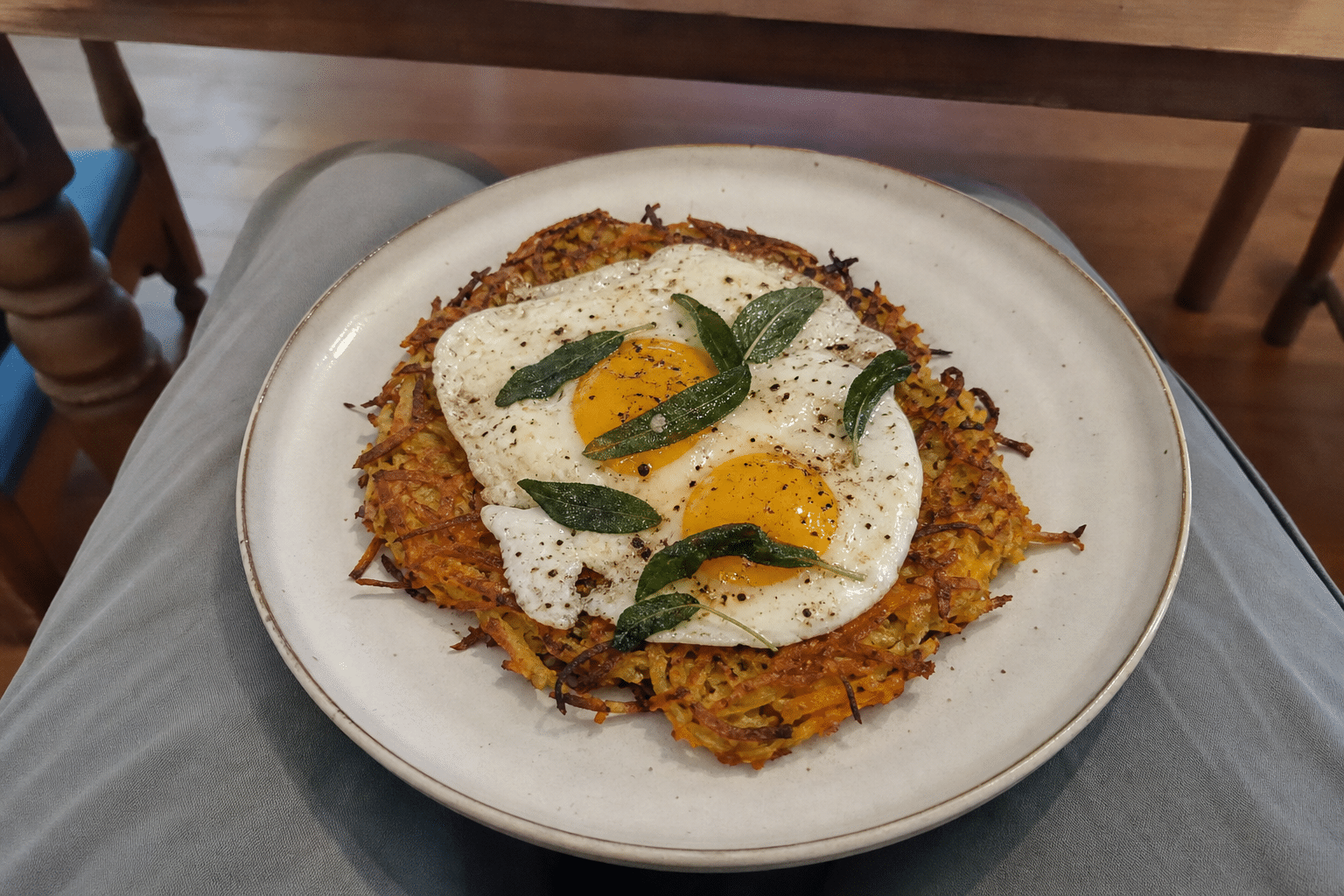

This rösti pairs Hokkaido pumpkin (or butternut squash) with waxy potatoes for a savory pancake with a crispy crust and a soft, lightly sweet interior. A fried egg cooked in sage-infused butter goes on top, with a simple chive sour cream on the side. The whole thing is on the table in 30 minutes and serves four.
The pumpkin adds color and a mild sweetness that works against the earthy potato and sharp chive. It makes for a hearty weekend brunch or a quick weeknight dinner.
Why this recipe works
Pumpkin holds more water than potato, so combining them raises the moisture level in the mixture. The essential step here is squeezing out as much of that liquid as possible before the mix ever hits the pan. A kitchen towel twisted hard over the sink for about a minute does the job. Skip it and the rösti will steam rather than fry, lose their structure, and stick.
Cornstarch – not flour – binds the grated vegetables. It sets faster at frying temperature, which is what creates the crust. Medium heat, not high, lets the inside cook through without the outside burning.
The sage leaves go into butter first, until they crisp up and color the fat golden. Then the eggs cook in that same sage-scented butter.
Ingredients
For the rösti (makes about 12)
- 14 oz (400 g) Hokkaido pumpkin or butternut squash
- 1 lb 2 oz (500 g) waxy potatoes, such as Yukon Gold
- 1 small yellow onion
- 2 large eggs
- 5 tablespoons (40 g) cornstarch
- 1 teaspoon salt
- 1/2 teaspoon black pepper
- Pinch of freshly grated nutmeg
- 4 tablespoons neutral oil, for frying (canola or sunflower)
For the sage fried eggs
- 2 tablespoons (25 g) unsalted butter
- 8 fresh sage leaves
- 4 to 12 large eggs (1 to 3 per person, depending on appetite)
- Salt and black pepper
For serving
- Scant 1/2 cup (100 g) sour cream or crème fraîche
- 1 teaspoon fresh lemon juice
- 1 tablespoon finely chopped fresh chives
- Handful of mâche (lamb’s lettuce), optional
Instructions
1. If using Hokkaido pumpkin, wash it well and leave the skin on – it’s edible and softens as it cooks. Scoop out the seeds and stringy pulp, then coarsely grate the flesh. If using butternut squash, peel it first.
2. Peel the potatoes and onion. Coarsely grate both.
Read more: The Danish-Thai chef who ran one of the world’s few Michelin-starred Thai restaurants
3. Combine the grated pumpkin, potatoes, and onion in a clean kitchen towel. Gather the corners, twist firmly, and squeeze over the sink until you’ve wrung out as much liquid as you can – about a full minute of firm pressure. This step is what separates crispy from soggy.
4. Transfer the squeezed mixture to a large bowl. Add the eggs, cornstarch, salt, pepper, and nutmeg, and mix well until evenly combined.
5. Stir together the sour cream, lemon juice, and chives in a small bowl. Cover and refrigerate until ready to serve.
6. Heat 1 tablespoon of oil in a large nonstick skillet over medium heat. For each rösti, drop 2 heaping tablespoons of batter into the pan and press into a patty about 1/2 inch (1 cm) thick. Cook 2 to 3 at a time without crowding the pan.
7. Cook until the underside is deeply golden, about 4 to 5 minutes. Flip carefully and cook until golden on the second side, about 4 more minutes. The rösti should feel firm when lightly pressed.
Read more: How to rat snack: the no-recipe fridge raid everyone is doing
8. Work in batches, adding more oil as needed. Keep finished rösti warm on a baking sheet in a 212°F (100°C) oven.
9. When all the rösti are done, wipe out the skillet. Melt the butter over medium heat, add the sage leaves, and fry until crisp and fragrant, about 1 to 2 minutes. Remove with a slotted spoon and drain on paper towels.
10. Crack the eggs into the same sage butter. Cook until the whites are fully set and the edges are lightly crispy, with yolks still soft, about 3 to 4 minutes. Season with salt and pepper.
11. Plate the rösti, place a fried egg on top of each serving, and spoon the chive sour cream alongside. Crumble the crispy sage leaves over the eggs. Serve with mâche if using.
Tips and variations
Don’t skimp on the squeeze. The drier the grated mixture, the crisper the rösti. If the mixture still looks wet after wringing, spread it in a colander for a few minutes and press again before forming patties.
Read more: How to smoke salmon at home using just a kettle grill and wood chips
Keeping them hot. The 212°F (100°C) oven hold keeps the rösti warm and crispy while you fry in batches. Don’t cover with foil or they will steam and go soft.
Eggs per serving. One egg per person makes a lighter plate alongside other dishes; two or three turns this into a full meal.
Make-ahead. The rösti batter keeps well in the fridge for up to 24 hours before frying. Stir again before cooking, as it will release a little more liquid on standing.
Substitutions. Butternut squash works well in place of Hokkaido – just peel before grating. For dairy-free, replace the sour cream dip with a squeeze of lemon and a drizzle of olive oil, and use neutral oil for frying the eggs instead of butter.
Food safety. This recipe calls for runny yolks. The USDA recommends cooking eggs until both yolk and white are firm; if you are serving anyone who is pregnant, elderly, very young, or immunocompromised, cook the yolks through until set.
Allergens: eggs, dairy (butter, sour cream).