
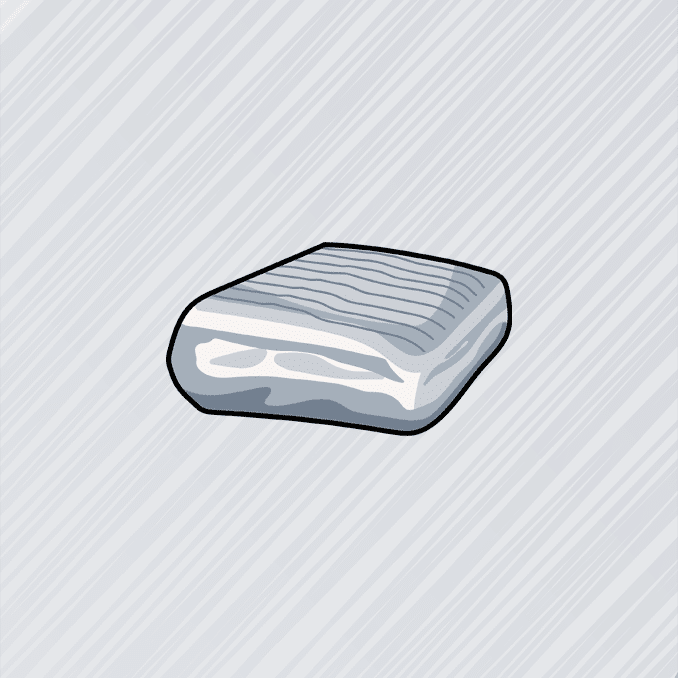

The pig contains many cuts that can be prepared deliciously and flavorfully in many different ways. We provide you with an overview of which cuts there are and how they can be prepared.
All the cuts we believe make sense to prepare via sous vide/water bath, we have presented our suggestions for time and temperature in the water bath. This is a guideline, as there are differences in the sizes of the cuts, but they give a good idea of the direction you should go in.
58-59 degrees corresponds to pink.
60-63 degrees corresponds to light pink.
64-68 degrees corresponds to well-done.

See perhaps the image on a larger scale here at www.ernaeringsfokus.dk.
Head
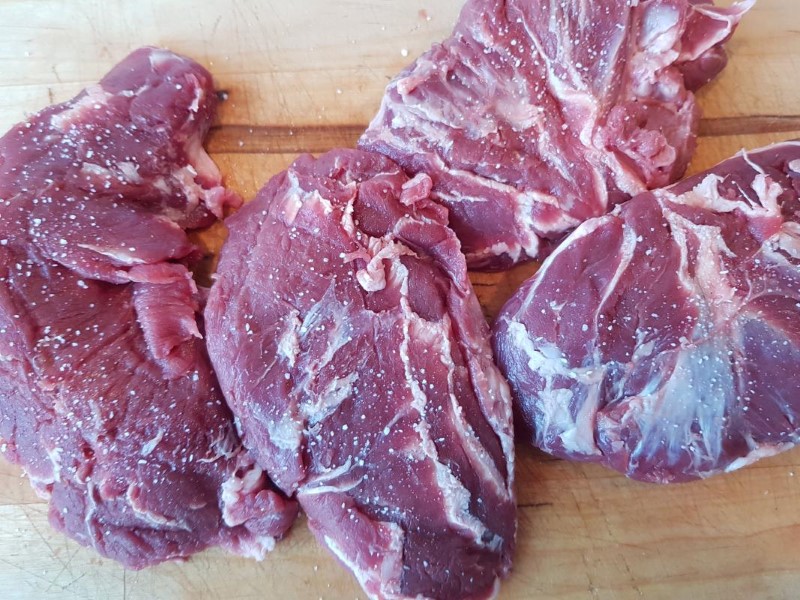
Pig Cheeks
Most parts from the head are typically used for brawn, and previously the cheeks were also most often used for that.
Today, you can buy the cheeks separately, and there is a good reason for that. The cheek muscles are the most used muscles on the pig’s head, so there is no fat at all, and the meat tastes delightful.
Pig cheeks are also known as cheek clump or pig jowls. It’s a good idea to remove the membranes before preparing the meat.
The meat needs to be cooked for a long time, and braising is the best way to do it.
Sous Vide preparation time/temperature:
Sous Vide Pig Cheeks: 62 degrees for 48 hours. Brown the meat before the sous vide and again afterward. The meat should be salted beforehand and benefits from having some fat in the vacuum bag. Read more here.
Neck
Neck Roast
A whole neck roast (neck loin) resembles a classic pork loin roast, though with a lot more fat on it. There’s rind on top, and the roast is best cooked over a long time, either at low heat in the oven, braised, or in a roasting pan.
Neck Fillet
The neck fillet is cut from the neck loin, with the rind and fat removed. The meat is best prepared over a long time, either at low heat in the oven, braised, or in a roasting pan.
The dish pulled pork is typically made from a neck fillet.

Neck Chop
Neck chops are typically 1.5 – 2 cm thick and quite fatty. Therefore, the best result is achieved by exposing them to high heat so that some of the fat melts and contributes to great flavor. This is best done on the grill. Generally, the meat benefits from being marinated before preparation.
They can also be prepared classically on a pan with salt and pepper, breaded and pan-fried in butter, or as “chops in a dish” in the oven.

Sous Vide preparation time/temperature:
Sous Vide Neck Fillet: 62 degrees for 12 hours. Brown the meat before the sous vide and again afterward. The meat should be salted beforehand.
Sous Vide Pulled Pork: 74 degrees for 24 hours. Brine the meat beforehand.
Sous Vide Neck Chop: 59 degrees for 2.5 hours. Salt the meat beforehand.
Loin
Pork Roast
The pork roast/pork loin is cut from the whole pork loin without the tenderloin. However, there is a big difference in which end you use, as the end towards the neck is higher than the other side.
The roast is typically prepared in the oven, either for about an hour and a half at 200 degrees or 5 hours at 100 degrees – then turning the oven up high to get crispy crackling.

Country Style Chop (Chops with Bone)
They are cut from the entire pork loin without rind and cap but still with a rib bone. The thickness is typically 3-4 cm. There is more flavor, juice, and power in them compared to a regular chop, as the bone is still attached.
They can be grilled or pan-fried.

Sous Vide preparation time/temperature:
Sous Vide Pork Roast: 59 degrees for 5 hours. Salt the meat beforehand.
Sous Vide Country Style Chop: 59 degrees for 1.5 hours. Salt the meat beforehand.
Tenderloin
Pork tenderloin is typically bought untrimmed with side tenderloin, silver skin, fat, and membranes. The side tenderloin and fat should be removed, and the easiest way to remove the silver skin is to lay it silver side down and make a cut with a sharp knife over the tendon, which is then run horizontally with the cutting board.
The meat is delicate and tender and should not be overcooked. As a whole “roast,” it can be pan-fried, grilled, split and filled with cheese/herbs, and wrapped in bacon/ham. The whole tenderloin can also be used for Pork Wellington, where the meat is wrapped in puff pastry.
The tenderloin can also be cut into steaks and pan-fried.

Sous Vide preparation time/temperature:
Sous Vide Pork Tenderloin: 58 degrees for 2 hours. Salt the meat beforehand.
Sous Vide Pork Tenderloin Steak: 58 degrees for 1 hour. Salt the meat beforehand.
Ham
The ham is the back part of the pig. The cuts are full of flavor but generally require longer cooking times.
Ham Schnitzel
The ham schnitzel is cut from the inside of the ham and trimmed of fat, tendons, and membranes.
The schnitzels should be thin, only about 1 cm. The meat should be cooked quickly and over high heat, so the grill or pan is preferred. They can also be breaded to add flavor and crispiness.
Ham Roast
The ham roast is cut from the outer thigh and has rind on it. The roast is typically prepared in the oven, either for about an hour and a half at 200 degrees or 5 hours at 100 degrees – then turning the oven up high to get crispy crackling.
Shank
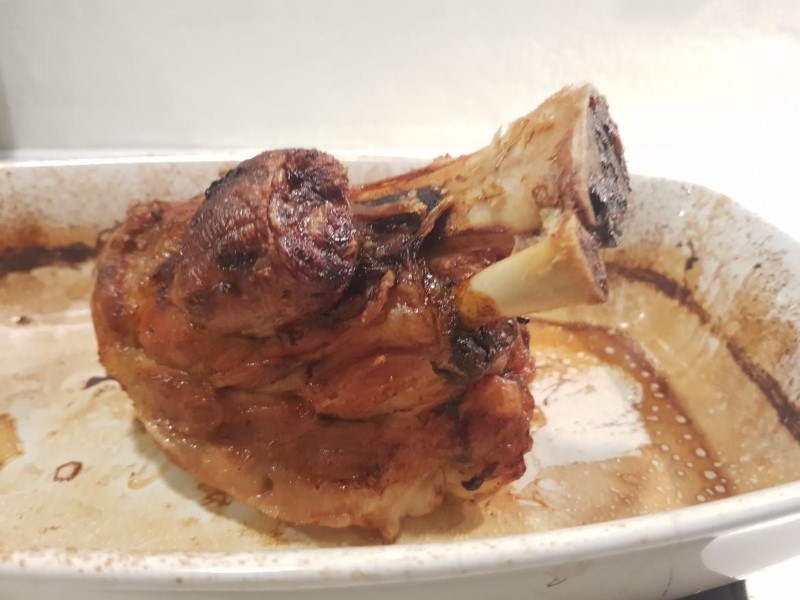
The shank is best known from the German dish Schweinshaxe/Eisbein, which is a whole shank that is braised/slow-cooked. The dish is very popular, for example, at Oktoberfest in Munich. The meat can be cooked in a pot, roasting pan, oven, or on a rotisserie on the grill. It’s important not to give it high heat until the very end when the rind can become crispy.
Knuckle
The knuckle is a lean and solid cut from the ham that becomes dry if overcooked. It should be cooked to a pale pink in the middle when served. The easiest way is to braise or slow-cook it. It can also be cut into strips/cubes, where it is suitable for stews.
Minced Meat
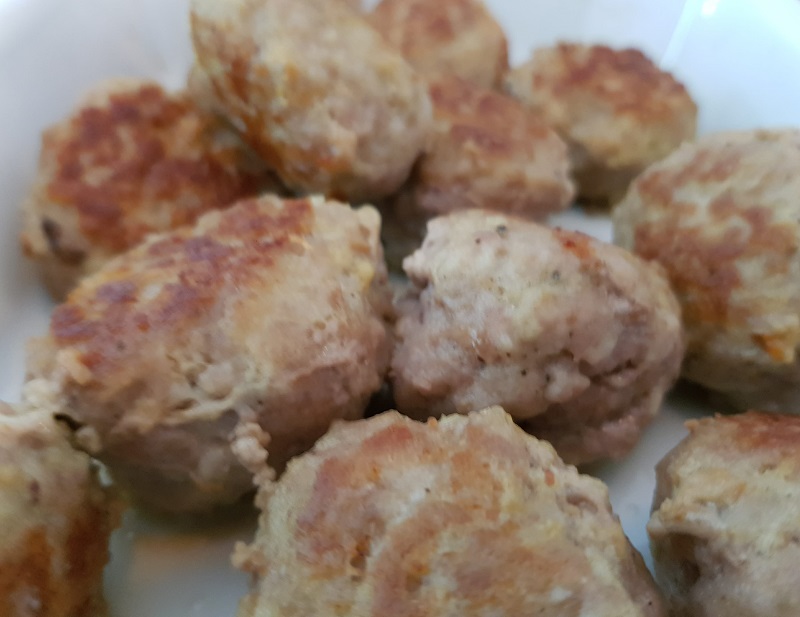
Minced pork is not only made from the ham scraps, but a lot of it comes from here. The meat is delicious and very suitable for meatballs or meat patties.
Sous Vide preparation time/temperature:
Sous Vide Ham Schnitzel: 59 degrees for 2 hours. Salt the meat beforehand.
Sous Vide Ham Roast: 61 degrees for 11 hours. Salt the meat beforehand.
Sous Vide Shank: 66 degrees for 12 hours. Salt the meat beforehand.
Sous Vide Knuckle: 61 degrees for 11 hours. Salt the meat beforehand.
Belly
Rib Roast
The rib roast is typically cut from the pork belly. The roast is typically prepared in the oven, either for about an hour and a half at 200 degrees or 5 hours at 100 degrees – then turning the oven up high to get crispy crackling.
Spareribs
Spareribs are also known as spare ribs or riblets. They should be slow-cooked or braised and preferably finished on a grill/pan.
Roast Pork
The slices are cut from the pork belly into thin slices. The bones and cartilage are removed, and it varies whether the rind is kept on or not.
Roast pork can be prepared in the oven, on a pan, or on the grill. Additionally, it can be breaded.
Sous Vide preparation time/temperature:
Sous Vide Rib Roast: 59 degrees for 8 hours. Salt the meat beforehand.
Sous Vide Spareribs: 61 degrees for 35 hours. Salt the meat beforehand.
Shoulder
Shoulder Roast
The shoulder blade is located under the neck fillet and can be used for a roast. The roast is full of good flavor but needs to be slow-cooked or braised.
The roast can be cut into steaks of 1.5 cm thickness or strips for stews.
Sous Vide preparation time/temperature:
Sous Vide Shoulder Steak: 63 degrees for 4 hours. Salt the meat beforehand.
Bon Appétit has this video showing the cutting of a pig: