
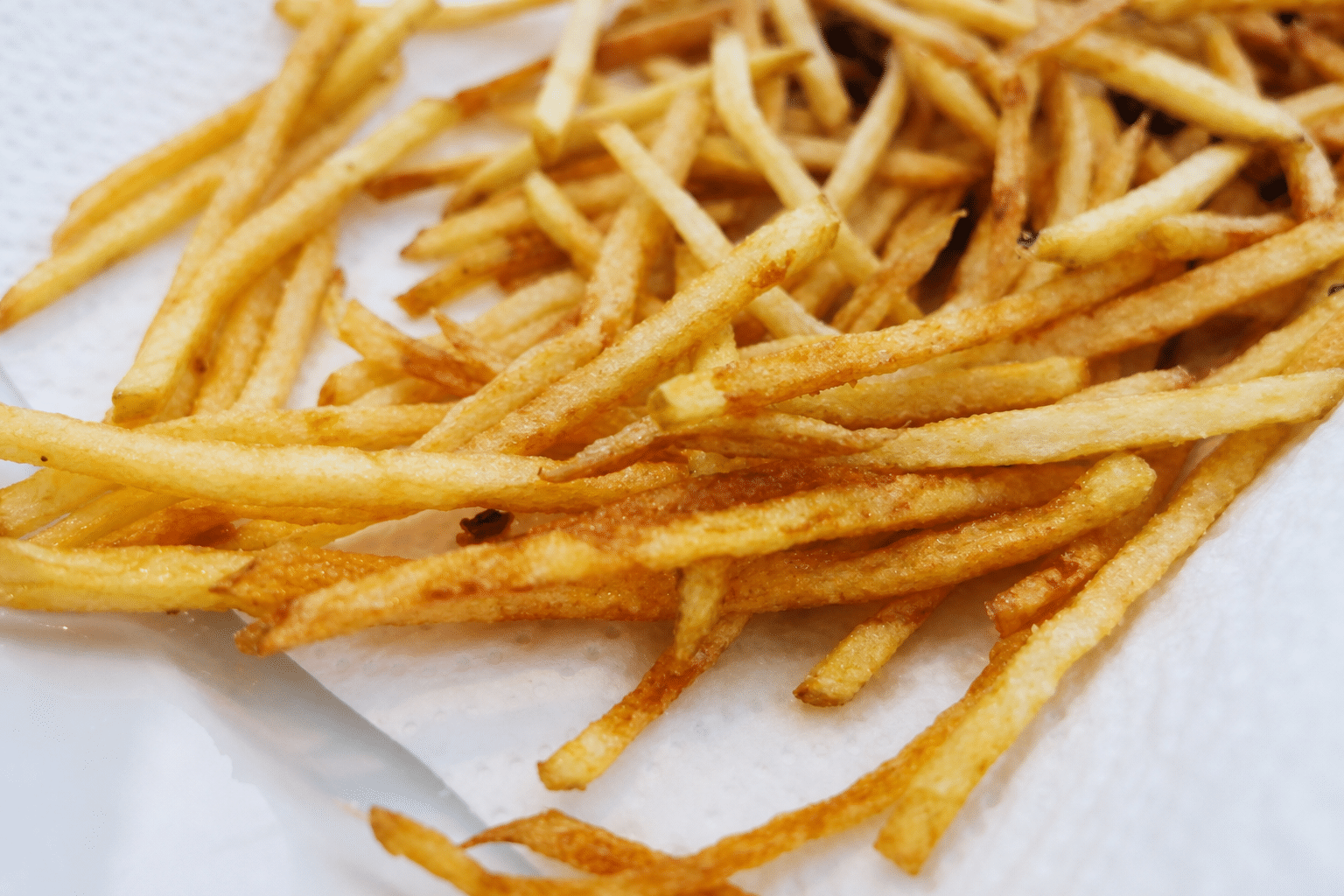

Pommes pailles are very thin French potato straws, deep-fried until they crunch all the way through rather than just on the outside. The name means “potato straw” in French, and the description is exact: these are not thick fries with a soft center. They are golden, shatteringly crisp throughout, and they stay that way whether you serve them hot alongside a steak or cold as a cocktail snack an hour later.
The ingredient list is three items: potatoes, oil, salt. The technique is the whole story.
Why these out-crisp regular fries
A regular fry has a starchy interior that steams soft under its crust. Pommes pailles skip that problem in two ways. First, they are sliced so thin there is barely any interior to speak of. Second, and more importantly, the cut potatoes soak in water before frying, which draws out a large portion of the surface starch.
Less surface starch means less gumminess, faster moisture loss, and a crunch that holds. It is the same science behind crispy roast potatoes and twice-fried fries, applied to a cut so thin the whole thing becomes the crust.
Ingredients
- 4 baking potatoes (russets work perfectly)
- 1 quart (about 1 liter) neutral-flavored oil, such as vegetable or canola
- Salt to taste
Serves 2. Prep time: 1 hour 10 minutes. Cook time: 6 minutes.
Read more: Cranberry orange quick bread for the holiday table: tangy, tender, and done in an hour
Instructions
1. Slice the potatoes. Set a mandoline to its finest julienne setting and run the potatoes through it carefully to get thin, matchstick-width straws. A sharp knife and steady hands will also work for a rougher version, but a mandoline gives consistent thickness, which means consistent cooking.
2. Soak out the starch. Put the potato straws into a bowl of cold water and let them sit for 30 to 60 minutes. Change the water two or three times during soaking, you will see it turn milky white as the starch releases. That milkiness is exactly what you want to get rid of.
3. Dry them completely. Spread a clean kitchen towel on the counter. Lay the drained potato straws across one half, fold the other half over, and press firmly. Pat until they feel genuinely dry to the touch. Any surface moisture will cause the oil to spatter and will slow down the browning. For extra insurance, you can spread the dried straws on a plate and freeze them for 30 to 60 minutes, this removes the last of the surface moisture and gives an even crispier result.
4. Heat the oil. Pour the oil into a deep, heavy pot or a deep fryer. Use a cooking thermometer and heat the oil to 365°F (185°C). Do not skip the thermometer: oil that is too cool makes greasy straws, oil that is too hot burns them before they crisp.
Read more: Roast Brussels sprouts at 425°F and even Thanksgiving skeptics ask for seconds
5. Fry in batches. Lower a small handful of potato straws into the oil at a time. Overcrowding the pot drops the oil temperature sharply and leads to steaming instead of frying. Fry each batch for a few minutes, stirring gently, until the straws are golden and crisp. Lift them out with a slotted spoon or spider and drain on a paper towel.
6. Season and serve. Salt immediately while the straws are still hot. Serve right away alongside a steak or other meat, piled on top of a salad, or poured into a bowl for snacking. They hold their crunch cold too, which makes them a solid make-ahead option for parties.
Tips and variations
Use a thermometer. The difference between 340°F and 365°F is the difference between a limp straw and a crisp one. A cheap clip-on fry thermometer is worth every penny here.
Fry small batches. A good rule: the straws should float freely in the oil with room between them. If they pile up, pull some out and fry in a second round.
Read more: The thick, slow-simmered beef and barley soup that fills the house on a cold afternoon
The freezer trick is real. If you have the time, the extra 30 minutes in the freezer after drying genuinely makes a difference. The cold pulls residual moisture from the inside of the straws before they hit the oil.
Knife vs. mandoline. A mandoline is not strictly required, but it delivers the kind of uniform, paper-thin straws that crisp evenly. Hand-cut straws will vary in thickness and some will cook faster than others. If you do use a knife, aim for the thinnest julienne you can manage.
Serving cold. Unlike most fried foods, pommes pailles hold their crunch well as they cool. Set them out in a bowl at room temperature and they will stay snappy for a good while, ideal alongside cold drinks at a gathering.
Oven and air fryer versions. Both work and are less messy, but neither matches the full crunch of deep-frying. If you go that route, spread the dried straws in a single layer, use a high temperature, and expect a somewhat softer result.