
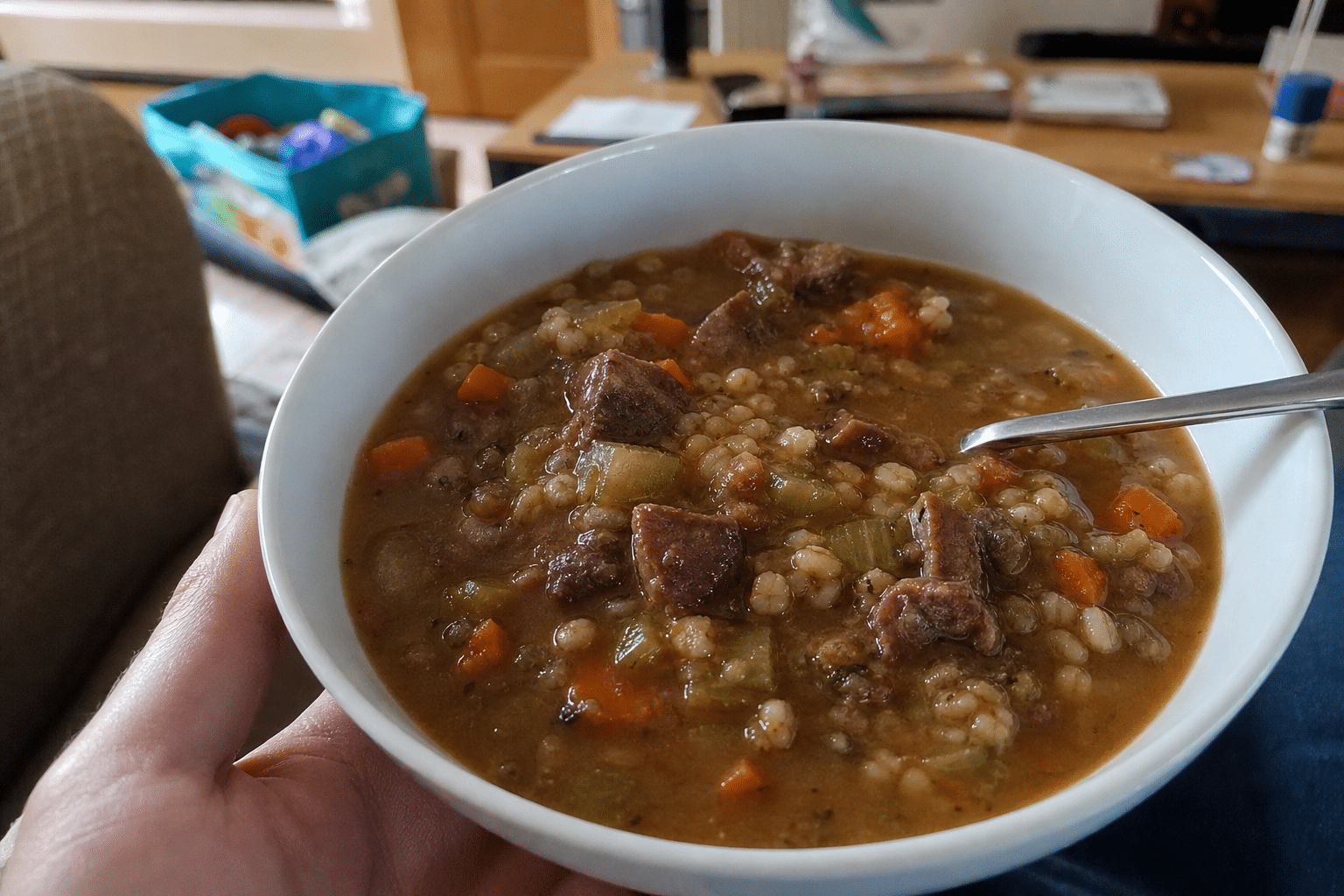

The difference between beef and barley soup and beef stew is the barley: pearl barley absorbs liquid as it cooks, releasing starch that thickens the broth from the inside out into something between a soup and a stew. The result is hearty, deeply savory, and built for cold afternoons.
This recipe uses boneless chuck, which breaks down over low heat into tender, pull-apart pieces. Two techniques make the difference: browning the beef properly before anything else, and adding the barley at the right moment.
Why this recipe works
Browning is non-negotiable. When beef makes contact with a hot, dry pan, the surface undergoes a rapid color and flavor change that carries the whole pot. If you crowd the pan, the meat steams instead of browning. Work in batches, two or three, depending on your pan, and give each piece room.
The other key is barley timing. Pearl barley cooks in 45-50 minutes and continues absorbing liquid as it sits. Add it at the start and you get a paste, not a soup. Add it in the last 45-50 minutes of cooking and it reaches a soft, chewy texture while leaving the broth thick but pourable.
Seasoning comes at the end. Barley absorbs salt as it cooks, which means a soup that tasted balanced before the barley goes in can be under-seasoned by the time it’s done. Taste and adjust only after the barley is fully cooked.
Ingredients
Serves 6-8.
- 2 lbs (900 g) boneless beef chuck, cut into 1-inch (2.5 cm) cubes
- 2 tablespoons vegetable oil
- 1 large yellow onion, diced
- 3 medium carrots, cut into 1/2-inch (1.25 cm) rounds
- 3 celery stalks, sliced
- 4 garlic cloves, minced
- 2 tablespoons tomato paste
- 8 cups (1.9 L) low-sodium beef broth
- 1 cup (200 g) pearl barley
- 2 bay leaves
- 1 teaspoon dried thyme
- 1/2 teaspoon black pepper
- Salt to taste
Instructions
1. Pat the beef dry with paper towels. Season lightly with salt and pepper.
Read more: The Danish chef nicknamed the Umami Queen shares her best tips for home cooks
2. Heat 1 tablespoon of the oil in a large Dutch oven or heavy pot over medium-high heat until shimmering. Add half the beef in a single layer, with space between pieces. Brown without moving for 3-4 minutes per side until a deep, mahogany crust forms. Transfer to a plate. Repeat with the remaining tablespoon of oil and the second batch of beef.
3. Reduce heat to medium. Add the onion, carrots, and celery to the same pot. Cook, stirring occasionally, until softened, about 6-8 minutes. Add the garlic and cook 1 minute more.
4. Add the tomato paste and stir to coat the vegetables. Cook for 2 minutes, stirring, until the paste darkens slightly.
5. Pour in the broth, scraping up any browned bits from the bottom of the pot. Return the beef and any accumulated juices. Add the bay leaves and thyme. Bring to a boil, then reduce to a gentle simmer.
Read more: The pumpkin cheesecake you make days ahead for a crack-free, creamy slice
6. Cover and simmer for 60 minutes, until the beef is beginning to turn tender. The broth should bubble gently throughout; adjust heat as needed.
7. Stir in the pearl barley. Continue simmering, partially covered, for 45-50 minutes, until the barley is fully tender and the broth has thickened. Per USDA FSIS, beef should reach a minimum internal temperature of 145°F (62.8°C). After an hour-plus of simmering in hot broth, the meat will be well past that threshold and fully fork-tender.
8. Remove the bay leaves. Taste carefully and adjust salt. The barley will have absorbed a noticeable amount during cooking, so the soup will likely need more than you expect.
9. Serve in deep bowls.
Tips and variations
Don’t skip the sear. Beef added to the pot without browning produces a pale, flat broth. The browned bits left in the pot are flavor, deglaze with the broth and scrape up every bit.
Read more: The 15 best pizza slices in New York City
Pearl barley vs. hulled barley. Pearl barley is polished, cooks faster, and gives a creamier result. Hulled barley is chewier and takes about 60-70 minutes. If you use it, add it after the first 30 minutes of simmering rather than the last 45.
Make-ahead and storage. This soup keeps well and tastes better the next day. The barley continues absorbing liquid as it sits, so add a splash of broth when reheating. It keeps in the refrigerator for up to 4 days or in the freezer for 3 months.
Add mushrooms. A handful of sliced cremini mushrooms added with the aromatics in step 3 builds additional depth in the broth.
Gluten note. Barley contains gluten. For a gluten-free version, substitute long-grain brown rice, added in the last 40-45 minutes, or stir in cooked lentils at the end.