

Advertisement – we received the products as a gift – the opinion is our own!
Meat-free meatballs and patties – my younger self (Per in his early 20s) would have thrown a fit and refused to even taste them.
A lot has changed with me (and Danes in general) in recent years. Just think about how recently it was that the Alternativet party proposed a meat-free day and there was an outcry in the media and among the public. Now you see that most families have at least one meat-free day, and in general, the amount of meat people have for dinner is decreasing. The same is true for my family.
When Planteslagterne reached out to us and asked if we wanted to test two of their products, I had to think about it, but quickly decided to say yes to trying them.
I’ve heard praise for their products, especially because they are free from additives. The first “meat substitute products” on the market were filled with E-numbers and salt, so they quickly earned a (deserved) bad reputation.
We received two different versions and decided to share them between two families, so they could be tested in different approaches.
The first surprise I got was that they were actually pre-cooked, so they just needed to be heated. Whether this was to better ensure consistency, we don’t know, but I had expected to work with a soft “mixture.” That was definitely not the case.
The two products we tested were the following:
1) Dilldelle
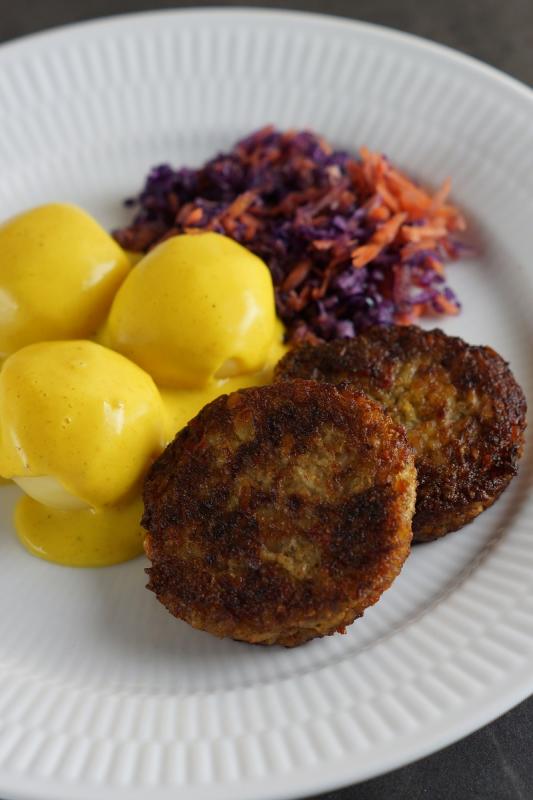
The dilldelle consists primarily of white beans, yellow split peas, and cauliflower. I chose to fry them in butter (yes, I know, then it’s not vegan anymore) and serve them with potatoes, curry sauce, and cabbage. I love fish cakes with curry sauce and potatoes, so that’s why I thought of that combination. Unfortunately, even though I thought the idea behind it was good, I didn’t think the cakes hit the mark. The taste/texture was certainly not bad, you got full from them, but I don’t think I would buy them again.
2) Beetroot Burger
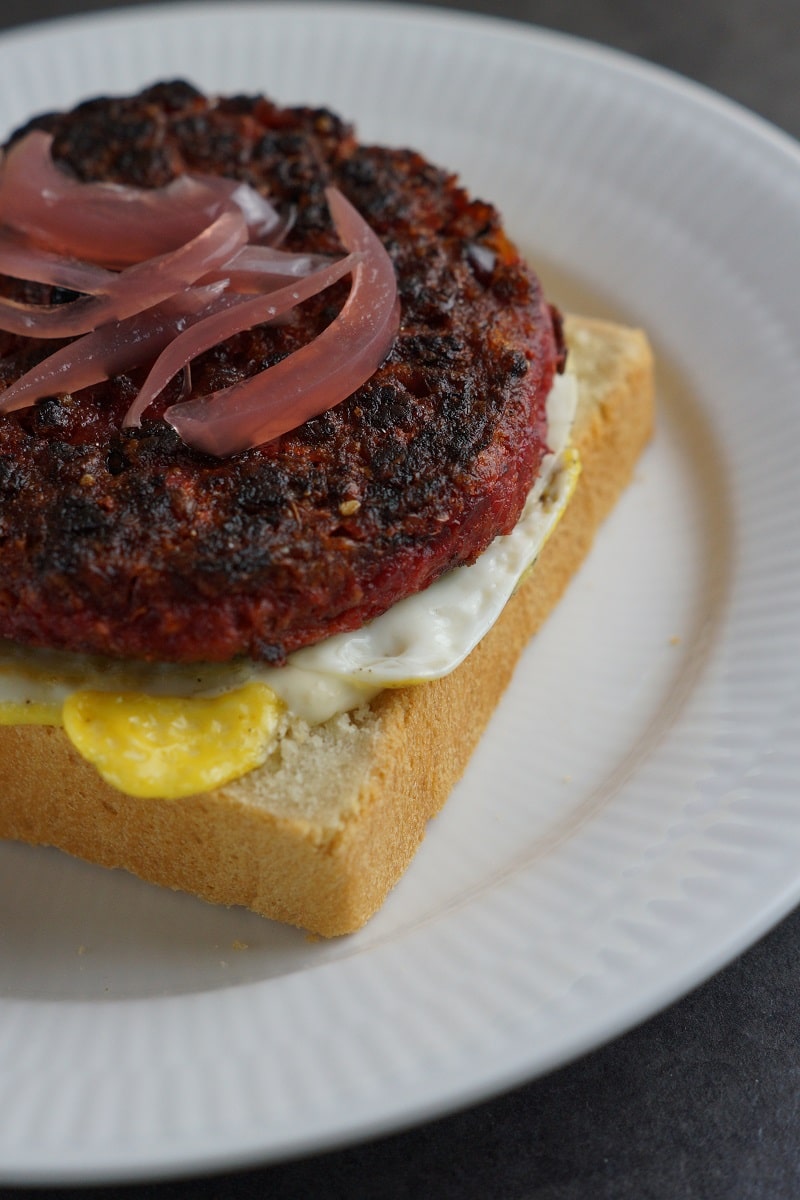
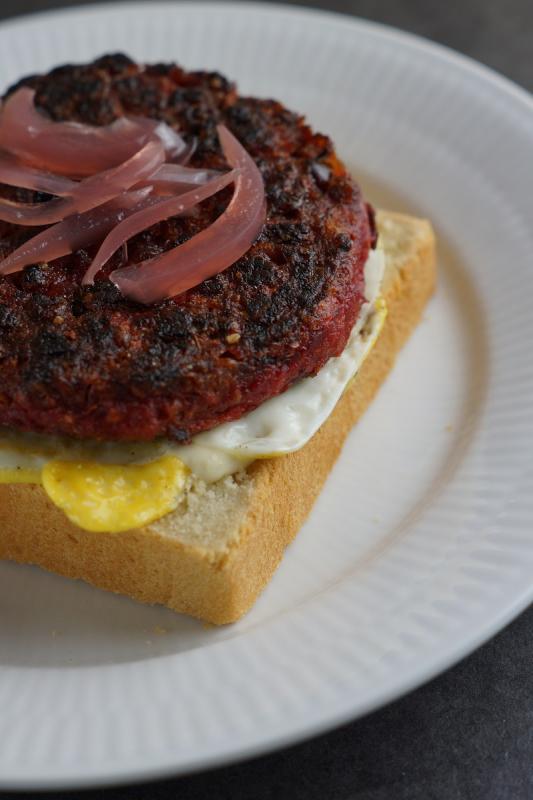
The beetroot burger consists primarily of beetroot, sweet potatoes, and brown rice. When I was going to test them the next day, I was naturally quite skeptical. For one, I am definitely not a fan of both beetroot and sweet potato, so I started thinking about baking a loaf of bread as an alternative. We decided to bake a toast bread and go in the direction of a Parisian steak. Rarely have I been so positively surprised – whether it was very low expectations or taste for the money, I can’t say off the top of my head. But the result was good.
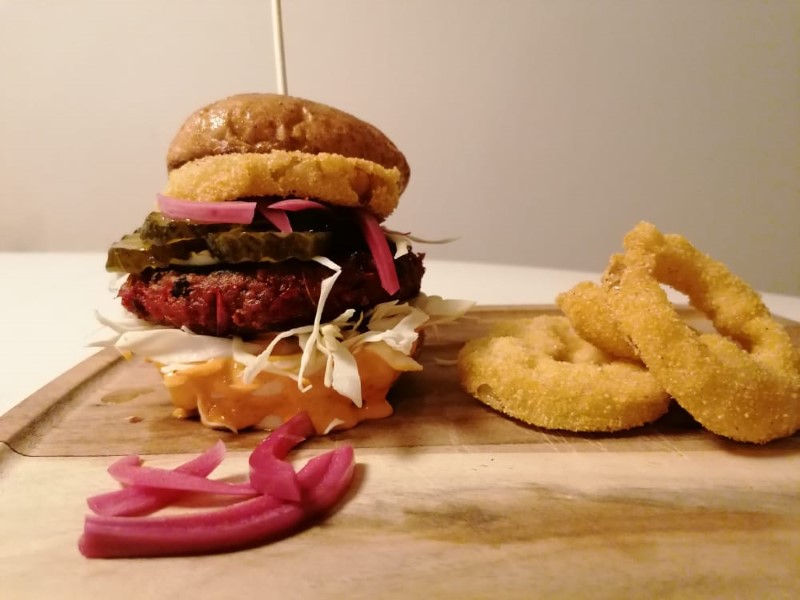
In the other family, Thomas chose to make burgers with pickled red onions, cucumber, cabbage, and onion rings for both types of plant-based mince. Here, especially the beetroot burger was the one that performed best. The crispy onion rings gave the dish the crunch that might generally be missing in plant-based mince.
He thought the dilldelle was better in a burger. This was partly because it was a bit firmer and didn’t mush out when you bit into the burger. But perhaps the dilldelle would also have done well on a slice of rye bread with remoulade? The beetroot burger had a delicious taste but was a bit too mushy.
So the main conclusion is that plant-based mince is fortunately not so scary, so it is definitely worth a shot to try.
We have pictures of the dishes here:
If you feel like giving it a try yourself, we have a recipe for homemade plant-based mince made from cauliflower here.