
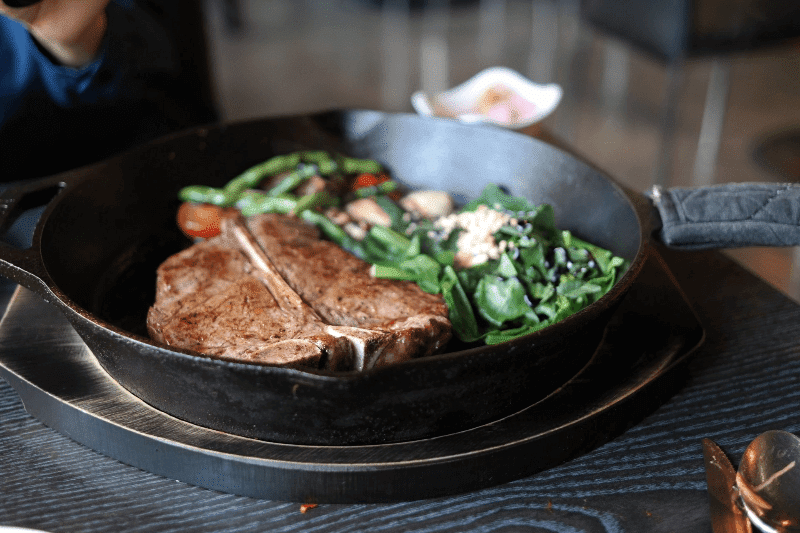

“The roast must rest before being carved, otherwise all the juices will run out!”
Hmm, is that really true?
There are countless myths circulating within cooking and preparation, and they are alive and well. Some of them can really divide opinions and spark heated discussions around the dinner table.
That the roast needs to rest before being carved is, for example, one of the very persistent myths. However, letting the roast rest has no impact on the flavor, juiciness, or tenderness of the meat.
We know, it surprised us too. But it doesn’t stop here: There are indeed many other commonly accepted myths that have no basis in reality.
Why do myths arise?
Some myths are, for example, based on ancient, debunked theories, while others are based on what many of us would simply call common sense. Unfortunately, there is rarely scientific evidence for them, and now it’s time to debunk these myths once and for all.
Below we have gathered some of the myths that can really create discord among friends. Most don’t hold up, and you’ll definitely be surprised.
Widespread myths
“The roast must rest before being carved. It retains the juices”
FALSE. As mentioned, it is one of the very persistent myths that the roast must rest to be as juicy as possible. Many mistakenly believe that the juices will run out of the roast if it hasn’t rested first. What actually matters for juiciness is the core temperature. Letting the roast rest only risks it continuing to cook and becoming overdone. If you always pay attention to the core temperature and not on letting the roast “rest”, you are much better off.
“The meatball mixture must rest before shaping into meatballs”
FALSE. It is said that the meatball mixture must rest to become firmer, more flavorful, and juicy. Resting makes no difference to the mixture. However, how long you mix the mixture does matter: The longer it is mixed, the firmer it becomes. It can also become too firm/hard, so be cautious, especially if using a mixer.
“Pork should be well-cooked”
BOTH. Unless you are working with ground meat, there is no reason why meat cannot be prepared pink. This also applies to pork. Any bacteria are on the surface of the meat, while the inside of the meat is almost sterile. The myth probably stems from a time when pork could contain a parasite called trichina. However, trichinae have not been found in Danish meat for the past 90 years.
“Meat absorbs the fat from the frying pan”
BOTH. Many believe it greatly impacts the calorie count whether the chicken breast, steak, or pork chop is fried in oil or not. The fat indeed forms a very thin layer on the meat, but it cannot penetrate into the meat. Whether you dry-fry or not has no significant impact on the nutritional profile. If you remove the meat from the pan immediately, only about 1 gram of fat per 100 grams of meat remains on the surface. However, if you leave the meat in the fat, more fat will cling to it.
“A good fat edge gives flavor to the steak”
FALSE. It is said that the fat edge imparts flavor to the meat/steak. The fat edge indeed gives a nice, dark color, but it does not result in a more flavorful steak. The fat edge even makes the meat less tender. Therefore, there is nothing wrong with trimming the fat edge from the meat before frying – quite the contrary.
“The longer the meat cooks, the more tender it becomes”
BOTH. It is commonly known that meat should be tenderized to become – yes – tender. Meat with a lot of connective tissue, such as pork cheeks, must be slow-cooked to become really tender and delicious. Whereas fattier cuts can withstand longer cooking times, lean cuts just become dry and unappealing if boiled or fried for too long. A lean cut will never become more tender by cooking it for longer. It’s all about the core temperature.
“Meat must be browned to seal the pores. It retains the juices”
FALSE. This is one of the myths that is thriving the most. Sealing the pores and enclosing the juices is simply impossible. It was a German chemist in the mid-19th century who put forward this theory. Just a few decades later, the theory was debunked, yet the myth has persisted. When you place the meat on a sizzling hot pan, the liquid evaporates quickly. At lower temperatures, the juices will run onto the pan before evaporating. Comparing the two scenarios, it’s not surprising that it may seem like high heat results in less liquid loss. That high heat produces a better sear, which gives the meat a good flavor, is a whole different matter.
Now you are well-prepared for the next big discussion at the dinner table. You will most likely be met with skepticism, but in that case, you can always refer to this article. We’ll take the fall for you!
Source: Gode Råvarer