
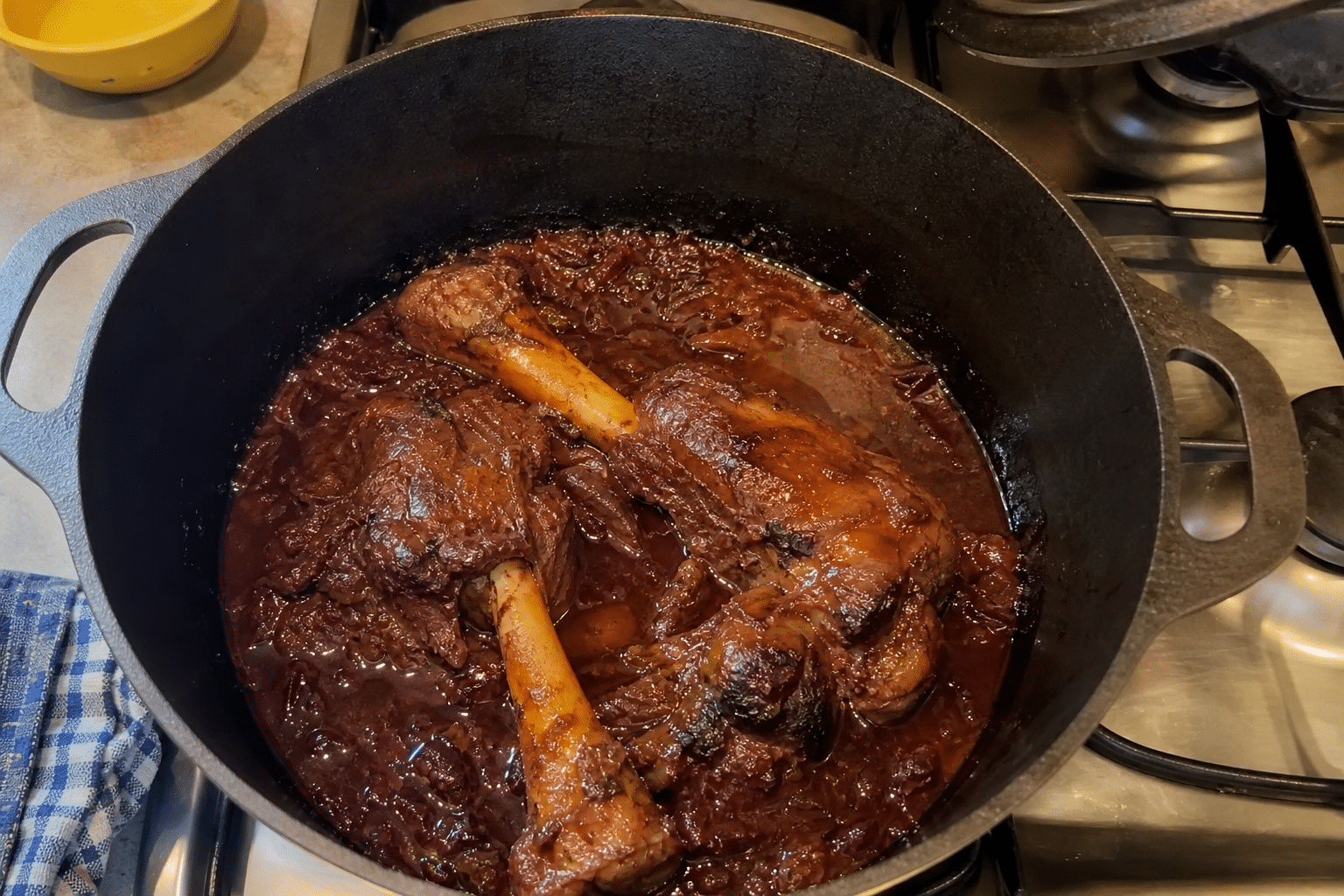

Braised lamb shanks are the dinner party dish that makes guests think you spent all day at the stove. You didn’t. After about 20 minutes of active work, the oven takes over, transforming tough, collagen-rich shank meat into something so tender it slides off the bone, pooled in a rich, winey sauce that coats the back of a spoon.
This is a classic braise in the Italian-French tradition: sear hard, deglaze with wine, build a vegetable base, and let low, steady heat do the work. The carrots, onions, and parsnips you use don’t survive as identifiable pieces – they dissolve into the braising liquid and are strained out, leaving behind deep savory flavor. November is exactly when all three are at their peak, according to the USDA SNAP-Ed seasonal produce guide.
This recipe serves 4.
Why this recipe works
The sear is non-negotiable. Lamb shanks develop enormous flavor from the Maillard reaction: when the proteins and sugars on the meat’s surface hit a very hot, dry pan, they brown and generate hundreds of new flavor compounds. A pale, lightly colored shank going into the braise produces a pale, lightly flavored sauce coming out. Take your time and get every surface genuinely dark.
The low oven temperature – 325°F (163°C) – is deliberate. Braising at higher heat tightens the muscle fibers before the collagen has time to dissolve, leaving the meat dry and stringy. At 325°F, collagen converts slowly to gelatin over 2.5 to 3 hours. That gelatin is what gives braised meat its silky, pull-apart texture and gives the sauce its body.
USDA FSIS sets the safe minimum internal temperature for lamb at 145°F (63°C), but a properly braised shank will reach well above 200°F by the time it’s done. The goal here isn’t food safety compliance alone – it’s the tenderness that only comes from long, slow cooking past that point.
Ingredients
For the braise:
- 4 lamb shanks (about 1 lb/450 g each)
- 2 teaspoons kosher salt, plus more to taste
- 1 teaspoon black pepper
- 2 tablespoons neutral oil (vegetable or grapeseed)
- 1 large onion, roughly chopped
- 2 large carrots, roughly chopped
- 2 medium parsnips, roughly chopped
- 6 garlic cloves, smashed and peeled
- 3 tablespoons tomato paste
- 1 bottle (750 ml) dry red wine (Cabernet Sauvignon, Merlot, or Syrah)
- 2 cups (480 ml) beef or lamb stock
- 4 sprigs fresh rosemary
- 4 sprigs fresh thyme
- 2 bay leaves
To serve:
– Mashed potatoes, creamy polenta, or crusty bread
Read more: Old-fashioned chicken and dumplings, with the fluffiest dumplings and the richest broth
Instructions
1. Preheat your oven to 325°F (163°C). Pull the shanks from the refrigerator 30 minutes before cooking. Pat them completely dry with paper towels – surface moisture prevents browning. Season generously all over with the salt and pepper.
2. Sear the shanks. Heat the oil in a large Dutch oven or heavy oven-safe pot over medium-high heat until it shimmers. Working in batches (do not crowd the pan), sear the shanks for 3 to 4 minutes per side without moving them, until deeply browned all over. Plan on 12 to 15 minutes total. Set the seared shanks aside on a plate.
3. Build the flavor base. Reduce the heat to medium. Add the onion, carrots, and parsnips to the same pot. Cook, stirring occasionally, until softened and beginning to color at the edges, about 6 to 8 minutes. Add the garlic and tomato paste and stir for 2 minutes, until the paste darkens to a deep brick-red.
4. Deglaze with wine. Pour in the full bottle of red wine. Scrape up every browned bit stuck to the bottom of the pot. Raise the heat to high and let the wine boil and reduce by roughly one-third, about 10 minutes.
Read more: Layered beef lasagna with long-simmered meat sauce and bechamel
5. Add stock and aromatics. Pour in the stock and add the rosemary, thyme, and bay leaves. Nestle the lamb shanks back in. The liquid should come at least halfway up the shanks; add a splash more stock if needed. Bring to a bare simmer.
6. Braise in the oven. Cover tightly with a lid and transfer to the oven. Braise for 2.5 to 3 hours, turning the shanks once at the halfway point. The shanks are done when the meat has pulled back visibly from the knuckle end and separates from the bone with a gentle tug.
7. Finish the sauce. Lift the shanks out carefully and set aside, covered loosely with foil. Strain the braising liquid through a fine-mesh sieve into a wide saucepan, pressing firmly on the vegetables to extract all their flavor. Discard the solids. Skim as much fat as possible from the surface (or refrigerate for 30 minutes and lift the solidified fat off cleanly). Bring the liquid to a boil over high heat and reduce until glossy and thick enough to coat a spoon, 10 to 15 minutes. Taste and adjust salt.
8. Serve. Set a shank on each plate over mashed potatoes or polenta. Spoon the sauce generously over the top.
Read more: Rich turkey gravy from pan drippings, ready before the bird is carved
Tips and variations
Make it the day before. This dish improves overnight. Braise a day ahead, cool completely in the pot, then refrigerate. The fat solidifies on the surface – lift it off cleanly the next day, then reheat the shanks gently in the strained sauce over low heat for about 20 minutes before serving.
Wine choice. Use something you’d pour in a glass but don’t save for a special occasion. Cabernet Sauvignon gives a full-bodied, tannic sauce; Merlot produces something rounder; a Syrah or Côtes du Rhône adds a peppery depth. Avoid bottles labeled “cooking wine” – they are salted and will make the sauce harsh.
Fresh herbs vs. dried. If you can’t get fresh rosemary and thyme, use 1 teaspoon of each dried, added with the stock. A strip of orange peel is a traditional Italian addition that adds a subtle brightness to the sauce.
Sauce too thin? Mix 1 teaspoon of cornstarch with 1 tablespoon of cold water and whisk it into the simmering, strained sauce. Cook for 2 minutes. It tightens the texture without muddying the flavor.
Leftovers. Store the meat in the sauce – it keeps in the refrigerator for up to 4 days. The leftovers shred well and work over pasta or in a sandwich the next day.