
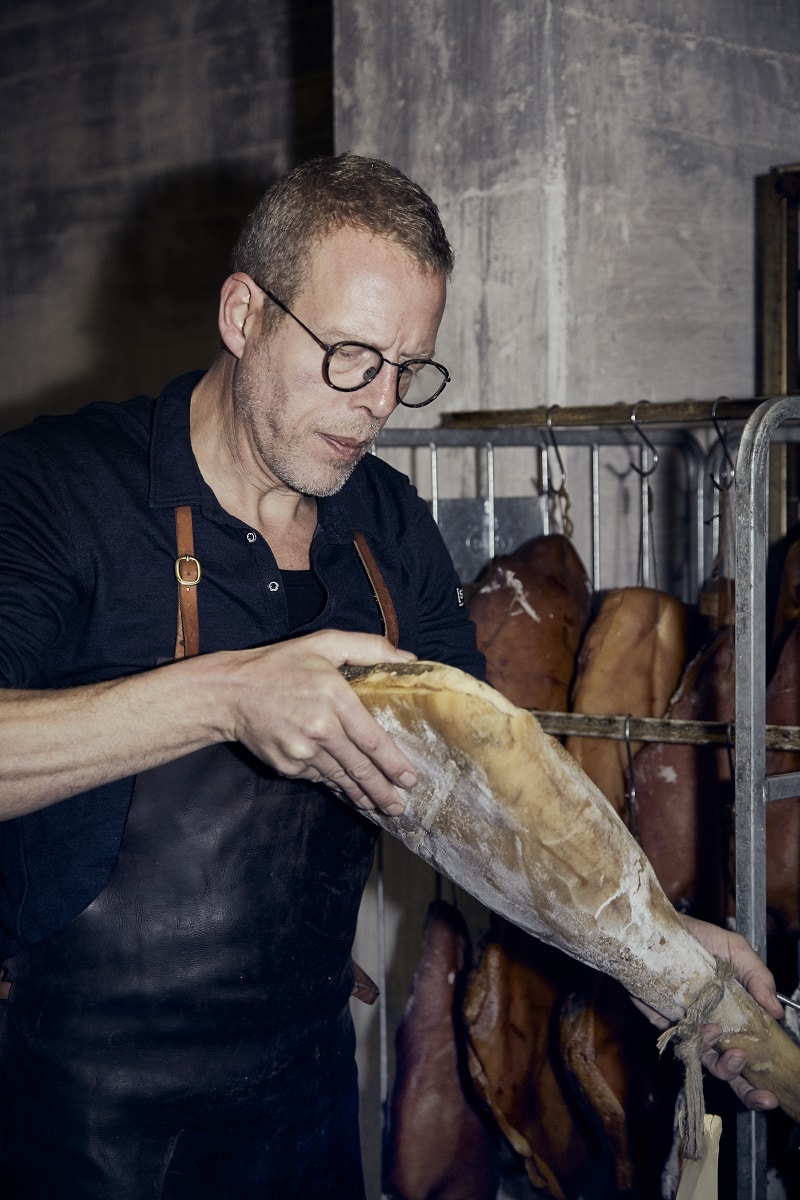

Michael wanted to create a reference point for supermarket products
When Michael Museth founded Folkets Madhus eight years ago, he had a relatively simple goal in mind: To bring pride back to the butcher’s trade.
Additionally, he wanted to give people a reference point – something they could compare supermarket’s pre-fabricated goods against – and teach them about quality ingredients.
“My mission was also to educate future generations about cooking with seasonal ingredients. It bothers me that you can get strawberries all year round, or at least that people don’t know they are in season – and thus at their best – during the summer,” says Michael Museth.
Though trained as a butcher, he didn’t actively work in that field because he found employment in the culinary and catering world.
“I reached a point where it was all about making money. I missed having a purpose and meaning in what I did,” he says.
He feels he has found that purpose with Folkets Madhus, where through courses for children and adults, catering, and production of butcher’s goods, he shares and communicates his knowledge and passion for food.
Michael Museth hopes this can eventually contribute to more young people considering a career as butchers and that we, as consumers, begin to care more about quality ingredients.
“Today, the focus is on making as many products as quickly as possible; they must be uniform and cheap. This results in many products being filled with preservatives and additives,” he says.
If consumers become aware of other products on the market but still prefer the pre-fabricated ones, that’s perfectly fine with Michael Museth. It’s the awareness that’s important.
“Then they have a reference point, something to compare supermarket goods with. And it’s really okay if consumers prefer other products over mine,” he says.
We ask – Michael answers
Learn about Michael Museth’s journey to what he does today, the ambition behind Folkets Madhus, and why he struggles with sous vide.
Education?
I am a trained butcher, but I’ve always worked independently. From 1997 to 2013, my focus was mainly on the culinary world before returning to the butcher trade and founding Folkets Madhus – still as an independent.
Why did you choose that education?
It was by chance. I was tired of school after primary school and quite young – 16 years old. Since I was 13, I had worked as a dishwasher for a butcher who then offered me an apprenticeship. I had a lot of energy swirling around in me, and my parents said I couldn’t just lie on the sofa; I had to do something. So, I accepted the apprenticeship.
I have worked in Egypt for six months as a butcher and have used my skills in my independent career, but not in the traditional way.
I also worked for Michel Michaud in France, and among other things, I made sausages and cut meat when I was employed in a kitchen. But it has been very kitchen-oriented, with the goal of creating proper things and proper cuts for a kitchen.
How has your journey been to what you do today?
It’s been incredibly random. I tell myself that I’ve always worked with a purpose. Just before I started Folkets Madhus, I was caught up in an economy mindset where everything was about making money. I missed having a purpose and meaning in what I did. The dream was – and is – to create change. I wanted to bring back pride to the trade. Today, it’s often about making many products quickly, and they need to be very uniform. I want to make butchers rock stars again. So that as a consumer, you trust the butcher.
What is Folkets Madhus? What is the ambition and vision?
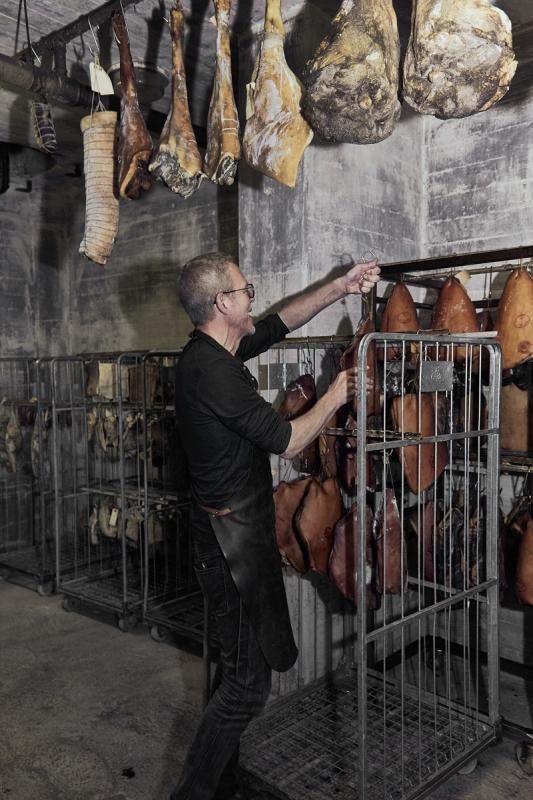
We are an organic community house. We make organic food for kindergartens and nurseries, have catering, and a butcher section, which is probably the most prominent part. We are working to produce butcher products without additives at prices everyone can afford. Preferably products that are as original as possible.
One of my biggest resources is time because my products require time. They need to mature, hang, and dry. But I believe you can taste that. I want to open the eyes of the average consumer. My products are initially a bit more expensive than those you can buy in the supermarket, but my raw materials are also much more expensive. I believe we should eat less but better meat.
In my opinion, my products are tastier, allowing you to eat less. It doesn’t really bother me if people prefer mine or factory-made, but I want to inform and create something people can compare against.
What is your best memory from the kitchen?
Privately, it’s when my grandmother called and asked if I wanted to come and eat. It could be anything from yellow peas with pig’s feet to rice pudding on the menu. The joy of being invited and it being a feast. Today, I might not think it was a ‘feast meal,’ but I did back then. The effort someone put into it.
Professionally, it’s when you’ve prepared for something – which you typically do over several days – and it succeeds. That feeling is amazing. It’s happened many times, but I still think it’s one of the best. Whether it’s a chili stew or a seven-course menu you’ve prepared. I also enjoy when people like the products we make in the butcher shop. The feeling of succeeding with something. I love that feeling.
What dish do you most enjoy making?
My favorite dishes change with the seasons. I enjoy cooking when I get home, and I relax a lot with cooking. I’m really good at making things from leftovers and creating meals from almost nothing.
This winter season, the dish I’ve made the most is probably yellow peas. I like that. I make it rustic, so it’s not porridge like usual, but I think there are many good memories associated with yellow peas, and the dish can do many things.
What is your show-off dish?
I feel like the Danish champion in cooking meat. I think I’m really good at it.
What is your nemesis?
Meat that’s been sous vide. I don’t get it. Sous viding a steak or a good piece of meat. I really don’t think it does any favors to the meat. To me, it’s also about taking the easy way out because you can’t cook the meat. I think you should learn to cook a steak first.
What dish do you make most often in your own kitchen?
My wife would probably say a piece of meat to be cooked in the pan. I’m really fond of pork, so we eat a lot of pork, but probably also because it’s readily available to me.
I’m working on a butcher’s book about pork, so I’ve made and eaten a lot of pork. But I also really enjoy a meatball, a patty, or a chop, so I make those often – cookbook or not.
Do you have a favorite cuisine?
This goes way back, sometime in the mid-90s, when I was in a New Orleans kitchen. It impressed me a lot, and it’s probably my favorite. It’s a kitchen fused between Spanish, African, and Mexican.
It’s simple, rustic, and very informal. There are some basic rules, but you can pretty much do what you want.
What is your favorite dish?
I love new Danish potatoes. I love them so much it’s almost exhausting to others. I like the waiting. You can’t cheat your way to Danish potatoes in December.
So, my favorite dish is probably a potato sandwich with homemade mayonnaise and chives. I really love that!
What is your favorite ingredient?
Either new potatoes or the first Danish strawberries. It could also be asparagus.
Again, it’s about waiting. You look forward to it and have expectations. My grandfather had an allotment, so I really grew up with that feeling.
Something you always have in your fridge?
I always have butter. I rarely run out of it. I use it for everything! I cook with it and eat it on bread. If we can’t eat it all, we make oatmeal balls from the rest.
I also always have good salt in my kitchen.
Butter and salt – that’s probably what I most want by my side.
Where and when were you last impressed by a food experience out?
It was in the fall of 2020, where I had delivered charcuterie leftovers to restaurant Lola. The chef made a dish for me using that meat with an Asian-inspired sauce and some Chinese radishes. It tasted fantastic!
The fact that the chef could take an ingredient that was essentially a surplus product and turn it into something good also made it part of the experience. I could really see the collaboration between butcher and chef.
Do you have a favorite restaurant?
I have a favorite chef – Paul Cunningham. He’s so talented and an incredibly nice person. So, my favorite restaurant is just wherever he happens to be or owns.
He can create something fantastic. He creates an atmosphere in the restaurant, and what he puts on the plate is just good.
What type of knife do you use the most?
I use a boning knife when working as a butcher, and otherwise a large chef’s knife. It means everything to have a good knife. Both when I work as a butcher and in the kitchen.
Using a knife is also a form of craft. So, you must ensure you have a proper and sharp knife.
What are your favorite machines?
If it has to be a machine, then it’s a dishwasher. Otherwise, a good knife is probably my preferred tool.
What machine do you have a strained relationship with?
Again, I have to say sous vide. It’s an easy shortcut, and people think they are good at cooking a steak, but that’s it; a shortcut for people who can’t cook meat.
Additionally, I think the good flavor comes when you cook a steak. You don’t get the same good flavor in a sous vide. Sous vide is good for appearance, but not for taste.
If you could only have six pieces of equipment to cook with, what would it be?
A knife and a proper cutting board, a bottle of wine and my wife to talk to while cooking – I can pretty much manage with that. Additionally, I would probably say a good frying pan.
Facts
 Name: Michael Museth
Region: Zealand
Trained butcher and currently runs Folkets Madhus, which aims to educate Danes about quality ingredients and good meals. The focus is particularly on enhancing quality and creating a reference point so that consumers have something to compare with.
Learn more at Folkets Madhus’ website and on Instagram at @folketsmadhus.