
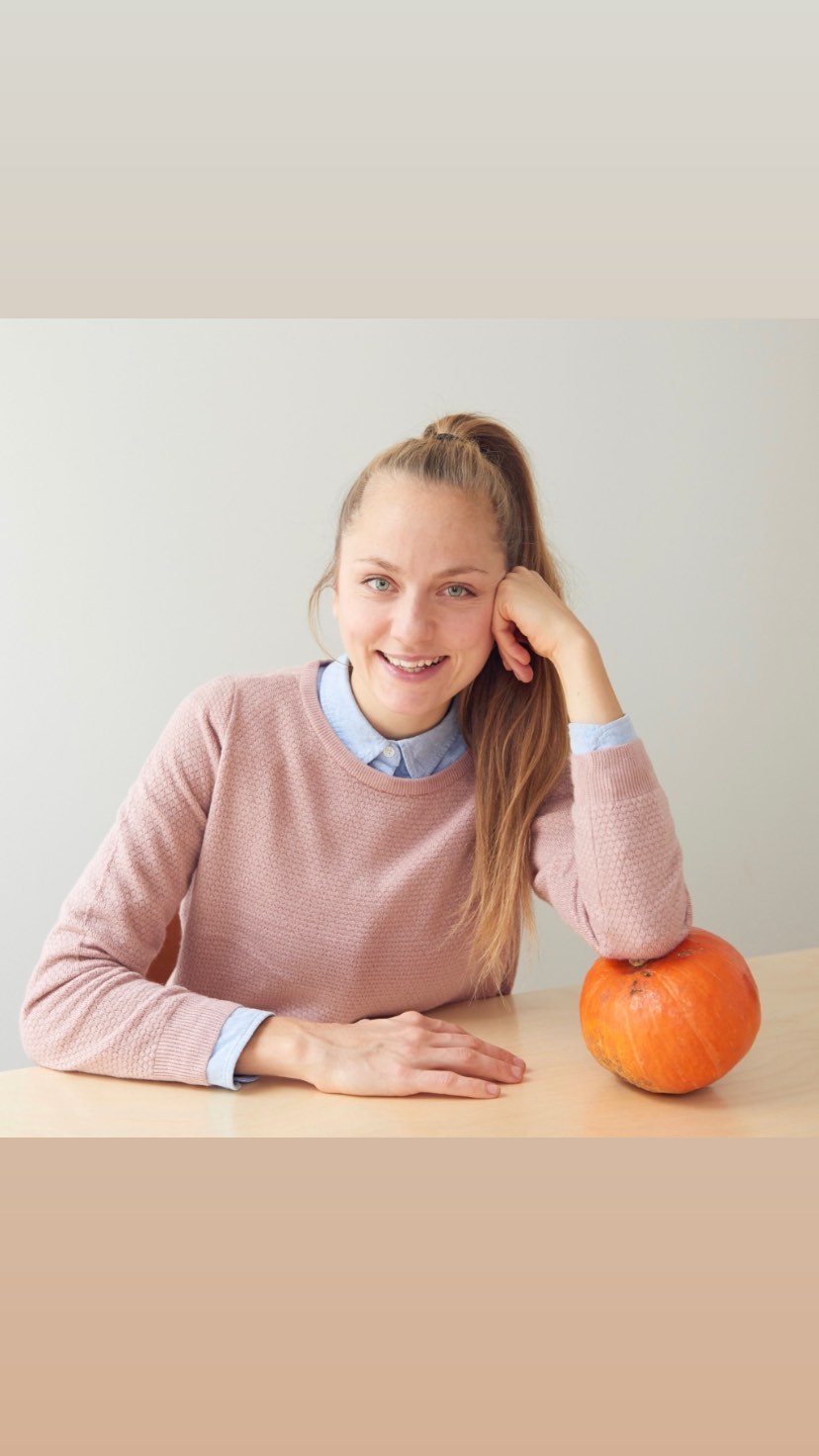

The born entrepreneur on a food mission
Karoline Trier has been running her cookery school since 2014, but she first became widely known when she won the 2nd season of ‘Masterchef‘ in 2016. Since then, things have only progressed for Karoline, and today her cooking school is well-known, offering courses for everything from companies to children and young people. When asked about her future plans, she has a clear answer.
“I have a lot, and we’ve actually just moved from a small space in Amager to a larger building where I’ve built two large kitchens. So I plan to continue what I’m doing now on a larger scale, but also with new courses and collaborations. The other part of future plans is a more personal food communication project, which is about being a face outwards and trying to get people to think about what they eat. I strongly believe that what we do can help change children’s future perceptions of food,” she says.
In fact, she has just entered into a collaboration with the Copenhagen Municipality to create courses for children and young people in kindergartens and schools, and there’s a specific reason for that.
“In this way, we have the opportunity to follow the children through their upbringing. First in the kindergartens and later in the schools, so in this way, I also have a somewhat idealistic approach to food teaching. I’m quite principled, so once I have an idea, I stick to it,” she says.
Her many successes become even more impressive when you look at her educational background. She is largely self-taught.
“I am educated in educational science, and I attended culinary school briefly, but it was a short career. It would probably have been good for me to become a trained chef, but I started too late. Before I was on ‘Masterchef,’ I was about 26 years old and had just graduated from university without knowing what I wanted to do. So I started culinary school and found an apprenticeship, but I was at a different place and wanted to decide for myself what and what kind of food to make, and I had already started my business. It was a bit late to start with that,” she explains.
Before starting her cooking school, she had tried various things. She tried opening a restaurant and buying a café while teaching at schools on the side. Therefore, there were also two special reasons for her to take a completely different path, which aligned with her background and passion for food.
“One was about being able to define my own life and have my own business. I have an entrepreneur in me, and that was quite a bit of what drove me to start my own business. The other part is the whole food mission, which I spent years trying to figure out how I could create a business out of. I didn’t know how to formalize or concretize it, but it combined a bit with the education I had taken and my own passion for food,” she explains.
After starting her cooking school, she knew she had a good idea and concept, but she needed to tell the world about it. Therefore, there was also one specific reason why she said “yes” to ‘Masterchef’.
“I really needed to show the world the cooking school I had and who I was as a person. That was actually the main argument. I had just started it and had a really good concept but was really bad at selling it. So it was a good way to get some airtime and show others what I was doing. So it was much about branding, but it also gave me a lot to participate, including the feeling that I was good enough to have a cooking school. There was a confirmation in that. So instead of a culinary education, ‘Masterchef’ functioned a bit as my validation of my talent and culinary skills,” she explains.
Despite her participation, it was at times challenging for her to be involved, but she did it to promote her business. Therefore, it wasn’t so much her personal participation that was important, but more that people would become familiar with her name and project.
“Personally, it wasn’t actually a very good experience because I had a hard time with it. My personality didn’t fit well with a defined concept and a set of rules you had to fit into. I found it difficult to show who I was in a kitchen. The premise of the program is these competition concepts, and it should be, so it’s not a criticism of the program. I was prepared for that, but it was still difficult to break through personality-wise because it’s so well-defined what you have to do and how to do it. But of course, it’s for entertainment, but it was just a bit difficult for me to be part of it,” she says.
After winning ‘Masterchef,’ her professional life also changed. Among other things, she could feel that more people were registering for the cooking school, where especially team-building registrations received a good boost. Additionally, she also got the opportunity to come in as a chef on ‘Go’ Morgen Danmark,’ where she can spread her food mission to a larger audience, and one group in particular has a special place in her mission.
“I like teaching both children and adults, but one of the purposes of my food mission is also to give the next generation a healthy relationship with food. Therefore, children become the most fundamental and important part of my business. So in that way, you can say that I focus a lot on the children, but the adults I meet often have children themselves, where I hope that what they learn from me also rubs off on them. So all target groups are welcome. We also differ a lot from others, in that at our courses, not everyone stands and makes the same dish, but more as a group working together to create a dish,” she says.
We ask – Karoline answers
Get to know one of Denmark’s greatest culinary talents and eager entrepreneurs better as we ask her a series of personal questions. You can read about her show-off dish, whether insects should be in the food, and when she was last impressed.
How was it to win ‘Masterchef’?
I was super happy. I’m a huge competitor, so in that way it was nice. The downside for me was suddenly being “the one from ‘Masterchef,'” and I didn’t really want to be that. I wanted to be me, as I am, but when you win, that’s what you tell people, and that’s what they want to hear about. I had a hard time swallowing that part, so I found it difficult to show it off. For example, changing my profile picture to me standing with the Masterchef apron, and then saying I had won. I couldn’t really do that. It’s only later that I’ve learned to accept that part too. It’s not a complaint from my side because I was totally happy that I won. So it was a bit of a mixed experience for me, but I’m glad I was part of it.
Castberg and Mielcke have both mentioned you as the big experience throughout ‘Masterchef’ seasons. How is it to receive that praise?
It’s totally lovely, it’s a huge recognition. So it’s really great, and I’m very happy about it.
What is your best memory from the kitchen?
My best memories can be divided into two categories. We are four siblings, of which I am the youngest, and quite early on, we had to make food for the family ourselves. We were given an amount, and then we had to handle shopping and cooking. I could get a special joy from serving something for the family, where I had been responsible for everything. So the idea of pleasing others with a good food experience becomes a driving force. That has been the foundation for me, both in finding out when food tastes good, but also everything else, such as figuring out how to serve it and what they say about it. These are some of the earliest memories, and I didn’t see it as a chore at all. I thought it was great fun! So I was also allowed to make my own experiences because sometimes, what they got served was a bit strange (She chuckles, ed.)
Is there a dish you like to make the most?
No, not really, because part of what drives me is more an idea of something I’ve made once. So I don’t make much of the same. I don’t really thrive on trivialities.
Do you have a show-off dish?
It’s probably something in the sweet kitchen, which is where I started, and what is probably my strong suit. I have a bit of a weakness for vegetables in desserts, which I find fun because you can often be a bit surprised. I’ve been really fond of making a Jerusalem artichoke ice cream, which is actually a parfait, with salted caramel, which I think is a simple and easy dish, but which always impresses a lot.
Do you have a nemesis in the kitchen?
I’m really not a meat eater, so I have to pull myself together if I have to fry a steak. I don’t buy meat myself, and I generally don’t deal with things that come from animals. But it probably also has something to do with motivation, as I can fry a steak, but I just don’t really want to. I don’t find it very fun, and therefore I don’t think I’m very good at it (She laughs, ed).
Do you then mostly deal with vegetarian dishes? And why?
Yes, and the cooking school is almost entirely vegetarian, except for the one hotdog course we have, which has been there from the start. We can use bacon as a spice or have a small fish main course, but otherwise, we are primarily vegetarian, and so am I privately. There are several reasons for this. Firstly, it’s better for the climate, and secondly, it’s the way future cooking is heading. I think it can be a bit silly to teach children to make meat dishes because they won’t be doing it in the same way when they become adults. So it’s also about teaching them a basic kitchen that doesn’t involve meat in various forms. If you can master cooking with vegetables from an early age, I think you’ll stand much stronger in the future.
How do you feel about using insects in the kitchen?
Bad, really bad (She laughs, ed). It scares me a lot, and I don’t like it at all. But maybe one day I’ll have to step into that arena, but for now, I think it’s going fine with just using vegetables and dairy products in the kitchen.
Do you have a favorite cuisine you draw inspiration from?
I think predominantly, I get most of my inspiration from the classic Nordic kitchen, as I am very oriented towards the Nordics when it comes to choosing ingredients. And then it makes sense to some extent that this is also the kitchen from which you cook.
What is your favorite ingredient?
I like onions the best, in almost all forms. Leeks, wild garlic, garlic, shallots, you name it. The only thing that’s a bit annoying about onions is that they’re hard to use in desserts, and I really like making desserts. So I use it mostly in the savory kitchen, where in the dessert kitchen, it makes the most sense to use a beetroot. There’s something about the color of a beetroot that is really appealing in the sweet kitchen. It’s easy to work with, and it’s a tough ingredient because it can do so many things. I’ve tried using onions in the sweet kitchen, but they’ve been somewhat semi-sweet dishes. For example, a tarte tatin with onions and a cream of blue cheese. I’ve also made a milk ice cream with roasted onions, so you can experiment with it. Fermented garlic can also be used in the sweet kitchen, but it’s a bit of a gray area. It’s more intermediate dishes or cheese dishes than actual desserts.
Do you have a favorite dish?
I think my favorite dish is the dishes I don’t want to make myself or the dishes I can’t figure out how to make. In general, I really like it when people cook for me, and I’m not really fussed about whether it’s the neighbor’s slightly sloppy bolognese. I find it quite fun to visit someone and eat because what they make says a lot about who they are as people.
Where and when were you last impressed?
I love dining out and getting inspired, but the last time I was impressed was when my 5-year-old son made a fried egg toast for me. It was fried in a lot of butter, with the bread on the pan, and a fried egg and leeks on top. I was really proud, and I was a bit impressed. One of the best parts of that experience was the proud look he had in his eyes, and I could recognize that from my own childhood. The joy of serving something for others. And who doesn’t like a toast bread fried in a lot of butter? It’s really delicious (She laughs, ed).
Do you have a favorite restaurant?
I obviously have some favorite places with great dining experiences, but I’m actually more impressed by my local bistro ‘Essen‘ here in Brønshøj. They make good everyday food, where the owner puts a bit more effort compared to others. She gets a shipment of ingredients from local, exciting suppliers and makes simple, super tasty, and inspiring food from them every day. It always tastes amazing. A really nice little shop, with really good food and delicious ingredients.
Do you have a guilty pleasure?
I drink a lot of coffee, good coffee – all the time. I have a really good espresso machine, and I rarely drink anything other than Americano.
What type of knife do you use the most?
I actually use a knife from H.W Larsen‘s own brand, which I really like, and which I think is reasonably priced. I’m not hugely into it. I think it’s called ‘Senjen,’ and it’s a 20cm chef’s knife, which is pretty good for the price. I think I paid 1500,- for it, and I primarily use it for vegetables, but it’s suitable for most tasks.
What brand are your knives?
I have quite a few different ones. I have a couple from ‘Tojiro,’ and then I have the knife from ‘Senjen,’ and besides them, I have all sorts of random ones.
Do you have a favorite kitchen appliance?
It’s a stand mixer, because you can get by without machines for most other things, but if you have to knead dough, you quickly get a result from it. Additionally, it’s also good for whipping a good egg cream, so you don’t have to use a handheld mixer. You get a good result, while having your hands free to do something else in the meantime. The favorite brand is, of course, ‘Teddy.’
Is there a kitchen appliance you have a strained relationship with?
I have a strained relationship with the ‘Thermomix,’ even though I have one myself. It’s both crazy and genius at the same time; you just have to learn what it’s genius for, like emulsions, herb oils, etc. But starting to boil rice and steam vegetables in it is all wrong. I think I have a hard time with having a machine where many think they can make all food in it. Some overuse it for all sorts of things that make more sense to do the traditional way. And I don’t think it has the best blending function – if that’s what you’re using it for – in isolation. But because I think the blending function isn’t optimal, I have to use another blender alongside it, and then it starts to become a bit of an expensive affair. So I have mixed feelings about it, because sometimes I think it’s pretty smart, but I also think it’s a bit ridiculous at times.
Can you name the three most important techniques you use in a kitchen that others can benefit from?
Learn the simple seasonal ingredients and use them when they are available. You get so much flavor help from fresh Danish ingredients that you don’t need much else to make flavorful food – just think of new Danish potatoes with a dollop of butter and some herbs!
Another thing I would say is that you can greatly benefit from pickling things, and it’s actually quite easy and mega delicious. You just need to put your vegetables in some sugar and vinegar, and it’s a good way to use, for example, vegetable leftovers. Additionally, I think there are some good points in pickling because it combats food waste and is good for the environment. It can be stored for a long time and is really easy to get started with. And it can make a big difference in your burger or salads.
A final thing I would mention is to experiment and make different things with the various ingredients. For example, how you can use a beetroot for more than just baking it in the oven. So you can get a lot out of exploring the ingredients you have available.
What basic dishes/ingredients are the most important to master?
I think the most important thing is to know the Danish ingredients and when they are in season. Just like you should learn to know and explore the different vegetables and fruits in terms of what they can do and what possibilities they offer for your own cooking.
Is there something people almost always do wrong in the kitchen that you think can be done better?
Remember to season your food! Often you’ve done everything right with a meal, but if it’s not salted enough, it can ruin it all. It can make a huge difference – even in everyday meals – that it’s seasoned. It’s simple to practice seasoning with salt, sour, bitter, and umami.
Fact Box
Name: Karoline Trier
Age: 33
Residence: Brønshøj
Job: Self-employed
Company: KarolineTrier.dk
Karoline offers a multitude of exciting courses, recipes, and ideas for all ages and events. If you want a fun and different Christmas lunch, she offers a Christmas lunch course. There is also an option for a summer school course or an online cream bun course.
You can follow Karoline and her work on Instagram at @karolinetrier_madskole or on her website https://karolinetrier.dk/