


Food is not just food
Thomas Rode is a person with many irons in the fire, who has a very special passion for food and culinary arts. For 18 years, he was the head chef at the prestigious ‘Kong Hans‘ but has, in addition to that, many other talents. He is known from TV and has published several books, and was a frontrunner in the movement around paleo food. Despite his great achievements, he always tries to broaden his horizons while seeking surprise in new cooking. Therefore, he is not just a person who lives off cooking; he lives for cooking.
“I am a person who likes to make an effort, who likes to engage in something that interests me and with people who interest me. So in that regard, I like to make an effort with what I have to do, and then go all-in on it. Besides that, I am very persistent,” he says.
Thomas was born in Nykøbing Falster in 1968, and after 10th grade, he applied to EFG, where he got to explore various subjects within the food industry. This included being a pastry chef, cook, sandwich maker, and baker, but from the start, he knew which path he wanted to take.
“It was great to try out the other areas, but I’ve always known I wanted to be a chef. However, it was the right foundational knowledge to gain, but after that, I started training as a chef and graduated in 1990,” he says.
His journey to the present day has – in many ways – had both good and bad sides but has been a fantastic journey and still is. It has given him a solid foundation and various skills, which have brought him many exciting experiences. Even though some of them have been boundary-pushing.
“It has been a challenge to be an advertisement for your work. Because no matter what happens, you have to perform. So even if half of the staff calls in sick, you still have to perform your best and get some goods over the counter. People come, who pay your salary, and pay for you to do what you want. They come to have a good experience, and it cannot be postponed. That has shaped who I am today,” he says.
Despite this, much of the energy he has invested in it has also given him much back.
“It’s about delivering here and now, no matter what happens. You have to deliver what your guests expect from you. And it creates situations where the nerves are on edge,” he explains.
Therefore, he has always had an expectation that his team delivered when needed.
“I have never, as a leader, just fired people left and right, but I have an expectation that one finds out if they want to be part of the team or not. And that’s another part of chef life. Besides just being creative, you also have to have the kitchen work together. So it’s about having people in your kitchen where you know that no matter what happens, they deliver. That’s just as important as everything else. You have to show each other the necessary respect, no matter where you are in the hierarchy. When you’re in the situation, you just have to say ‘yes, please,’ and then we’ll deal with everything else afterward,” he says.
It is this drive that has driven Thomas to where he is today. Where ingredients and cooking are not just culinary arts but a craft that must be respected and constantly refined. It’s about allowing oneself to be surprised.
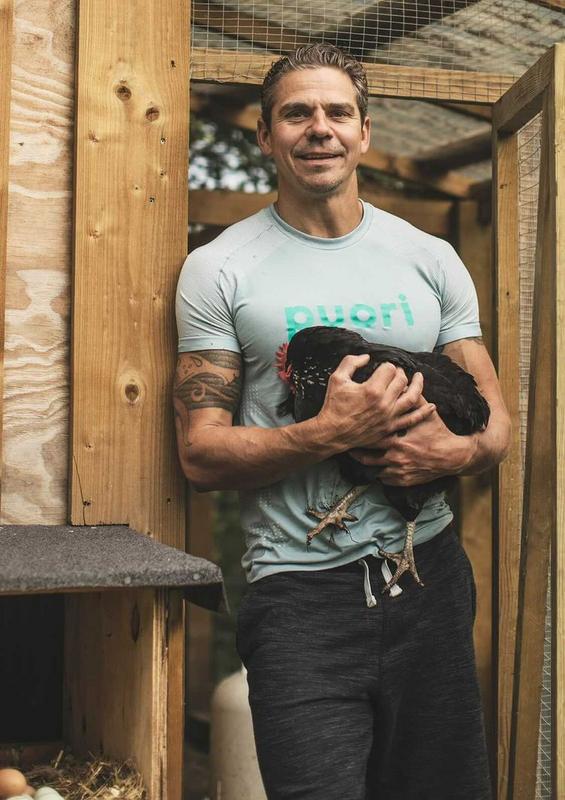
We ask – Thomas answers
Get to know Thomas Rode better as we ask him some personal questions and find out which knife is his favorite and why ingredients are not just ingredients.
What is your best memory from the kitchen?
Many of them are very difficult to specify or be specific about. There are so many experiences and aha moments, even though one has been in the game for so many years. It’s both major experiences in buying ingredients and getting a dish to manifest on the pan or plate while you’re cooking it. So that’s what it’s about. It’s a constant journey when you’re cooking. The development, joy, and curiosity never stop. One must keep letting oneself be surprised.
What is your favorite dish?
It’s hard to be specific about what is one’s favorite because it never stops. There are a multitude of experiences that overwhelm you. It changes all the time, so my favorite dish is the one I’m currently making. So my favorite ingredients are also the ones that are in season. You should always do what makes you happy in everyday life. Whether it’s a roast on a Tuesday or oysters on a Monday. “Favorite” should not be time-bound to eating it on the weekend or New Year’s Eve. You should eat it in everyday life if it makes you happy.
What has driven your passion for food?
It’s an inexhaustible joy in cooking, paired with what one can do within cooking. And it’s also the joy of being able to produce and combine food that simultaneously serves as fuel for oneself. The desire should be driven by effort, but it’s also about getting fuel to also do something that gives you joy. That provides surplus and energy. If you make the same dish every week, you’ll also burn out, and the joy of making that dish is not the same. Why do certain things only work in the morning? Is it just because it has to be easy and just about getting full? One should regard all food as a meal.
You run the site rigtigmad.dk with specialties; what do you wish to achieve?
You should always think outside the box when cooking, and then think back to what food really is. Smoked salmon is not just smoked salmon. It’s a refined ingredient, but you should think back to it as a basic ingredient and ask yourself: How has the salmon lived? What has the salmon lived on? The salmon most people eat has lived on wheat, soy, and waste from chicken production. That is, animals that have also eaten wheat and soy. So it’s the same you’re eating because that’s what the animal has lived on. Therefore, it matters what a salmon has eaten, or the pig for that matter. What we eat should also have eaten the nutrients we, as humans, need. It doesn’t need to be easier, cheaper, and faster. We try to convey the message that there’s a difference in the ingredients we consume and that the quality is better, also for you as a person. Food is not just food, and it’s not just black and white.
How was it to publish your first book?
I was proud and happy, but at some point, it’s also just a page you turn in your book. I’ve never been that good at dwelling on those kinds of things. So in that way, it’s no longer a major event for me.
Where did the interest in paleo food originate?
When I published my first book about paleo food, that’s when I felt I was making a difference. The first book was just an ordinary cookbook. There was such a huge response to the book about paleo, and people wrote to me about how much better they felt after cooking from it. There are many principles in the book that people have adopted. I was encouraged to write the book after I changed my lifestyle, but I don’t live 100% by it. I still drink wine and such. The idea was that I got great joy from it, and maybe others could also find the same joy by being inspired by the book. The plan was not for it to become a fixed concept.
What is your nemesis?
There’s nothing I feel I have difficulty making, but probably more things I have difficulty eating. For example, I don’t think liver tastes good, but it’s not difficult to make. I would love to like it because you can almost live off liver alone.
Do you have a favorite cuisine?
Mexican is not for me! I don’t like it. The cuisine of course has some things that work well, but I actually think all cuisines have something special, and I combine the different cuisines a lot when I cook. I am very fond of the Spanish cuisine, which also shines through in the ingredients available on rigtigmad.dk. I have a great love for all the world’s cuisines.
What do you feel the different Danish seasons can offer?
Now it’s 2021, so some things come in from outside the country’s borders, but otherwise, it was something we focused a lot on at ‘Kong Hans’. But if you take a carrot, which is a fantastic ingredient, you might eventually find it a bit boring. That’s where you need to spice it up a bit with things that come from outside, like with some lemon or ginger. Otherwise, I think you should focus on the ingredients in season. So, in winter, it’s root vegetables, onions, and cabbage, and especially in winter, it’s important to use the different types of cabbage available, and it tastes insanely good. Culinary art is, for example, about being able to season a kale salad.
What are the most exciting trends in Danish cuisine right now, and what will happen in the future?
I think there’s more focus on the nutritional value of what one eats at restaurants. Back when I was training as a chef, it was all about getting as many carbohydrates on the plate as possible to make more money. So the more potatoes and bread on the table, the more you could earn. Now I see more focus on the bread being better. So people are starting to change some common things to elevate quality and nutritional value.
Do you have a favorite restaurant? And when were you last impressed?
Fortunately, I live in a country (Denmark, ed.) where the restaurant scene is extremely exciting and dynamic. I’m really surprised sometimes when I go out and see what the young people are doing. The level elevation that has been, they are really skilled, and I am pleasantly surprised when I go out to eat. Both at the mid and high level. I travel all over Denmark to eat at different restaurants, and they do a job that makes me come back again and again every year. There are just so many small culinary gold mines all over the country. But ‘Noma‘ just has an extra gear that impresses every time, and I think I’ve been there about 10-15 times. And it has been worth every penny.
What type of knife do you use the most?
I actually have a favorite knife, which is a ‘MAC-SKS 105 Carving Knife’ at 26 cm. It’s an expensive knife, but it lasts a long time. It’s a very robust knife that is very versatile, and it can do it all. I’ve worn out two at ‘Kong Hans,’ and when I left, I was on my third one. But I’m looking for a new knife that can rival it. I’m eyeing a ‘Nenox,’ which I saw in Tokyo a few years ago. Otherwise, I would say that I’m very fond of ‘Gastrotools,’ and when I see what they offer for the price, those are knives you can enjoy for a long time. They are nice to have in the kitchen, and they are sharp.
What is your favorite machine?
You can never go without an immersion blender, and they can create some very special textures and make ingredients do something different than you expect. A blender also means a lot to me. So a proper glass blender and an immersion blender are what I use the most. I don’t go crazy with kitchen equipment, but I do care about having a good paring knife, utility knife, and immersion blender. Then I’m satisfied.
Can you name the three most important techniques chefs use that most ordinary people don’t know?
That would be knowing how to use salt, pepper, lemon, and olive oil. It’s so important because it can make things on the pan taste divine if you know how to dose and taste. It can make a complicated dish or leftovers from the fridge taste amazing, and that ability is incredibly important. Moreover, one should know how to select and maintain their tools, and the most important ones are a utility knife and a paring knife. That’s what you need in an ordinary household, and it’s worth spending money on something good. You can’t cut with a dull knife. You’ll just cut your fingers more often. Otherwise, you should develop a good ability to select a good ingredient. The joy of buying a fresh and proper ingredient makes the food experience so much better.
Fact Box
Name: Thomas Rode Andersen
Age: 53
Residence: Copenhagen and a summer house in North Zealand.
Job: Entrepreneur, gym teacher, chef and author
Company: www.rigtigmad.dk
Follow him on Instagram at @rodentiletgodtliv
/Photo:/ Kenneth Nguyen