

The Good Taste is Important for Rasmus Bundgaard
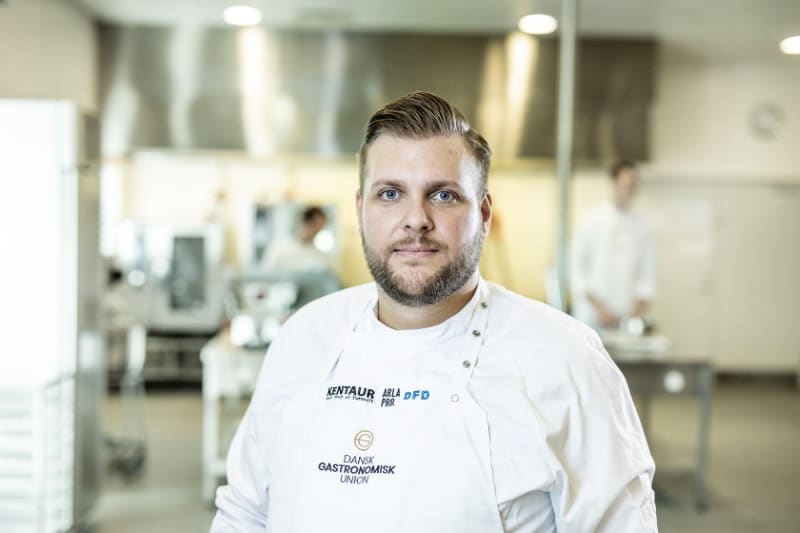
31-year-old Rasmus Bundgaard Nielsen is a trained chef but now works independently, advising companies on food and developing recipes among other things.
Rasmus’ CV is extensive, having worked with companies like Tulip, Danæg, Arla Foods, and Unilever. Prior to that, he worked as a chef at restaurants such as Mefisto, Den Rustikke, and Lecoq. He helped build restaurant Gastromé from scratch as an assistant head chef, contributing to the restaurant earning a Michelin star just 1.5 years after opening.
“I have actually traveled a lot in my culinary career. I pursue my goals vigorously, having trained in London and worked in Iceland and Singapore,” he says.
For Rasmus Bundgaard Nielsen, the culinary profession is about good taste and quality ingredients.
“It’s essential that the flavors are right,” he says.
As a person, he is very competitive, which was one of the reasons he applied to join the Danish catering team, part of the Danish Gastronomic Union.
“It was simply an opportunity I couldn’t say no to,” he says. He was selected, and thus was part of the team when they won gold at the Olympics in Stuttgart in 2020.
“It was a big day,” Rasmus Bundgaard Nielsen recalls.
We Ask – Rasmus Answers
We have asked Rasmus Bundgaard Nielsen a series of questions to help you get to know him better. Discover, among other things, which ingredient is his favorite and why he believes it’s important to temper your meat before cooking it.
Education?
I am a trained chef and now have about 10 years of experience in the industry.
Why did you become a chef?
I’ve always wanted to be a chef since I was very young. My parents have pictures from when I was 3-4 years old, baking cakes in the kitchen or preparing vegetables. So it’s always been in the cards, and I’ve pursued it vigorously when I had the chance.
How did you get onto the Danish catering team?
I’m extremely competitive, which is why I applied to join the Danish catering team. It was both an opportunity to test what I can do but also a chance to compete against some of the best in the world. I simply couldn’t say no to that.
I applied, went through an audition, and was selected. I participated in the Olympics in Stuttgart in early 2020, where we won gold. It was huge.
Afterwards, our team captain stepped down, and I took over.
What is your best memory from the kitchen?
It still stands out to me when Gastromé won a Michelin star. It’s one of the biggest achievements I’ve been a part of—alongside the Olympics, of course.
I helped build the kitchen at Gastromé, and when the Michelin stars were awarded, we had been operating for about six months. We were not tipped to win anything, and we didn’t really believe it ourselves, but along with our bosses, we decided to gather for breakfast to see what happened.
Shortly after nine o’clock, the head of the Michelin Guide called and said, “Congratulations, you’ve earned a star.”
We didn’t believe it at all—”you must be kidding,” we said, but it was true. Back then, there was no big TV show—you just got a phone call.
Afterwards, things went crazy, and we popped champagne. In a short time, our booking system exploded, and the same evening we went from having few reservations to a full house. It was insane! We had to rush into the kitchen in our gentle champagne buzz to prepare for the evening while our bosses had to drive to Copenhagen to be on the Evening Show.
After closing the kitchen that night, my sous chef and I had to drive to Copenhagen with ingredients because everything was closed, and the bosses were scheduled to appear on Good Morning Denmark the next day. It actually ended with one of my boss’s wives going into labor, so he had to rush back to Aarhus, and my sous chef and I had to go on TV and cook. It was completely crazy, and I didn’t sleep for 48 hours. But it was great!
What dish do you most enjoy making?
I love making anything with fish and shellfish. I really feel at home with that.
I can also always make—and eat—a good batch of meatballs. I appreciate that too.
What’s your show-off dish?
It must be whole-baked turbot with white asparagus and a mousseline sauce with caviar.
What’s your nemesis?
There’s not really anything I fear or dislike much. But perhaps the dessert kitchen. I enjoy making desserts, but I don’t do it often, and that’s probably where I’m weakest.
What dish do you most often make in your own kitchen?
It often ends up being a ‘clean out the fridge’ dish. I’m good at inventing on the fly, taking whatever’s in the kitchen and making something good out of it. I find that fun too.
One or more items you always have in the fridge?
Butter, onions, and garlic.
Do you have a favorite cuisine?
I have a fondness for French cuisine because it’s what I trained in.
In my own kitchen, I try to blend the various world cuisines, taking elements from different kitchens. I’m not purely Nordic, French, or Italian. I try to put my own twist on it. I like using Asian ingredients in Danish cuisine, for instance. It provides a cool contrast.
What’s your favorite dish?
I can’t name just one thing. I love turbot, chicken in asparagus is also fantastic, and the same with meatballs. Generally, there are many things I like.
What’s your favorite ingredient?
White asparagus. It’s an ingredient you wait for, and you know that when the asparagus comes, it’s spring. When they come, you indulge in them to such an extent that you’ve had enough by the end of the season when they disappear again.
I think asparagus is fantastic to use in all dishes. Both in the vegetable-based kitchen, and also alongside fish and meat.
White asparagus, steamed and fried so they still have crispness, with warm mayonnaise made with asparagus oil together with a good piece of fish or chicken, it tastes absolutely fantastic.
Which ingredients do you believe people should always have in their kitchen cabinets and/or fridge?
Onions and garlic are a must. Additionally, butter and some flavorless oil for frying with the butter. There’s a widespread misconception to fry food in olive oil. People buy good olive oil which they use, but it gives a bitterness in the dishes. I recommend frying in flavorless oil and butter.
What type of knife do you use the most?
A chef’s knife or a utility knife. You can often manage with these two knives, and then a paring knife. The chef’s knife is an all-round knife, which you can use for vegetables, for example, and the utility knife can be used for both smaller vegetables and fish—if there’s not much deboning work—and the like.
What type of kitchen machine/equipment is your favorite?
You can get really far with a good pan or pot. Here, I would actually say a sauté pan is indispensable. It’s probably the pot I use the most at home. It has curved, soft edges, so I use it, for example, to whip real sauces, but also to toss and sauté vegetables. It’s indispensable.
Which kitchen machine do you not understand?
I think there’s a huge misunderstanding in the general kitchens regarding the use of a sous vide.
It’s actually a good tool, but it has had an unfortunate entry into the market, especially in private kitchens. Suddenly, everything has to be cooked sous vide, and that’s a huge misconception. If you do that, it means to me you don’t have control over cooking. People put the wrong things in it, like tenderloin and steaks that are already tender. It doesn’t work.
A sous vide is fantastic for fish because it provides a very gentle cooking method. A sous vide also works well for vegetables and tough cuts of meat like pork shoulder.
People need to use it properly and for what makes sense, otherwise, they shouldn’t use it.
If you could only have 6 pieces of equipment to cook with, what would they be?
Knife, cutting board, pan, hand blender, whisk, and sauté pan.
Is there something people almost always do wrong in the kitchen that should stop?
People need to be better at handling ingredients with care, I would say.
Many tend to cook meat straight from the fridge. You should take your steak or similar out of the fridge, temper it on the kitchen counter, and then cook it. It gives a better steak and a better piece of meat.
People also tend to overcook fish and vegetables. Salmon doesn’t need to release the white protein before it’s done. Vegetables don’t need to be completely overcooked. They can have a bite.
Facts
Name: Rasmus Bundgaard Nielsen
Age: 31 years
City: Aarhus
Runs Bundgaard Food Consulting, where he advises and helps other companies with things like product development, styling, and recipes.
Previously served as assistant head chef at restaurant Gastromé in Aarhus, which earned a Michelin star 1.5 years after opening.
Rasmus is the team captain of the Danish catering team, which won gold at the Olympics in Germany in 2020. The catering team is part of the Danish Gastronomic Union.
Follow Rasmus Bundgaard Nielsen on Instagram at @lord.bundgaard.
You can find the catering team on @cateringlandsholdet as well as on their Facebook page.
The image at the top of the article is taken by Rais Foto.