
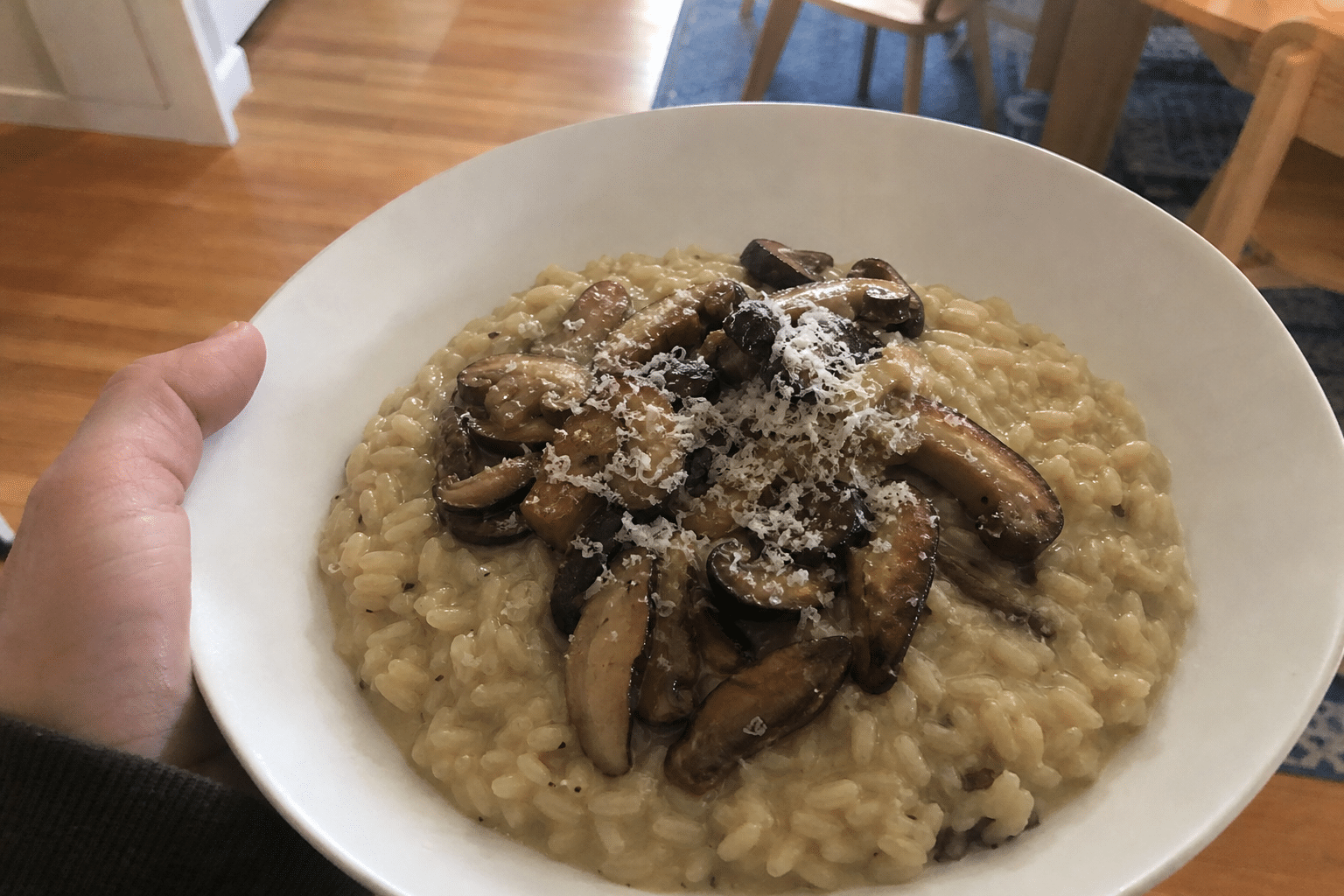

There is no cream in a properly made risotto. The creaminess comes entirely from two decisions: keeping your stock hot and adding it gradually, then finishing the dish off the heat with cold butter and parmesan beaten into an emulsion. Skip either one, and the texture falls apart.
This recipe combines dried porcini for deep, earthy flavor with fresh cremini for body and chew. The porcini soaking liquid goes into the stock pot, pulling every bit of flavor out of the dried mushrooms. Both mushroom types are at their best in fall, with cremini widely available from September through November at grocery stores and farmers’ markets.
Why these two steps make all the difference
Hot stock, one ladle at a time. Arborio rice is high in amylopectin, the starch responsible for risotto’s characteristic creamy suspension. When hot liquid is added gradually and you stir continuously, the starch granules swell slowly and release into the surrounding liquid in a controlled way. Add cold stock, even once, and you shock the temperature, stall the cooking, and get a dense, starchy paste instead. The stock must stay at a simmer in a separate saucepan throughout the entire process.
Mantecatura. This is the step most home recipes skip. With the pan fully off the heat, cold butter and freshly grated Parmigiano-Reggiano are beaten in vigorously to form an emulsion. This is what makes risotto creamy, not cream. Heat breaks emulsions, so the pan must be off the flame and the butter must be cold. Done correctly, the finished dish is glossy and flowing, rich from the butter and cheese, with no added cream anywhere in the recipe.
Ingredients
Serves 4
For the mushrooms and stock:
- 1 oz (28g) dried porcini mushrooms
- 8 oz (225g) fresh cremini mushrooms, sliced 1/4 inch (6mm) thick
- 4 to 5 cups (950ml to 1.2L) vegetable stock (or low-sodium chicken stock)
For the risotto:
- 2 tablespoons olive oil, divided
- 2 medium shallots, finely diced
- 2 garlic cloves, minced
- 1 1/2 cups (300g) Arborio or Carnaroli rice
- 1/2 cup (120ml) dry white wine
For the mantecatura finish:
- 4 tablespoons (55g) cold unsalted butter, cut into small cubes
- 1/2 cup (50g) Parmigiano-Reggiano, freshly grated, plus more to serve
- Salt and black pepper
Instructions
1. Soak the porcini. Put dried porcini in a small bowl and pour over 1 1/2 cups (360ml) of just-boiled water. Let soak 25-30 minutes until fully softened. Lift mushrooms out with a slotted spoon and chop them roughly. Strain the soaking liquid through a fine-mesh sieve lined with a paper towel; discard the gritty sediment that settles at the bottom of the bowl.
2. Warm the stock. Combine vegetable stock and all of the strained porcini liquid in a medium saucepan. Bring to a gentle simmer over low heat and keep it there for the entire cooking time.
Read more: Skip the whole turkey, this juicy Thanksgiving turkey breast is easier than you think
3. Brown the cremini. Heat 1 tablespoon of olive oil in a wide, heavy-bottomed pan over medium-high heat. Add cremini in a single layer without crowding; work in batches if needed. Cook without stirring until deeply golden, 3-4 minutes, then flip and brown the other side until golden, 2-3 minutes. Season with salt, transfer to a plate, and set aside.
4. Cook the aromatics. Reduce heat to medium and add the remaining tablespoon of olive oil to the same pan. Add shallots and a pinch of salt. Cook, stirring, until soft and translucent, about 5 minutes. Add garlic and stir for 1 minute more.
5. Toast the rice. Add rice and stir to coat in the oil. Toast until the edges of each grain look translucent and the pan smells faintly nutty, 1-2 minutes.
6. Add the wine. Pour in the white wine and stir constantly until fully absorbed, about 2 minutes.
Read more: You don’t need to sear first: 6 cooking rules that are quietly costing you flavor
7. Add stock gradually. Add one ladle of hot stock (about 3/4 cup/180ml) and stir almost constantly, keeping the heat at an active simmer. When the stock is fully absorbed and the bottom of the pan is briefly visible when you drag a spoon across it, add the next ladle. Repeat, one ladle at a time. Never add cold stock and never add the next ladle before the previous one is fully absorbed.
8. Stir in the porcini. After about 14-15 minutes of stock additions, stir in the chopped rehydrated porcini. Continue adding hot stock one ladle at a time, stirring, until the rice is tender with a slight bite at the center. The risotto should flow in a loose wave when you tilt the pan, about 18-20 minutes total from the first ladle. You may not need every last bit of stock.
9. Mantecatura. Remove the pan completely from heat. Add all the cold butter cubes and grated Parmigiano-Reggiano at once. Beat vigorously with a wooden spoon in rapid circular motions for 1-2 minutes until the butter melts fully into the rice and the risotto looks glossy and creamy. Fold in the browned cremini mushrooms.
10. Serve. Taste and adjust salt and pepper. Spoon into warmed bowls and add a few more gratings of parmesan. Risotto does not hold; serve it immediately straight from the pan.
Read more: Swiss fondue that never breaks: the Gruyere-Emmental ratio and wine trick
Tips and variations
Pull it off heat early. The risotto should look slightly loose and almost flowing when you stop adding stock – closer to lava than pudding. It will tighten during mantecatura and firm up further as it rests. A risotto that looks perfect in the pan will look dry and stiff in the bowl two minutes later.
Do not skip the cremini sear. Mushrooms cooked over low heat with the aromatics will steam and go limp without building any flavor. High heat, a dry pan, and no stirring: that is what creates the golden crust and concentrated flavor.
Rice choices. Arborio is the most widely available risotto rice in the US and works well here. Carnaroli holds its shape slightly better under prolonged stirring and gives a firmer bite; worth seeking out at Italian grocery stores.
Make ahead. The risotto can be par-cooked: stop after adding the last 2 ladles of stock while the rice is still slightly underdone, spread it onto a sheet pan to cool rapidly, and refrigerate for up to 24 hours. When ready to serve, reheat in the pan with a few splashes of warm stock, then finish with the mantecatura as written.
Leftovers. Cooked risotto keeps refrigerated for 2 days. Reheat over low heat with a splash of water or stock, stirring to loosen. Leftover risotto also works well pressed into patties and pan-fried in a little olive oil until crisp on both sides.