
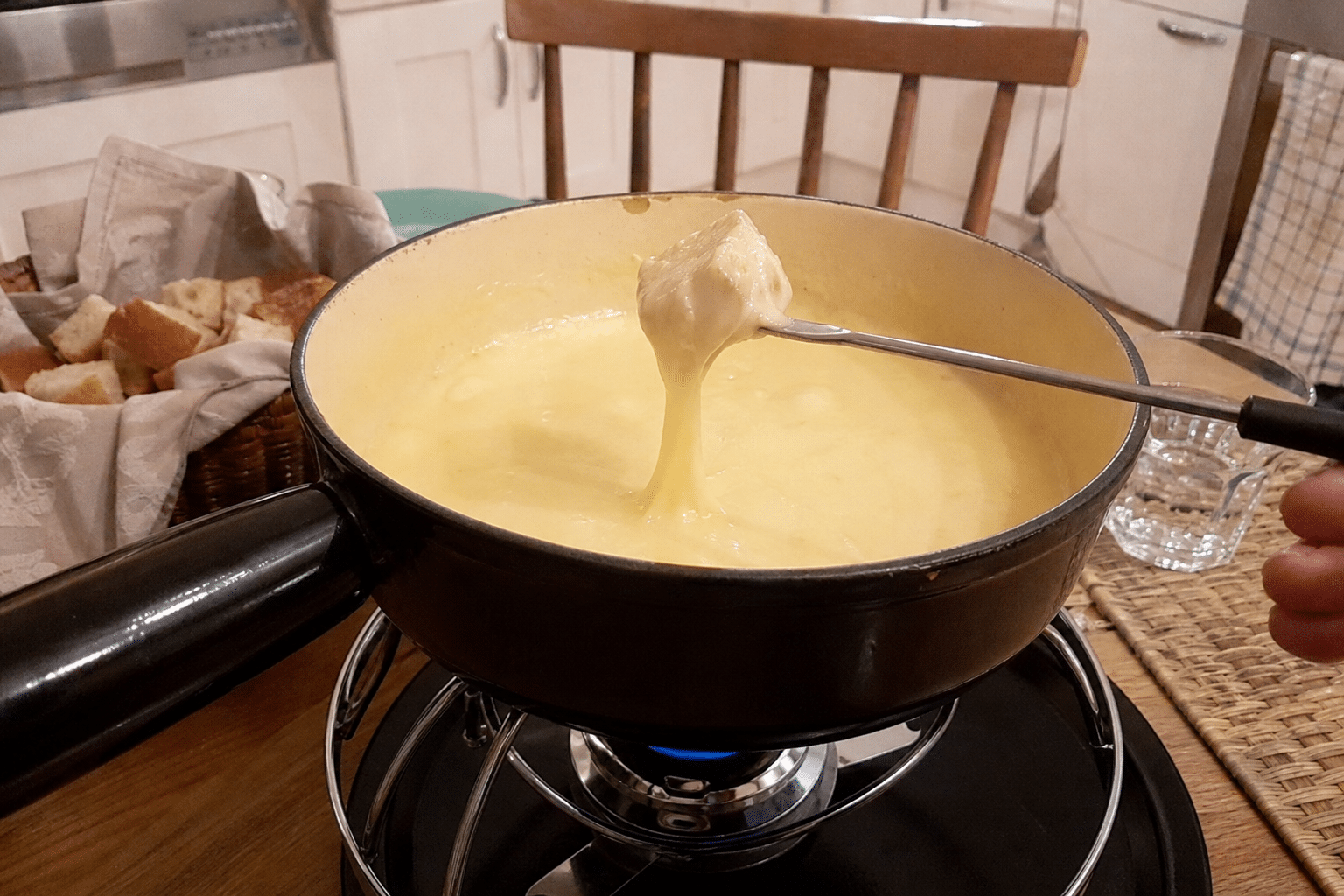

Cheese fondue is the communal winter meal that scales effortlessly: set one pot in the middle of the table, hand everyone a fork, and the evening runs itself. It has a reputation for going wrong – the cheese seizes into a rubbery clump, or the fat separates into an oily puddle. Neither has to happen. Two things prevent both: dry white wine and cornstarch, working together in ways that any cook can understand and apply.
This recipe follows the classic Swiss two-to-one ratio: two parts Gruyere to one part Emmental by weight. Gruyere delivers depth and nuttiness; Emmental brings a milder, slightly sweet melt that keeps the pot from turning too sharp. A splash of kirsch at the end adds the traditional flavor that sets Swiss fondue apart from every other melted-cheese dish.
Why this recipe works
Dry white wine is non-negotiable. It contains tartaric acid, which breaks down the calcium bonds that hold the cheese’s protein network together. Without that acid, the casein proteins clump and seize as they heat, turning the pot gritty and stringy. As the Cheese Science Toolkit explains, the tartaric acid “is changing the cheese protein structure allowing it to hold onto fat better” – that is the whole mechanism behind a smooth pot.
Swap white wine for water and you remove that acid entirely. According to Fondbank’s fondue science explainer, the fondue will seize “despite identical liquid volume” – the problem is never about how much liquid you use, only what that liquid contains.
Cornstarch stabilizes what the acid starts. Tossed with the grated cheese before it goes into the pot, cornstarch gelatinizes under heat and moisture and forms a light gel that physically traps fat droplets throughout the liquid, preventing them from coalescing into a separate oily layer.
Heat is the third variable. High direct heat causes the cheese’s protein network to tighten and clump faster than the starch and acid can keep it dispersed. Keep the flame low, add the cheese off direct heat in small handfuls, and stir each addition fully into the wine before adding the next.
Read more: The chocolate buns that beat the bakery, made at home with buttermilk and cardamom
Ingredients
Serves 4 to 6
- 12 oz (340g) Gruyere, finely grated
- 6 oz (170g) Emmental, finely grated
- 1.5 tablespoons (13g) cornstarch
- 1 cup (240ml) dry white wine, such as Sauvignon Blanc or Pinot Gris
- 1 garlic clove, halved
- 2 to 3 tablespoons kirsch
- Fresh nutmeg, a few grates
- White pepper to taste
To dip:
- Crusty bread, cut into 1-inch (2.5cm) cubes
- Small boiled potatoes
- Cornichons
- Sliced cured meats: salami, coppa, or prosciutto
Instructions
1. Rub the inside of a heavy saucepan or fondue pot with the cut side of the garlic clove, coating every surface. Discard the garlic.
2. Toss the grated Gruyere and Emmental together with the cornstarch in a large bowl until every strand is lightly coated.
3. Pour the wine into the prepared pot and warm over medium-low heat until steaming and just beginning to show small bubbles around the edges. Do not let it boil hard.
4. Take the pot off the heat. Add the cheese in four to five small handfuls, stirring each addition in a figure-eight motion until fully melted before adding the next. Return the pot to low heat between additions as needed; do not let it boil.
5. Once the fondue is smooth and silky, stir in the kirsch. Season with a few grates of nutmeg and white pepper.
6. Transfer to a fondue pot with a tea-light or low-alcohol burner underneath to keep it warm. Serve immediately with bread, potatoes, cornichons, and charcuterie.
Tips and variations
Use younger block cheese, grated yourself. Very aged, dry Gruyere has a tighter protein structure and less free moisture – it seizes more readily than a younger block. Pre-shredded cheese is also coated in anti-caking agents that can muddy the texture.
If the fondue starts to look grainy: pull it off the heat immediately and stir vigorously. A small splash of warm wine and continued stirring usually pulls it back together.
Read more: You don’t need a fresh loaf: 8 stale-bread ideas that beat the original
No kirsch? A tablespoon of fresh lemon juice works as a substitute. Its citric acid acts the same way as the tartaric acid in wine, adding another layer of protection against seizing.
Vacherin Fribourgeois variation: Some Swiss households swap the Emmental for Vacherin Fribourgeois, which gives a creamier, slightly gamier pot. The technique is identical.
Make ahead: Grate and cornstarch the cheese up to a day in advance and keep it covered in the refrigerator. Fondue stiffens as it cools and does not reheat cleanly, so plan to serve it straight from the pot.
On the dippers: Small boiled potatoes and crusty bread are the classic Swiss accompaniments. Blanched broccoli florets, roasted cauliflower, and a pile of cornichons fill out the plate and give the table something to work through between bread cubes.