

The Secret to a Perfect Pan-Seared Ribeye
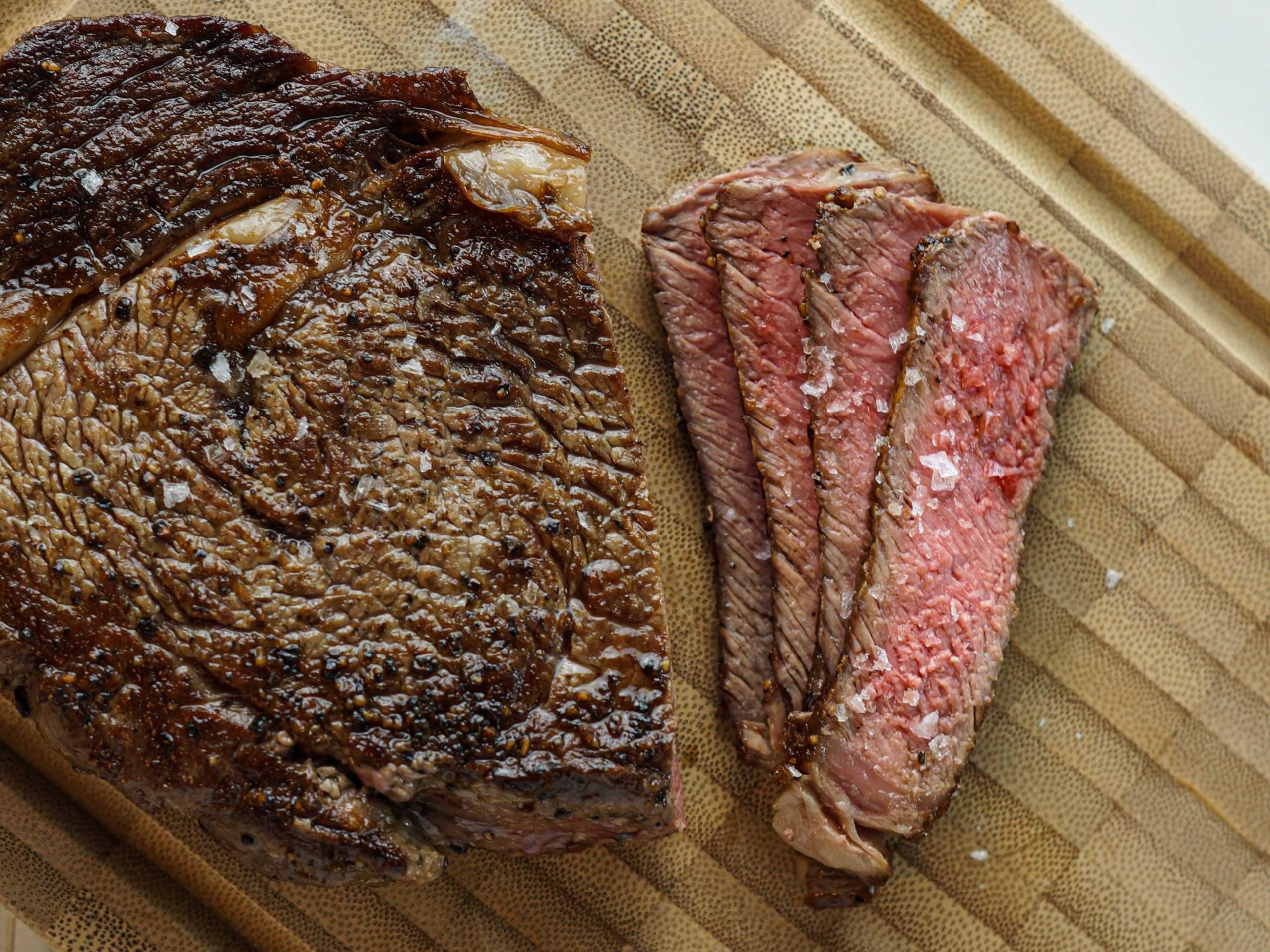
There’s something timeless about a perfectly seared ribeye steak — golden and crusty on the outside, juicy and tender on the inside. This recipe proves that you don’t need a grill or fancy tools to make a steakhouse-quality ribeye at home. All it takes is the right cut, high heat, and a few smart techniques. The trick lies in using a thick steak, ideally about 3–4 cm (1.2–1.6 inches), to ensure that the inside stays juicy while the outside develops that deep, caramelized crust. Start by seasoning generously with salt and pepper — and don’t be shy about it. Let the steak sit for a few minutes before it hits the pan so the seasoning can settle in. Then, heat your pan until it’s almost smoking, add ghee or oil, and sear the steak hard to lock in flavor.
Why Ghee and Resting Time Make All the Difference
One of the biggest mistakes people make when cooking steak is using the wrong fat or cutting too soon. Ghee (clarified butter) is the real secret weapon here — it can handle the intense heat needed for a proper sear without burning, and it adds a slightly nutty flavor that enhances the beef’s natural richness. After searing, lowering the heat and finishing the steak gently ensures the interior stays tender. Once cooked, resist the temptation to slice into it right away. Letting the ribeye rest for at least 10 minutes allows the juices to redistribute, creating a steak that’s evenly moist and incredibly flavorful. Skipping this step is the difference between a good steak and a great one.
From the Pan to Perfection
When it’s time to serve, slice the steak thinly against the grain and finish with a sprinkle of flaky sea salt and a few turns of freshly ground pepper. The result? A beautifully cooked ribeye with a crisp crust and melt-in-your-mouth texture — the kind of steak that feels like a splurge, even when it’s made right in your kitchen. Pair it with simple sides like roasted potatoes, garlic butter mushrooms, or a crisp Caesar salad for the ultimate dinner experience. Whether it’s a weeknight indulgence or a weekend treat, this method guarantees success every single time.
What’s the best type of pan to use? How do you know when the steak is perfectly cooked? Should you marinate the ribeye before cooking?

What’s the best type of pan to use?
A cast iron skillet is ideal because it retains heat evenly and helps create that golden-brown crust. A stainless steel pan also works well if you don’t have cast iron.
How do you know when the steak is perfectly cooked?
For a medium-rare ribeye, aim for an internal temperature of around 130°F (54°C). Use a meat thermometer for accuracy — it takes out all the guesswork.
Should you marinate the ribeye before cooking?
No need. A quality ribeye is full of natural flavor and fat, so salt and pepper are all you need. A drizzle of ghee or butter during cooking adds all the richness you could want.