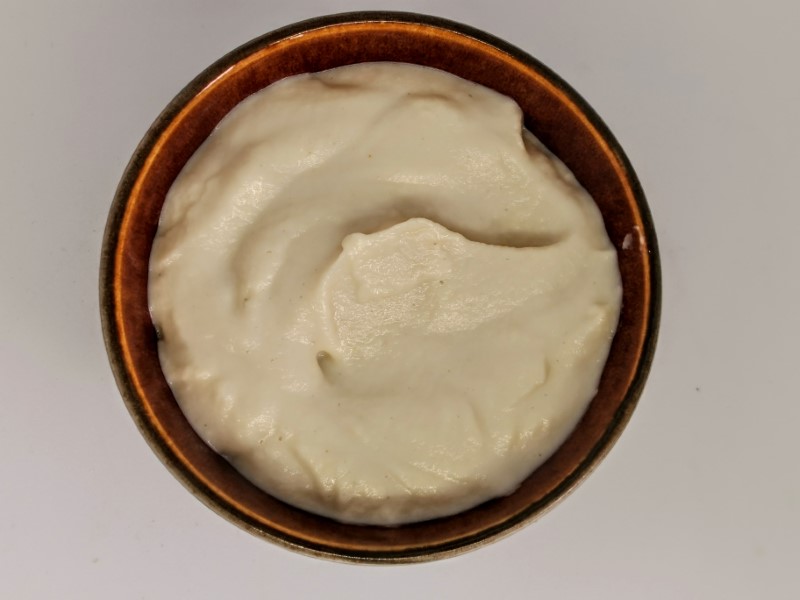
An Overlooked Side Dish
Do you often find yourself missing something new, delicious to accompany your meals? Something that isn’t just a new kind of sauce or salad? Then it might be time for you to delve into creamy and delicate purées.
It’s possible to find many ready-made purées in the supermarket, but there’s no doubt they are not the same as the purée you can make at home. And it’s incredibly easy too.
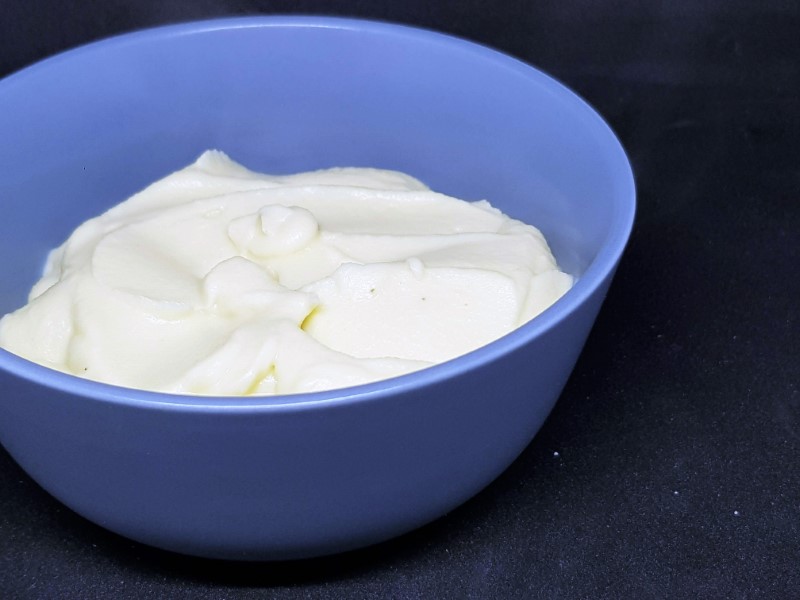
What is the difference between purée and mash?
Yes, a purée is essentially “just” a mash of various cooked ingredients such as legumes, root vegetables, or berries.
And yet, it’s not.
What truly distinguishes a purée from a mash is that a purée is considerably finer, smoother, and silkier in texture than a mash. Furthermore, a purée should be just on the verge of being liquid, while a mash is often so thick and/or coarse that it can almost stand on its own.
A purée can therefore be described as an “elegant” form of mash.
How do you make purée?
There are hardly any fruits or vegetables that aren’t suitable for puréeing. Both cauliflower, celeriac, Jerusalem artichokes, pumpkin, peas, bananas, apples, and various berries are all ingredients that can become an incredibly delicious purée, which can be served in many different contexts.
Additionally, you can choose to add spices, sugar, salt, cream, or other ingredients to complement the flavor and refine the texture. The only thing you need to keep in mind is that “a purée should be as smooth as a baby’s bottom,” as Jesper Koch always puts it.
In a broad sense, both mash and purée are made in exactly the same way. What gives the purée its fine, smooth texture is that significantly more cooking water/liquid is added to a purée than to a mash.
Once the ingredient is cooked until tender, the purée is blended until completely smooth and silky, while gradually adding the cooking liquid until the desired consistency is achieved.
Since you can use so many different vegetables and fruits to make purée, the purée is a side dish that can be varied almost infinitely.
Vegetable Purée
- Cook the vegetables until they are soft. Feel free to cook them with bouillon, herbs, and/or dried spices to add extra flavor and depth. You can also add milk and cream to the water/bouillon.
- Then pour everything through a sieve to strain off the liquid. Remember to save all the liquid.
- Blend the cooked vegetables while adding the liquid gradually. Add less rather than more, as the purée can always be made thinner but not thicker.
Fruit Purée
- Start either by boiling the fruit with a little water or put the fruit directly in the blender. Feel free to add a bit of sugar, especially if it’s berries, as these can be quite tart. Sometimes, however, the dish will benefit most from the fruit being completely naturally tart, in which case you don’t need to add sugar. Don’t be afraid to experiment with different flavorings and spices – that’s what makes cooking really fun, and sometimes you strike a “gold vein”!
- Add a little liquid while blending the fruit to the desired consistency.
Which purée pairs best with what?
Everything naturally depends on personal taste. Therefore, it’s not possible to establish a definitive set of rules.
However, in general, it can be said that all dishes benefit from having an element of sour, sweet, salty, bitter, and umami. It adds more depth to the meal, making the taste experience significantly richer. At the same time, the different flavor elements are balanced.
Therefore, you can advantageously experiment with using fruit purées in savory dishes – it actually pairs wonderfully with several types of meat, especially game.
Furthermore, a purée of butternut squash can pair excellently with a Beef Wellington, while pea purée is always a sure hit with fish n’ chips.
Perhaps you might even get away with making a vegetable purée for dessert – maybe a blend of fruit and vegetables? Several root vegetables are on the sweeter side of the scale, so with a bit of creativity, they can easily be imagined to elevate, for example, a cake to a whole new, interesting level!
Feel free to explore the endless universe of purées. Below, we have gathered our best purée recipes.
Purée Recipes

Silky Jerusalem Artichoke Purée