


What is a pumpkin really?
When we say pumpkin, do you think of spooky Halloween decorations or incredibly delicious dinners? Personally, we lean towards the latter.
The less you know about pumpkins, the more you might associate the word with a certain American holiday. However, pumpkins are much more than that, and the pumpkin family is almost overwhelmingly large.
Pumpkins can be divided into two categories, namely summer squash and winter squash.
The Difference Between Summer Squash and Winter Squash
The pumpkin family also includes squash (also known as zucchini or courgette) and cucumbers – at least from a botanical perspective. These aren’t exactly the vegetables most of us think of when we refer to pumpkins in everyday life.
These fall under the term summer squash. Common to summer squash is that they are small, immature pumpkins with a very thin skin. They are usually green and elongated, and they have a relatively short shelf life.
Summer squash grows quickly, and the plants typically yield a very large harvest, so it can be difficult to keep up if you have them in your garden.
Winter squash are the pumpkins that many of us would consider to be “real” pumpkins, such as Halloween pumpkins, Hokkaido pumpkins, and butternut squash.
These pumpkins take a long time to develop, and the color often changes from green to orange or yellow, although ripe pumpkins can also be green, white, and striped.
In this article, we will take a closer look at the so-called winter squash and how to make the most of them in your cooking.
An Ancient Native American Berry
Pumpkins are usually used as vegetables, but they are actually berries. Berries are defined by growing from the plant’s flowers and containing at least one seed. Pumpkins contain plenty of seeds – or kernels, if you will – that can be roasted and eaten.
All the pumpkins we know today, both summer and winter squash, come from one and the same pumpkin variety: The 10,000-year-old Cucurbita Pepo, which originates from South America.
Today, pumpkins are grown on six out of seven continents – even in Alaska, yes! Antarctica is the only continent in the world where pumpkins cannot survive.
The Pumpkin Capital of the World
The American town of Morton in the state of Illinois is self-proclaimed as the “Pumpkin Capital.” This is where the company Libby’s Pumpkin, owned by Nestlé, is based.
Libby’s Pumpkin reportedly accounts for 85% of the canned pumpkins sold worldwide, and every year in September, the town hosts a large, four-day pumpkin festival where pumpkins are celebrated in every conceivable and inconceivable way. If you are a true pumpkin enthusiast, this is undoubtedly worth a visit.
Pumpkins in Cooking
While summer squash is often eaten raw, winter squash should always be cooked. They are delicious whether mashed, baked, or blended into a creamy soup.
Apple, lemon, and ginger are three flavorings that go really well with pumpkin. If you are making pumpkin soup, you can try making it with baking potatoes, as they can make the soup even more hearty and creamy.
You can also use pumpkins in salads, either as a side dish for dinner or as a meal for lunch.
Pumpkins can also be used in ravioli if you are fond of this Italian classic, or you can try incorporating them into baked goods.
There are different types of pumpkins, and they are all great in their own way.
St. Martins (Halloween Pumpkin)
The pumpkins we typically use for Halloween are of a variety known as St. Martins. These can grow incredibly large.
Halloween pumpkins can certainly be used in cooking, which we have done a few times (we have, for example, made pumpkin pie, pumpkin puree and pickled pumpkin), but we wouldn’t describe Halloween pumpkins as the ideal eating pumpkins. The flesh is somewhat more fibrous compared to other eating pumpkins you find in the supermarket, and the flavor is not nearly as round and delicate.
Hokkaido Pumpkin
Hokkaido pumpkin is one of the most popular eating pumpkins here. This lovely pumpkin is named after the Japanese island, Hokkaido, where it originally comes from.
The Hokkaido pumpkin is smaller than Halloween pumpkins, and it is one of the pumpkin varieties with the finest and most tender flesh. The flesh is slightly drier and harder in its raw state, but this doesn’t affect the taste experience after cooking.
Hokkaido has a mild and sweet taste and is suitable for both sweet and savory dishes. The firm flesh contains plenty of starch, making it perfect for mash and puree.
It might require a bit of work to get the knife through the thick skin and hard interior, so you’ll want a good, sharp knife and “wiggle” it through the pumpkin.
Butternut Squash
Butternut squash is the “band-aid-colored” and bell-shaped pumpkin you’ve surely seen in the supermarket during the autumn.
Inside, butternut squash is a deep orange, and the flavor is deliciously nutty. The seeds are gathered in the bulbous end and can be easily removed if the pumpkin is split lengthwise first.
You can use butternut squash in both sweet and savory dishes, but they are especially good for soups and desserts.
Pumpkin Recipes


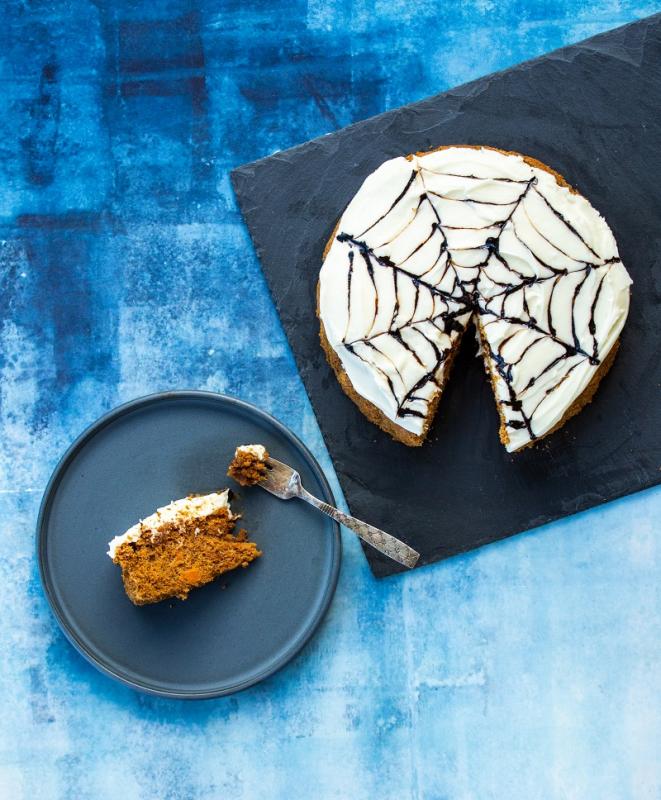
Gluten-Free Pumpkin Cake (Halloween Cake)


Ravioli with Pumpkin and Ricotta


Toast with Brie and Baked Pumpkin and Red Onions


Pumpkin Soup with Roasted Kale, Pumpkin Seeds, and Sweet Apples
