


General Information about Cauliflower
Cauliflower is one of the most used vegetables in our latitude; partly because of its low price, partly because it tastes good and has many uses.
Cauliflower is a collection of small, edible flower buds. There are several types of cauliflower, but the most common is the white one. The white “color” is actually the lack of pigment, caused by the large protective green leaves. When the flower clusters are not exposed to light, they develop no color.
In addition to the white variety, there are also orange, green, and purple varieties, as well as the Italian romanesco, which is best described as a hybrid between cauliflower and broccoli.
Below, we will try to give you a little more insight into the good old white cauliflower that most of us know and love.
The Season for Danish Cauliflower
Supermarkets have cauliflower all year round, but Danish cauliflower can only be found from around June to the end of November. If you want them organic, you have to wait until August before they hit the market.
Cauliflower is quite forgiving when it comes to temperature conditions, but it grows best at daytime temperatures between 21 and 29 degrees Celsius with plenty of sun and moist, sandy soil with ample nutrients. About 7 – 12 weeks after sowing, the cauliflower is ready for harvest. The large green leaves protect the white flower buds and keep them white, but very long periods of abundant sun can give the cauliflower a purple hue.
Originally a Cypriot Cabbage
Like broccoli, cauliflower is a flower belonging to the cruciferous family. It is an annual plant, and botanically speaking, it has gradually changed throughout history. However, as early as the first century, we find descriptions of cauliflower that closely resemble the cauliflower we know today.
Cauliflower is one of the most popular types of cabbage in the world. In the West, it has been cultivated since the 17th century. Two Arab botanists in the Middle Ages are said to have proclaimed that cauliflower originated from Cyprus. This evidently stuck, for as cauliflower moved towards Southern Europe and later to our latitudes, it was known as Cyprus colewort (roughly translated “Cypriot cabbage”) among the Western European traders.
Even Worthy of a (Sun) King
It is likely thanks to Louis XIV, also known as the Sun King, that cauliflower became so popular in Europe. Louis XIV ruled France in the latter half of the 17th century, and he was reportedly incredibly fond of vegetables, particularly cauliflower. His favorite was said to be cauliflower with butter and nutmeg.
However, it was not until the end of the 19th century that cauliflower truly broke through among the “common folk.”
Cauliflower Before, During, and After World War II
The government, as you know, implemented several rationings during World War II. The consumption of cauliflower had already increased significantly between World War I and World War II, but when restaurants in 1941 were required to have one meat-free day a week, cauliflower truly had its big breakthrough: Suddenly, a lot of cauliflower gratins were being served at Danish restaurants.
Cauliflower’s popularity continued after the war, with Danes making cauliflower soups and gratins in large quantities.
Also Popular Among Health Enthusiasts
Cauliflower is brilliant when you want to feel full with few calories. With just 30 calories per 100 grams, you can eat without worry. And because it is so good at adding bulk to a meal, you can more easily do without, for example, meat.
Cauliflower is rich in fiber and vitamin C, as well as amino acids that are converted into B vitamins in the liver. Cauliflower also contributes antioxidants, which are said to counteract the development of cancer cells.
Of all the members of the cabbage family, cauliflower is the easiest to digest.
Many Different Uses
Cauliflower can be said to be the vegetable world’s own little, white flower child. And like most other flower children, it fits into almost anything!
Cauliflower can be included in a multitude of different contexts in cooking. However, if you associate cauliflower with soft, overcooked, and boring retro vegetables, it (fortunately) just means that cauliflower has (unfortunately) been done a disservice through overly harsh and unimaginative preparation.
Salad
Cauliflower can easily be eaten raw. Try using it in delicious, crunchy salads. It shouldn’t take you more than 10 minutes to mix a tasty creamy and crispy cauliflower salad for dinner. You can also slice the raw cauliflower into very thin slices and pour olive oil over it. Then sprinkle with fresh basil and serve with crispy salted almonds on top – A perfect crispy element at the dinner table!
Cooking Cauliflower
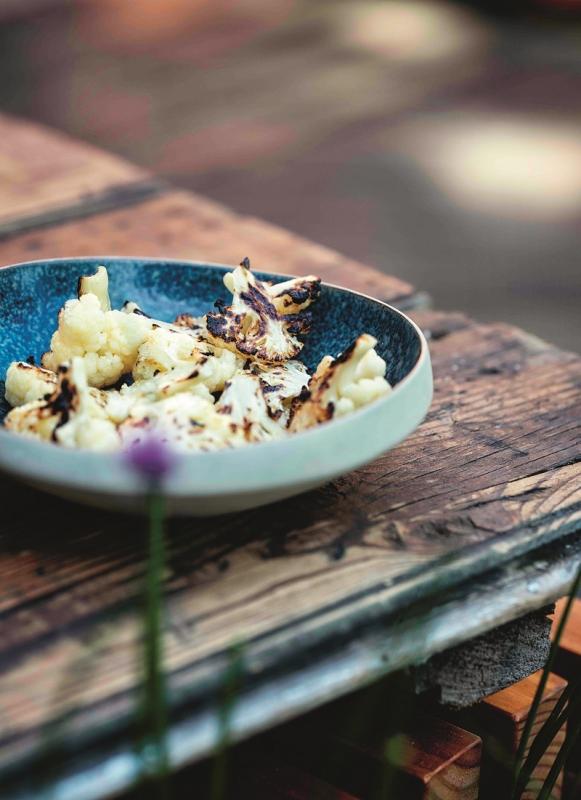
If you’re not a fan of eating raw cabbage (some might experience a bit of stomach issues), you can also try to bake, fry, or steam it. By roasting cauliflower, it develops a really delicious nutty flavor.
If you choose to boil the cauliflower, do not overcook it. Boil it lightly so that it still has some bite. You can also butter-steam it with carrots and peas.
Cauliflower has a sweet taste, but some would also describe it as quite “cabbage-like.” If this is not to your taste, it’s just another reason not to overcook it, as it emphasizes the “cabbage-like” flavor.
Side Dish
Cauliflower is generally really good at adding plenty of bulk in different contexts – just look at this wonderful dish with chicken and cauliflower in a spicy coconut sauce! Serve with rice, and you have a lovely, exotic meal.
Rice
If you need a healthy alternative or supplement to regular rice, you can also make cauliflower rice. Mix them with regular rice or let them completely take the place of rice. You can also use cauliflower rice to make healthy pancakes with.
Gratin
Of course, we can’t talk about cauliflower without also mentioning the classic gratin. One of the most delightful traditional dishes we know! If you’d like to try a slightly healthier version of the classic gratin, this cauliflower gratin might appeal to you. Instead of breadcrumbs, cheese, and bread crumbs, almond flour is used for the gratin topping.
Soup
If you have a soft spot for soups, or if you’d just like to get a little more greens into your everyday life, cauliflower can also be turned into a delicious, creamy soup. Also, try making it with potatoes.
Extra Tip
Since the dense florets can hide little critters, it might be a good idea to start by placing the cauliflower in cold water with salt for about 10 minutes. This will draw out any small insects.
If you want more good advice on how to get more greens into your busy everyday life, you can read this article, and if you want to learn even more about making healthy everyday food, you can also read this article.
Recipes with Cauliflower

Creamy Baked Pasta with Mushrooms and Spinach



Salmon Rillette and Cauliflower Slaw


Whole Roasted Miso-Marinated Cauliflower


Cauliflower Soup with Lumpfish Roe

Confit de Canard with Cauliflower Purée and Salt-Baked Celery


Beef Steak with Cauliflower Béarnaise


Pancakes from Cauliflower Rice

Gluten-Free Burger Buns with Cauliflower

