

Aging meat is a must for anyone who loves gastronomy. Typically, the meat we buy in supermarkets is wet-aged for a couple of weeks in a vacuum bag before it is sold.
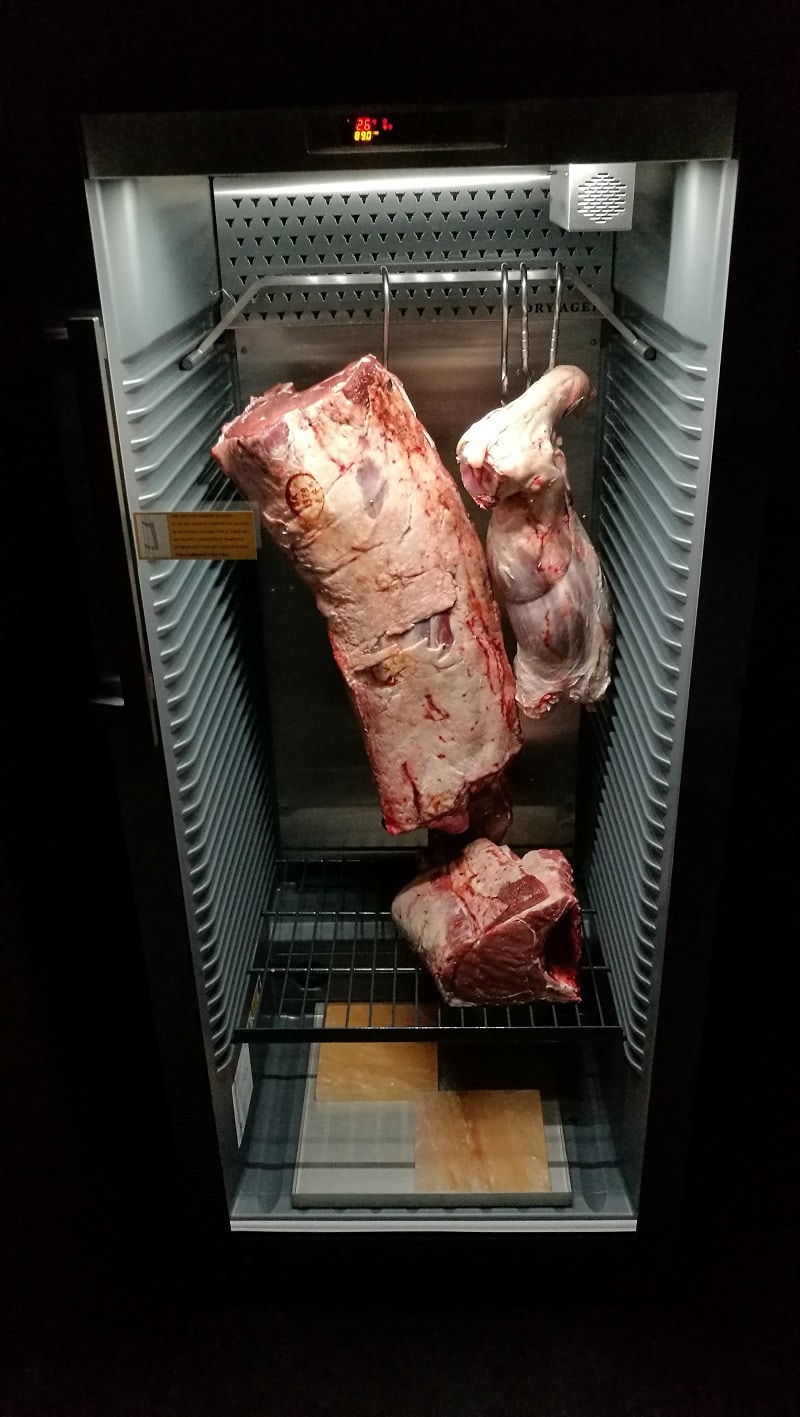
Here at our house, we swear by dry aging through a dry aging cabinet – also known as dry aging. By dry aging, more of the meat’s moisture evaporates, which makes the flavor more concentrated, but the meat shrinks. This is probably one of the reasons supermarkets prefer wet aging, as the kilogram price is higher for dry-aged meat compared to wet-aged meat.
So you must accept that the meat loses anywhere from 10-30% of its weight in this process, while the crust becomes “beef jerky-like” and must also be trimmed off. However, it can be used for stock, for example.
Another good argument for dry aging meat yourself is actually the price. If your local butcher wants to sell good meat, it needs to hang in his cold room for anywhere from 3-6 weeks before he can sell it. This means his liquidity is tied up in the meat that takes up space in the cold room while he cannot sell it. By buying the meat from him right when he gets it, you allow him to make money on it quickly, and you are often rewarded with savings of anywhere from 10-30% on the final sale price.
Dry aging bags:

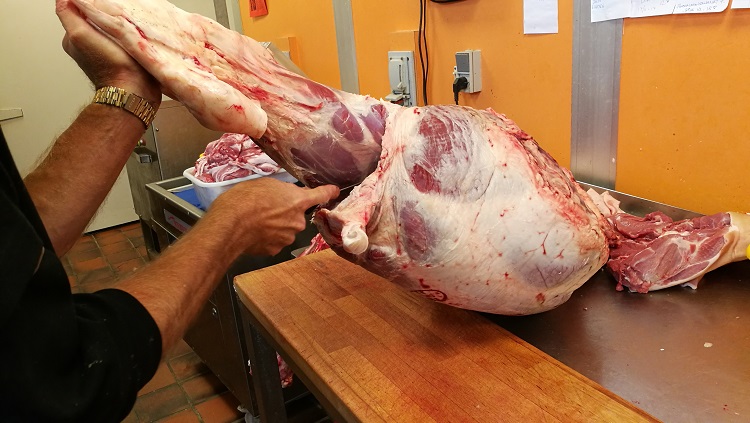
Dry aging can be done with the help of dry aging bags or a dedicated dry aging cabinet.
The bags are available at a price range of 15-35 DKK each and are a bit difficult to handle. The bags are smooth, and since most vacuum sealers are made for grooved bags, it presents some challenges in vacuum sealing them.
Meatlovers.dk has made a video showing how you can solve this challenge using a “patch solution” with grooved strips:
Dry aging cabinet:
Dry aging cabinets are a whole caliber of their own, both in terms of quality and price. In the cabinets we have worked with, we must acknowledge that price and quality go hand in hand. The less robust cabinets are in the price range of 7-12,500 DKK, and the better ones cost from 20,000 DKK and upwards. Therefore, this should be a passion or there should be an incredible amount of meat consumption to recoup the savings on the slightly cheaper meat. Additionally, there are also operational/maintenance costs for the cabinet, such as electricity, charcoal filters, and UV bulbs. The bulb and filter should be replaced annually.
The process is quite simple:
The meat should be purchased as freshly slaughtered as possible and aged within the first 5 days. Depending on the type of meat, this is a good rule of thumb:
- Lamb – 14 days
- Pork – 21 days
- Beef – 28 days
The larger the cuts, the better. Generally, there will always be a layer of about 1-3 mm all around the meat that needs to be discarded. Therefore, the larger the cut, the less percentage waste. The German company Dry Ager recommends a temperature of 1.5 degrees Celsius and a humidity of 82% when aging beef and pork.
A dry aging cabinet is and remains something you have for the sake of passion, but for us, it is an indispensable piece of equipment.