

Christmas is undoubtedly the most important holiday for most Danes. We start the preparations well in advance, so we can bake cookies, make Christmas decorations, and create an advent calendar for the children. Magazines are packed with recipes, tips, and tricks for the perfect Christmas, and we spend oceans of effort, time, and money on the holiday. It’s no wonder that Christmas is something that divides opinions.
While some love Christmas and can’t start preparing soon enough, there are also those who mainly look forward to it being over and returning to normal. However, there is no indication that “Christmas haters” will have an easier time in the future, as the interest in Christmas and everything associated with it seems to be growing. The classic, homemade Christmas fits perfectly with today’s focus on creating and showcasing the good life, and we measure each other’s success on the quantity of homemade cookies and the number of homemade Christmas wreaths on the doors of the house.
Critics argue that Christmas has been taken hostage by today’s Instagram obsession, where everything is displayed online as part of the story of the perfect life. There might be some truth to that, and perhaps it’s time to challenge the polished surface and focus more on what Christmas is really about: being together with family and friends, eating good food, and perhaps, if one is inclined, enjoying a peaceful moment in one of the country’s churches.
What Danes Eat on Christmas Eve
Food is an important part of Christmas, and the menu on Christmas Eve is something that can stir emotions. Many of us are creatures of habit, and on this day of the year, traditions must not be altered—everything must be as it always is! Even though we live in a small country, there are still significant geographical differences in what we eat on Christmas Eve.
If we go far enough back in time, before the Reformation in the 1500s, people didn’t eat meat on Christmas Eve, but fish. This was because December was a time of fasting, and meat was banned until the end of the fast on December 25. People ate dried cod, salted herring, or fresh freshwater fish like carp and perch on Christmas Eve. The shift from Catholicism to Protestantism meant that meat made its way onto the Christmas table.
At first, pork was the main feature on the menu, mainly because many families kept a pig or two. A pig doesn’t take up much space, it’s almost omnivorous, and the meat is suitable for salting, which was the best, and almost only, way to preserve it for later use. For the same reason, fresh meat was a very fine and rare thing, and by slaughtering the pig for Christmas, one could enjoy roast pork with crispy crackling during the holiday—a wild luxury!
Roast pork was thus the most widespread Christmas dish, and it remained so for many years. But around the 1800s, the bourgeoisie in the cities grew, and they wanted to distance themselves as much as possible from the simple peasants in the countryside. This included distancing themselves in terms of food, and the new, affluent city dwellers adopted turkey as a finer alternative to roast pork. It became very fashionable, and more and more people wanted to join the trend. If one couldn’t afford a goose or if there were fewer people around the table, a duck could be substituted for the goose in a pinch. Roast duck became the common man’s answer to the more exclusive roast goose, and that is why we still, to this day, serve both duck and goose for the Christmas meal.
In recent years, another bird has found its way to Danish Christmas tables: the turkey, which is actually eaten by every tenth Dane on Christmas Eve (source: Samvirke.dk). It’s especially popular among the people from Southern Jutland, whereas the bird is seldom seen on North Jutland’s Christmas tables. In some families, they also eat medister sausage on Christmas Eve, and it is especially popular among people from Funen. In fact, one in six people from Funen eats medister sausage on Christmas Eve, which is three times more than the national average. Funen residents are also those who eat the most medister sausage in everyday life, and this is reflected on Christmas Eve as well (source: Sondagsavisen.dk).
When it comes to side dishes for the Christmas meal, what is served depends on which part of the country one comes from. Browned and white potatoes are eaten everywhere in the country, and potato chips are also on the table in many places. The chips are most popular in Jutland, especially in the northern and western parts, where nearly half of all families include them. It’s different on Zealand, where only about one in twenty serves chips.
Browned potatoes are, by the way, a distinct Danish custom, not found anywhere else in the world. Originally, it was again the bourgeoisie’s refined taste that led to the invention of the sugar-browned potato. They had developed a taste for everything French, and glazed chestnuts were all the rage with meat dishes. Edible chestnuts were used for this, which were expensive and difficult to peel, so when it was discovered that the same trick could be done with small potatoes, a new specialty soon saw the light of day.
The rest of the traditional Christmas dinner consists of two types of potatoes (white and browned) and the classic Danish red cabbage. Sliced red cabbage is cooked with sugar, vinegar, and perhaps currant juice, seasoned with salt and pepper, and served as a sweet/sour accompaniment to the meat. This, like the browned potatoes, is a Danish invention not found anywhere else in the world. It was invented, like the browned potatoes, sometime in the 1800s, when it became fashionable to have a sweet/sour accompaniment to meat. During this period, it generally became popular to use fruit in the savory kitchen, and accompaniments such as fruit jelly, fruit compote, and Waldorf salad became common to serve with meat dishes.
As for Christmas Eve dessert, risalamande takes a clear first place. Its precursor is rice pudding, which was once an exclusive dish for the few. Rice was an expensive, imported product that first came to Denmark in the 1800s, so pudding made with rice and whole milk and served with butter and a sprinkle of (exotic) cinnamon was not everyday food—and certainly not for the poor. Gradually, rice became affordable for everyone, and it became possible for the average Dane to serve pudding.
The story goes that risalamande was created by accident at Hotel D’Angleterre in Copenhagen, where one late evening, an improvised dessert had to be made with what was in stock. Using ingredients consisting of leftover cold rice pudding, whipped cream, and cherry sauce, risalamande was born and later became the Danish Christmas national dessert. Whether this is exactly how it happened is somewhat doubtful. But we love it, and for most of us, a Christmas Eve without risalamande is unthinkable.
Tips for a Successful Christmas Eve
On Christmas Eve, we should relax and enjoy ourselves. But since it’s an evening with many expectations and wishes for how it should go, it can quickly become a night of much hustle, stress, and even arguments about how things should be done. Hosting the event is quite special, as Christmas Eve is, for many, the year’s most important festive occasion. Therefore, it’s worth considering how you can make some things easier.
Although you obviously want to do your best for your guests, you should also have a good evening yourself, and if you’re stressed, angry, and burnt out, it’s very hard not to let it affect others and create a bad atmosphere. Therefore, you actually owe it not just to yourself, but also to the others, not to try to play superman/woman and insist on doing everything yourself.
The first, and perhaps most important, tip is to delegate some of the tasks so that you don’t end up being responsible for everything. Most people are more than willing to help, and if everyone brings something, the event becomes far more manageable for the host, who also has to take care of setting the table, cleaning, etc., before the guests arrive.
If your mother-in-law is excellent at baking cookies, and your brother is a world champion at making red cabbage—let them use their skills by bringing their masterpieces on Christmas Eve. They get praise for their efforts, and you get help in the kitchen—two birds with one stone!
Another good tip is to wait until the day after Christmas Eve to clean up. Many spend a lot of time and effort on thorough cleaning before guests arrive, but this is often a waste of time and energy. Your guests are unlikely to visit to inspect your home for dust bunnies in the corners, so skip the obsessive cleaning and just do a few simple tidying and cleaning tricks: clear the floors and surfaces of toys, exercise equipment, and other clutter and vacuum superficially if necessary. Clean the kitchen and bathroom and ensure clean towels, dishcloths, etc., and have plenty of paper towels, toilet paper, and clean cloths. That’s actually all it takes to give the house a much cleaner and tidier look, saving you both time and effort, which you can instead spend on your guests. The next day, when you likely would have cleaned the house thoroughly anyway, you can do so and enjoy the feeling of a clean and fragrant home.
Meat
Roast Pork
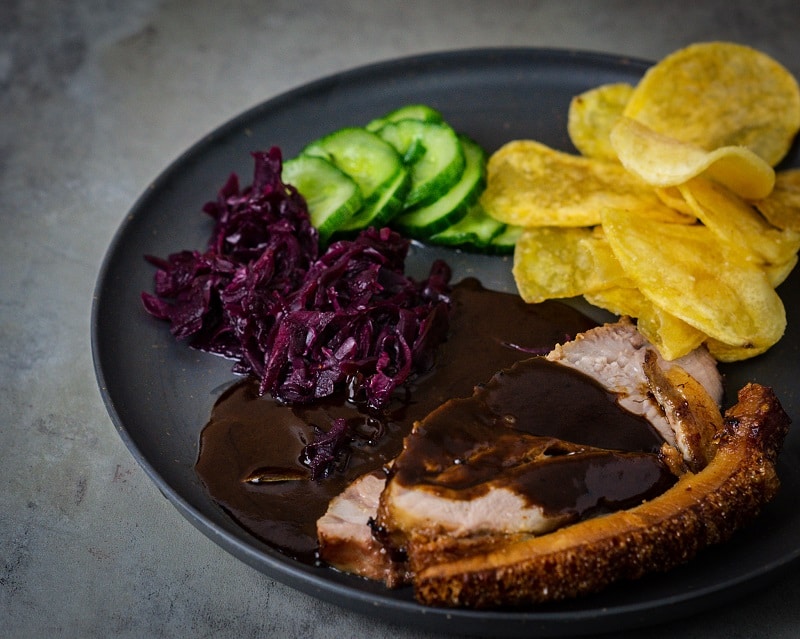
Roast pork is a collective term for loin and rib roast. Both are cuts of pork with a layer of crackling on top, roasted crispy in the oven/grill. Although rib roast contains much fat in relation to the amount of meat, the meat itself is very tender, juicy, and flavorful. Many prefer rib roast over loin roast, which they find dry and boring. If you are only a couple of people around the Christmas table, a rib roast might be sufficient, but if there are more, it may be more economical to opt for a loin roast.
If you are among those who find loin roast a dry and flavorless experience, it’s likely that you are overcooking it. Apart from the crackling and the fat between the crackling and the meat, loin roast is a very lean cut, and like other types of lean meat, it should not be cooked too hard or too long, as it will become dry. It’s a myth that pork should be cooked all the way through; there is no harm in cooking whole pieces so the core is slightly pink. Doing so will yield a juicier and far more flavorful roast, which can also be used the next day if there are leftovers.
If you want to learn more about elevating your roast pork with various cooking techniques, read here.
Pork Crackling
If you love roast pork, you probably also adore pork crackling. The quest for the perfect crackling is not always easy, and most have probably experienced having a roast where the crackling, despite numerous efforts, simply won’t become crispy.
The perfect pork crackling need no longer be unattainable; there are just some good pieces of advice, tips, and tricks you should know.
- Saltwater: Soak the roast (with the crackling side down) in saltwater for 30-60 minutes. This method ensures that as much moisture as possible is drawn out of the crackling. It’s the moisture that makes the crackling difficult to crisp up, so try to remove as much of it as possible.
- Dry Aging: You can never go wrong with dry-aged meat! The aging process draws moisture out of the meat, making the method particularly suitable for roast pork, where crispy crackling is paramount and the meat should not be too moist.
- Salting the Crackling: The third and most common method is to score the crackling all the way down to the meat and then rub them well with salt. The key is to be thorough so that you get between all the scores. This method is usually quite effective, but to be sure the crackling crisps up, we recommend using a dry-aged roast and soaking it in saltwater. Then it can hardly go wrong!
If you are a large family who all love pork crackling, it’s rare that the crackling on a single roast will suffice. The problem can, of course, be solved by making more roasts, but you may end up with quite a bit of leftover cooked meat, making it perhaps a less ideal solution. Instead, make extra crackling alongside the roast so there’s enough for everyone. You can obtain extra crackling in two ways: The first is to buy a couple of extra roasts and remove the crackling. Then freeze the roasts for later use. Pork loin without crackling is a really good piece of meat that can be used in countless ways.
Another way to get more crackling is simply to buy an extra piece from the butcher. A large portion of the pig’s crackling is actually discarded in butcher shops across the country, and you will often be able to get a large piece at a very reasonable price. So ask around the next time you go to the butcher, and ensure there’s plenty of crispy crackling for everyone.
Duck
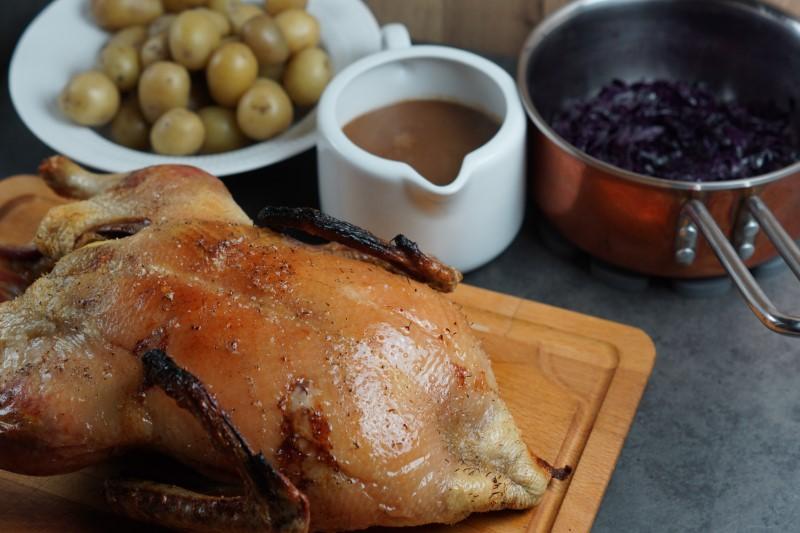
If you prefer to eat duck on Christmas Eve, we also have a range of tips on how to roast the bird to perfection. Many buy their ducks frozen, so it’s crucial to thaw them properly. This is best done over two days in the refrigerator. The slow thawing process ensures that the meat doesn’t lose too much juice during thawing, thereby preserving the flavor better.
How many people does a duck serve? Generally, one duck weighing about 3 kg should serve 4 people. This should provide plenty of meat for everyone to be satisfied, with hopefully some leftover for the next day. Always use common sense to judge how much food you need. If it’s a gathering of only adult men, they will eat more than if it’s a group of older women. Young children don’t eat as much as adults either, and if you’re serving many different kinds of side dishes, people won’t take as much of each kind. Keep all these considerations in mind when shopping. Of course, there should be enough food, but it’s a waste of money and resources to make twice as much food as will actually be eaten.
Goose
A goose weighs about 6 kg (excluding the innards) and easily serves 7-8 people. If there aren’t that many of you around the table, it shouldn’t deter you from roasting a goose. The meat is also delicious cold, so go ahead and roast a big bird and enjoy it in the following days.
Turkey
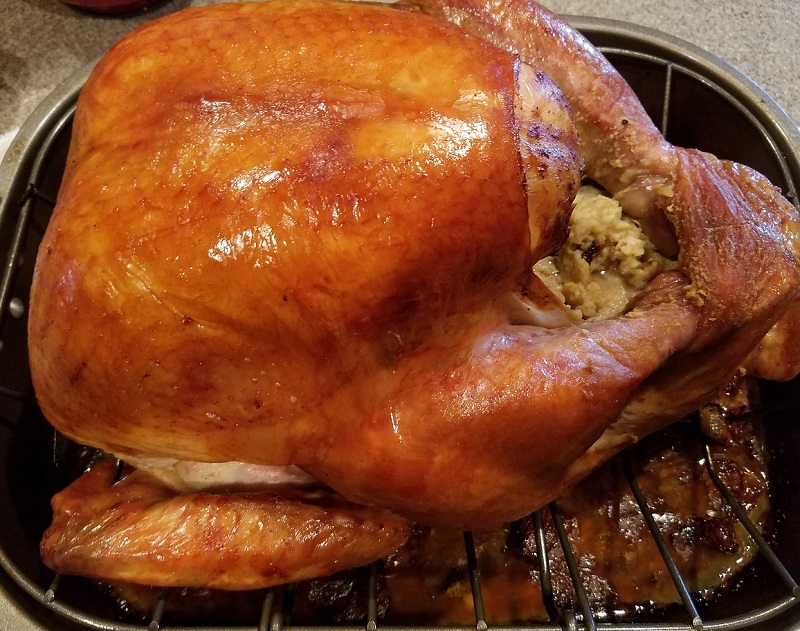
If you are among those who serve turkey on Christmas Eve, you shouldn’t miss out on our good tips and tricks for succeeding with the meat. Turkey is usually stuffed with a filling consisting of stuffing, apples, and prunes or maybe mushrooms, nuts, or similar ingredients. Depending on the filling you choose, a good tip is to stuff it the night before and store the turkey with the stuffing in the refrigerator. The filling will generally handle a trip to the fridge just fine, saving you a step on the day when things are busiest. Another tip is to place some large slices of thin bacon over the breast meat to prevent it from drying out. Secure the slices with cooking pins so they don’t fall off during roasting. Also, periodically baste the turkey with some of the stock from the roasting pan as it cooks. This also helps retain moisture. Always remember to coat the entire surface of the turkey with a good layer of butter before sprinkling it with salt.
Medister Sausage
Medister sausage can be made in several different ways. Here’s our guide to three different methods of preparing the meat, all yielding great results.
The first involves starting by boiling the medister in a high-sided pan. Add water to cover (about two dl). Cook the medister over low heat for about 10 minutes, then take it out and fry it until crispy and golden on both sides.
Alternatively, you can skip the boiling and simply fry the medister in the pan. Begin by browning it in butter and then fry it for about 10 minutes on each side. If you’re using the oven anyway, you can forego boiling and frying and simply roast the medister in the oven. It yields a really good result and makes the medister crispy and delicious. Brush the surface with butter or oil and place the medister in an ovenproof dish. Roast it at 180 degrees in a convection oven for about 20 minutes until golden and thoroughly cooked.
Side Dishes
Brown Gravy
When it comes to Christmas Eve, the sauce is one of the most important elements in our book. It can “bind” the whole dish together, and especially on Christmas Eve, it’s worth putting some effort into making sure it’s spot-on.
The perfect sauce contains all the basic flavors; salty, bitter, umami, sweet, and sour. When seasoning it, try to think along these lines if you feel it lacks flavor. For example:
- Try starting by adding a little salt before anything else in the sauce. Salt has the property of binding (enhancing) flavors, making them stand out more.
- Then add a bit of sweetness, such as red currant jelly, sugar, sweet apples, or honey.
- Acidity: Add a little lemon juice, apple cider vinegar, or balsamic vinegar.
- Bitterness: This could be a bit of beer or dark chocolate.
- Umami: The somewhat unknown flavor. Add a bit of smoked paprika/bacon, capers (fruit), fish sauce/ketchup, or grated parmesan.
Always consider these 5 flavors when seasoning your sauce. Over time, you will learn to consistently achieve the perfect taste—every time!
Potatoes
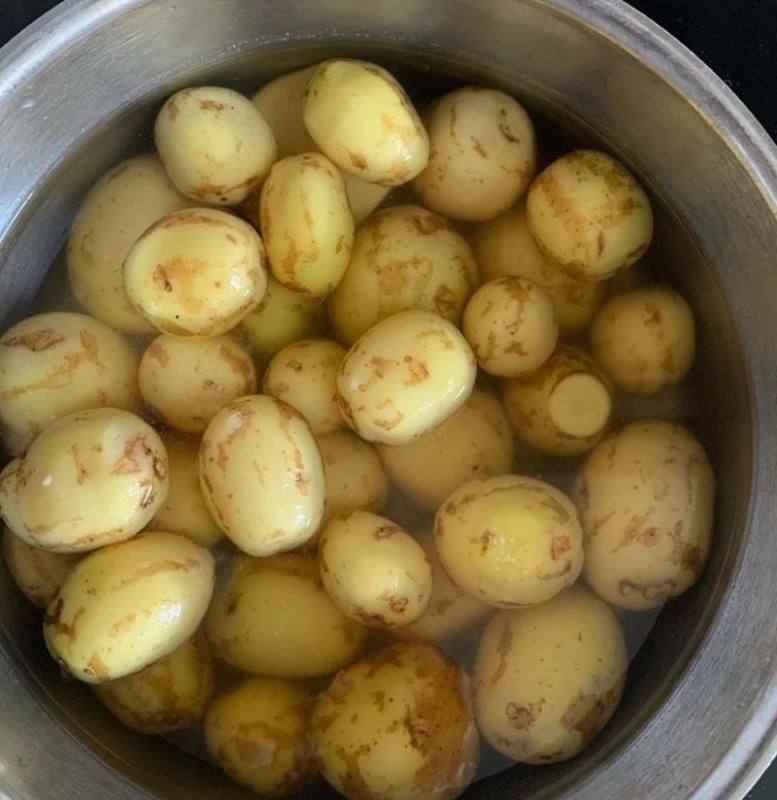
Most people make two types of potatoes for the Christmas meal: boiled white potatoes and sugar-browned potatoes. The latter should be made from small, firm potatoes that should not be boiled for too long. The browned potatoes will undergo another heating process during browning, so boil them so they still have a bit of a bite! To avoid having to buy several different types of potatoes, make it easy on yourself by buying and subsequently boiling a large batch of a type suitable for both white and browned potatoes. The asparagus potato is a good choice here: it can be boiled well in advance and is easy to peel—and it’s usually available in most larger supermarkets. Serve the largest as white potatoes and use the smallest for browned potatoes.
Many swear by buying potatoes in jars and using them for browned potatoes. The advantage of this is that it’s easy, and all the potatoes in the jar are the perfect size for browned potatoes. However, that’s the extent of the pros, as jar potatoes, regardless of brand, will always have a slightly stale taste and be less firm than those you boil yourself. If you still insist on using jar potatoes, we have a couple of tips on how to get the best out of them.
First and foremost, do not buy the cheapest variant, but choose the most expensive in the store. The price difference between the cheapest and the most expensive variant is not large, and by investing a few more kroner, you also get a better product. Next, it’s important to rinse and drain the jar potatoes thoroughly before use. Use cold water and rinse the potatoes in a sieve. They do not need to be dried afterward but should be allowed to drain well before being placed in the pan.
For many people, potato chips also belong on a well-set Christmas table, and if there is a tradition of serving them with the meal, it likely won’t be well-received if they suddenly go missing. Chips can, of course, be purchased ready-made in bags, and there are many kinds available in stores that taste great. However, the store-bought varieties are nowhere near as good as those you make yourself, and if your family loves chips, a portion of homemade ones will be greatly appreciated. Chips should preferably be made the same day they are to be used, as they lose too much of their crispness if kept. This does, of course, involve some extra work, but if you’re a true chips fan, it will be well worth it!
Red Cabbage
Old-fashioned, cooked red cabbage is a must on the Christmas table, and the sweet-sour taste pairs perfectly with duck, goose, and roast pork. The most important tip here is that the red cabbage can be made a few days in advance, as it actually gets better the longer it sits and absorbs flavors. Additionally, it should cook for a long time—preferably a couple of hours—over very low heat. You can cook the cabbage with currant juice and vinegar, or you can replace the currant juice with an appropriate amount of sugar if you don’t like the juice flavor. Old-fashioned, cooked red cabbage is easy to make, and the homemade version tastes far, far better than any of the varieties you can buy in jars. Therefore, you should allow yourself the time it takes to slice and brown the cabbage. The rest of the preparation essentially takes care of itself, so this is truly a case of a small effort yielding a fantastic result. If you don’t like cooked red cabbage, or if you just want a crisp and slightly fresher addition to the Christmas table, a delicious salad of finely sliced red cabbage, oranges, and walnuts can provide a tasty and slightly different alternative.
Risalamande
One of the fixed traditions is that Danes eat risalamande on Christmas Eve.
Risalamande is an essential part of Christmas for most, and this cold dessert with cherry sauce is a classic for nearly all of Family Denmark.
There are a multitude of different recipes for the dessert, but most are quite similar:
The principle is generally the same—a cold rice pudding sweetened with sugar and light whipped cream.
Even though the name sounds very French, risalamande is purely Danish. Allegedly, it was invented at d’Angleterre during a late night in the 1800s when the chef had to whip up a fine dessert, even though he only had a bit of pudding and the other ingredients for the recipe in the kitchen.
Most people cook their rice pudding on Little Christmas Eve, where it is typically prepared as a normal pudding, but without salt and with a vanilla pod instead. Therefore, many families also have the tradition of eating rice pudding the day before the day.
Christmas with Sous Vide
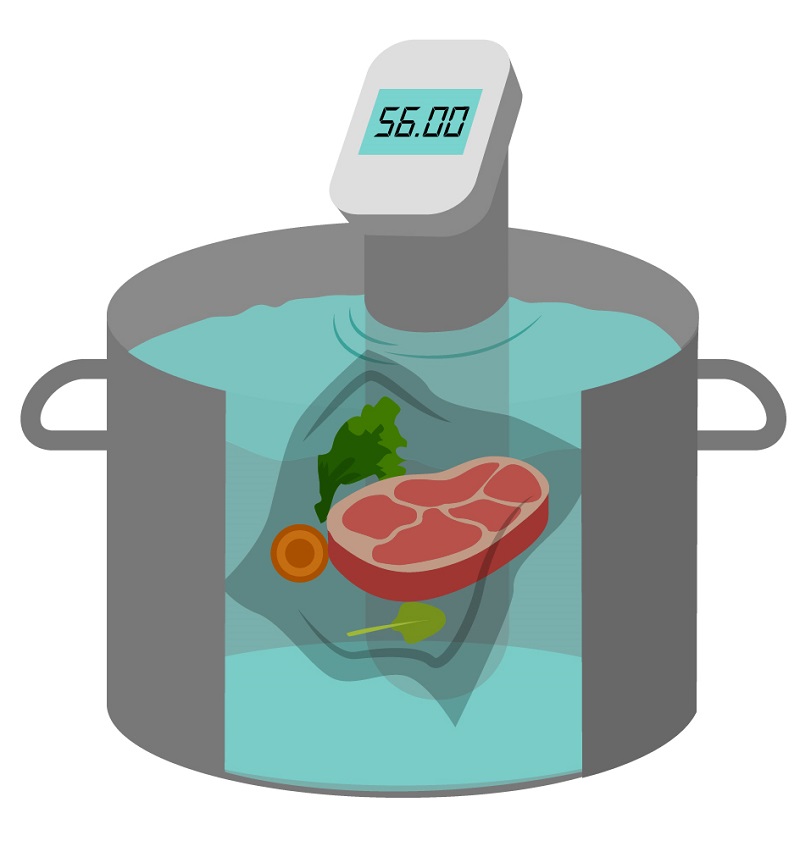
Sous vide is a fantastic cooking method, and once you discover what it can do, it’s hard not to be captivated by its many possibilities. One of the great advantages of sous vide is that the ingredients take care of themselves during cooking, and the long cooking time allows you to prepare the food well in advance. This is a huge advantage in many situations, especially on Christmas Eve, when everything needs to go smoothly and be ready at the same time.
Duck and Goose
If you don’t want to prepare a whole bird, it’s a good idea to prepare smaller cuts (legs and breast) in your sous vide, which become perfectly tender and flavorful with the long cooking time.
Roast Pork
You can certainly prepare an entire roast pork in your sous vide, and with a very good result. Both rib roast and loin roast can be prepared using this method. Especially loin roast is suitable, as it easily becomes dry, and the meat benefits from the slow and gentle cooking. The crackling should, of course, be roasted crispy afterward; see how to do it in our recipe here.
Below we have recipes for roast pork prepared with the sous vide technique:
Turkey
Just like with duck and goose, cuts of turkey are also very suitable for sous vide preparation. Both legs and breasts can be used as they are, but also a stuffed turkey breast will be delicious when prepared this way.
Potatoes
Potatoes can also be prepared sous vide, making them ready well in advance. You can prepare both the potatoes you will serve as they are and those you will later use for browned potatoes. The potatoes you wish to brown should simply be dried thoroughly before being placed in the pan with the caramel mass.
Red Cabbage
Red cabbage is brilliant for sous vide preparation because the secret to well-prepared old-fashioned red cabbage is that the cabbage should be cooked for a long time at low heat. Just as when you boil the cabbage, you can prepare it several days in advance when using sous vide, as the cabbage improves with time. Just warm it up before use and season again with salt, pepper, sugar/currant juice, and vinegar.
Bon appétit and Merry Christmas.