


We love dry-aging meat here at the editorial office and love to delve into the details of the concept. The classic wet-aged meat doesn’t get much attention from us on this page.
When something in between suddenly gets attention from meat enthusiasts worldwide – we’re naturally interested in the phenomenon. Tens of millions have watched the videos online of the Danish chef Casper Stuhr Sobczyk from Marienlyst Strandhotel.
We have spoken to Casper about his process, and you can read much more about it here.
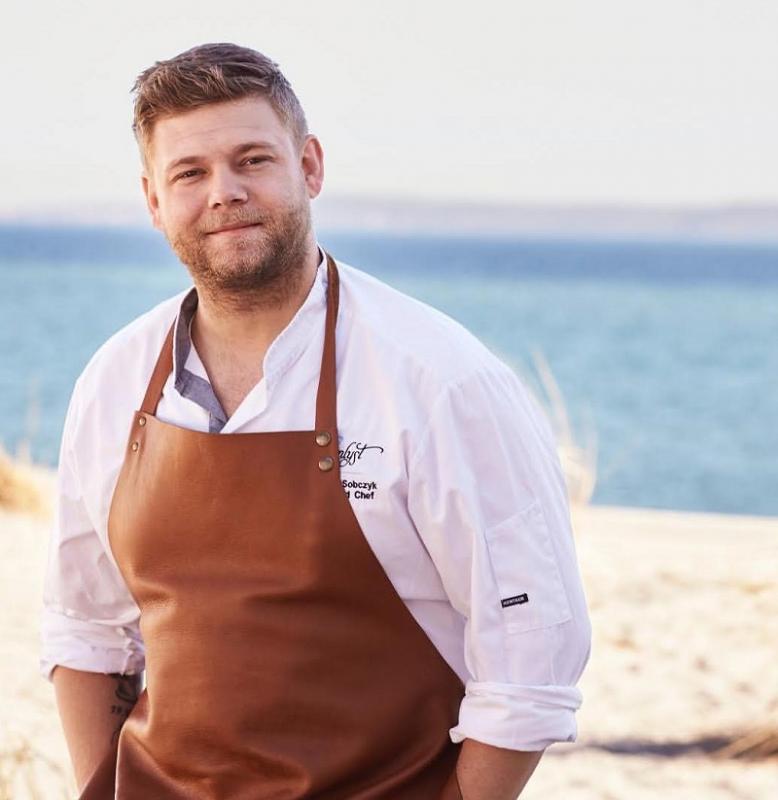
Casper’s Butter Steak
The concept is butter-aging or butter-aged steak, buttersteak, or translated to Danish; butter-aged beef.
Casper has invented a technique where the meat is aged in butter for about 45 days. It has been a long process for him to reach the technique he uses today:
Casper uses fresh rib-eye roasts from freshly slaughtered meat. He starts by unpacking the meat and placing it uncovered in a regular refrigerator. The temperature is between 3-5 degrees there.
After 5 days, the meat is dipped in lightly smoked, salted butter at 15 degrees. He uses around 10 kg of butter for 5 rib-eye roasts. If the butter’s temperature is a few degrees warmer or colder, it’s difficult to get it to stick to the meat. He has experimented with unsalted, salted, and lightly smoked salted butter, and taste-wise, Casper believes the best version is achieved using the lightly smoked, salted butter – which he smokes in a tray over wood chips.
The meat is then placed on a rack and returned to the refrigerator for a total of 30, 45, or 60 days. He is personally most fond of 30-45 days of aging.
“60 days, then it becomes much more anomalous – I am personally most fond of 30-45 days,” he says.
The meat is then cut into steaks and fried in butter on the pan. The butter becomes rancid from the process, so it is discarded.
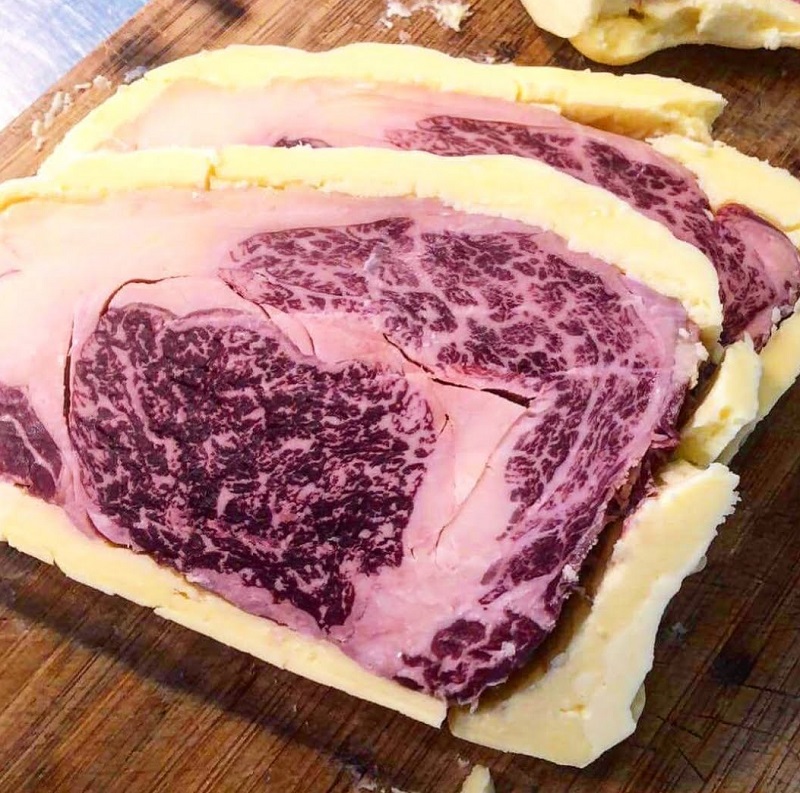
We asked Casper if he thought the technique resembled dry or wet aging the most. The answer was wet aging. The meat doesn’t lose any liquid in the process, similar to what one sees in the wet-aging process.
We then asked why he uses butter for the process instead of “just” vacuum sealing the meat and wet-aging it conventionally?
Casper’s answer was: “The butter gives it a longer shelf life – indeed, much longer than in a vacuum, where it can only last a couple of weeks at most.”
In a dry-aging process, the meat needs to be placed in an aging cabinet with the right protective elements against bacteria; UV light, carbon filter, controlled humidity, and temperature. In this process, the meat is protected against bacteria by the butter, whose light smoky taste also imparts flavor to the meat.
When asked if the salt helps to cure the meat a bit in the process, Casper replied: “I think it does, but I’m not sure.”
We look forward to following Casper’s projects in the future, and one of the newest things he’s working on is preparing fish in the same way.