


Celebrity chef Anthony Bourdain’s confession about how star chefs cook:
How to Cook Like the Pros
Unless you’re already one of us, you’re probably never going to cook like a professional. And that’s okay. When I’m off, it’s rare that I want to eat at a restaurant, unless I’m looking for new ideas or recipes to steal. What I want is homemade food. It doesn’t matter whose food it is, it could be mom’s or grandma’s, as long as it’s homemade. A simple pasta pomodoro made with love, a lumpy tuna casserole, roast beef with Yorkshire pudding, all of that I find deeply exotic, even when I’m up to my ears in filet mignon and herb-infused oils, and whatever else we come up with to make restaurant food an experience. When I was present, my mother-in-law used to apologize before serving dinner: “This is quite an ordinary meal for a chef…” She had no idea how magical, how affirming, how delightful I found her meatloaf to be, what a pleasure even lumpy mashed potatoes were – because it was all so blessedly free from truffles or truffle oil.
But that’s not what you’re here to hear about. What you want to know is how to make your next dinner party look like you’ve got the Troisgros family personally tethered to your stovetop at home in the kitchen. Maybe you’re curious to hear about the tricks, the techniques, the few simple tools that can make your dishes look as though they were prepared, composed, and garnished by a cold-blooded professional.
Let’s start with the equipment. What do we have in our kitchens that you probably don’t? The funny thing is, a lot of what we stock – herb oils, crushed spices, finely chopped parsley, starchy foods and vegetables that are pureed – is often made with perfectly ordinary kitchen equipment like your own. True, I have a professional 27-liter Hobart mixer and an ultra-large Robot-Coupe, but there’s a good chance that I’ll use the home blender when I’m making that wonderful roasted pepper coulis sprinkled with bright green basil oil.
So what is it you absolutely must have?
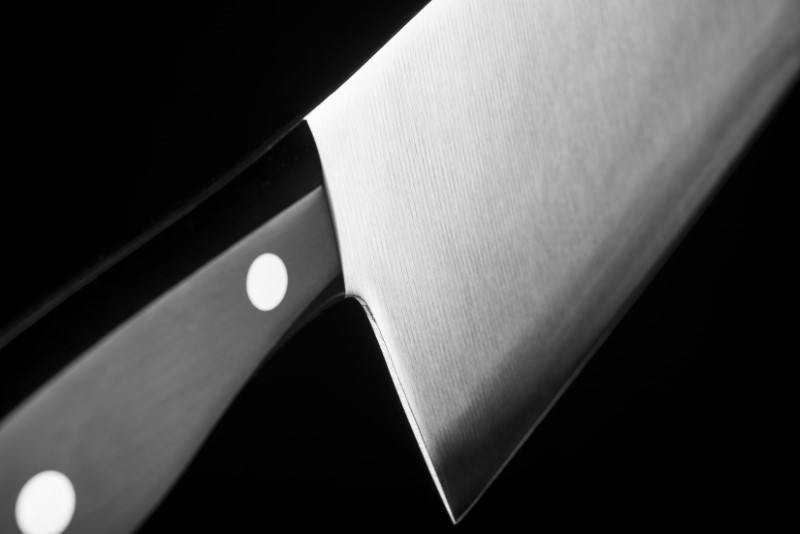
For heaven’s sake, get yourself a good chef’s knife. No con job perpetrated on the general public beats the outrageous, wrong, and so widespread misconception that what you need is a whole set of different knives of varying sizes. Sometimes I really wish I could go through all amateur chefs’ kitchens and just throw the knives away – all those medium-sized “utility” knives, those worthless serrated monstrosities advertised on TV, all those clumsily designed paring knives – not one of those damn things can cut a tomato. Please believe me when I tell you that all you’ll ever need in the knife department is: ONE good chef’s knife in precisely the size that fits comfortably in your hand. Brand? Okay, most talented amateurs get a thrill when they buy an old-school professional high-carbon stainless steel knife from Germany or Austria, like a Henckels or a Wüsthof, and they are good, if heavy, knives. The high carbon content makes them easier to sharpen, and the fact that they’re stainless means they won’t stain or rust. They also look fantastic in their boxes in the store, and when you show off your steel-glinting Solingen, you’re also telling your guests that you take cooking seriously. But do you really need such a formidable knife? So expensive? So difficult to maintain (which you probably won’t do)? Unless you truly intend to spend 15 minutes a couple of times a week running the blade up and down an oiled carborundum stone, followed by careful honing on a diamond steel, I would skip the German knives.
Most professionals I know retired their Wüsthofs years ago in favor of the lighter, easier-to-sharpen, and relatively inexpensive vanadium steel knives from Global, an excellent Japanese product that – in addition to its many other fine qualities – also looks really cool.
Global makes many knives in different sizes, so what do you need? A chef’s knife. That should be able to cut everything you might work with, from shallots to watermelon, an onion or a piece of tenderloin. Like the pros, you’ll use the tip of the knife for the small things and the area closer to the handle for the larger items. It’s not hard; buy a few turnips or onions – they’re cheap – and practice on them. Nothing will set you apart from the crowd faster than the ability to use a chef’s knife properly. If you need instructions on how to handle a knife without cutting off a finger, I recommend Jacques Pépin’s La Technique.
Okay, there are actually a few other knives you might need. I carry around a flexible fillet knife, also made by the fine folks at Global, because I sometimes fillet fish, and because the same knife can carve whole tenderloins, debone whole legs of lamb, slice veal racks lengthwise, and prepare meat. If your butcher does all that for you, you can probably live without this knife. A paring knife is handy from time to time when you need to turn vegetables, channel mushrooms, and do the kind of microsurgery my friend Dimitri used to excel at.
But how often do you do that?
But an excellent knife blade – and one that is gaining more traction among my kitchen comrades – is the one with the angled handle. I’m talking about a serrated knife that’s attached to an ergonomic handle; it looks like a Z that’s been stretched and extended. It’s an incredibly cool thing that, once you’ve tried it, quickly becomes impossible to do without. Since the handle isn’t level with the blade but elevated concerning the cutting surface, you can use the knife for the tasks a serrated knife traditionally performs – such as slicing bread and tough-skinned tomatoes and so on – and also for all sorts of vegetables, potatoes, meats, and fish. My sous chef uses his for just about everything. F. Dick makes a good one for around 25 dollars. It’s stainless steel, but since the blade is serrated, it doesn’t matter; when you’ve used it for a couple of years and the teeth start to wear out, you just buy a new one.
But knives are such an obvious thing. What other tricks can the professional chef give you? Numero uno – indispensable for most chefs – is the simple plastic squeeze bottle. Maybe you’ve seen Bobby Flay on TV as he artistically drizzles sauce over a dish using one of these bottles – he’s been making Mexican food look like haute cuisine for years with these. Yes, yes, it’s just anchovy-pepper mayonnaise he’s squeezing over the fish, but it looks… hmm… abstract, man! And it’s not even hard to get one of these things, they’re practically the same as those they have at cafeterias and hot dog stands filled with mustard and ketchup. Cover half of a plate with emulsified butter sauce and then make a few concentric circles with a darker sauce – like demi-glace or roasted pepper puree – around. And then pay attention because now you draw a toothpick through the circles or lines, and you find out that it was all much ado about nothing. It will take half an hour of fiddling around with a couple of plastic bottles and a toothpick before you fully understand what this is about. It’s the same trick pastry chefs use when they make chocolate or raspberry sauce swirls on crème anglaise and then have the audacity to charge an extra three dollars per serving for two seconds of work that you could easily teach a chimpanzee.
But… but Mr. Chef, you say… how do you get the food to be so tall? How do I get my chicken breasts and mashed potatoes to rise up over my awestruck and terrified guests like a Priapus bursting with blood? The answer again comes in the form of another low-tech gadget: the metal ring. A thin metal ring or a piece of cut-off PVC pipe, about 3.5-5 cm in height but varying in width, is the very core of pretentious plating art. Just spoon your mashed potatoes into one of these – or better yet, pipe it out through a piping bag – and you’re off. Make a tall pile, remove the ring, lay the vegetables on, then the chicken, and you’re halfway ready to make Emeril Lagasse breathless. Stick a pommes gaufrette into the mash, maybe a fresh herb sprig or a nice stack of ultra-thin julienned fried leeks, which you’ve sliced with your new Global, and then you’re ready to look down your nose at your tall presentation.
Gaufrette-what? It’s French for “waffle-cut”, and they’re just French fries I’m raving about. You can do it. All you need is a so-called mandoline, a vertical slicer with variable settings. They make some very cheap, very effective mandoline slicers in Japan today, so it’s not a major investment. Such a little devil can be of great help when you want to make those snazzy-looking, perfectly even julienne and batonnet-cut vegetables you thought they made by hand last time you were at a restaurant – and it can also waffle cut, just by flicking your wrist a little. Pommes dauphinoise cut to identical width? No sweat. You didn’t think they cut them out with a knife, did you?
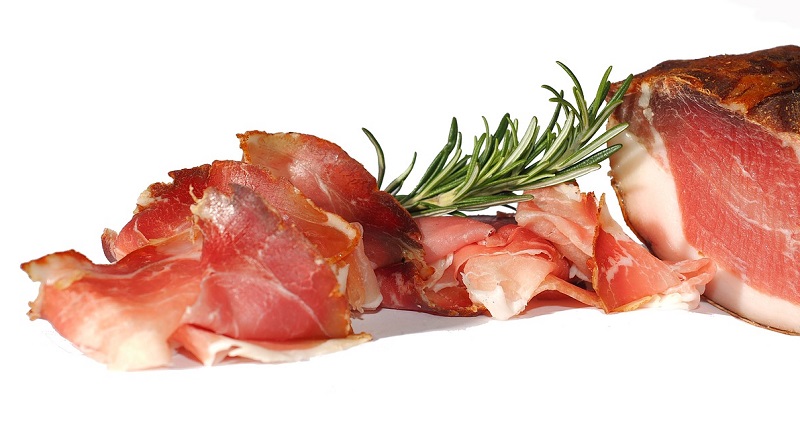
All right, the mandoline can’t cut meat, and it certainly can’t cut paper-thin prosciutto slices. For that purpose, you’ll need one of the professional slicers they have down at the deli. The machines made for use in your kitchen are crap. If you’re doing a buffet with sausages or meats, I highly recommend that you give your local deli shop a few bucks to slice your food before you lay it out on the serving table. It will make a colossal difference. Or if you have more money than you need, you can go through the newspaper and see if you can find some restaurant auctions. Because as you’ve probably figured out, restaurants go bankrupt all the time and need to sell their equipment quickly and cheaply before others start doing it for them. I know people who buy entire restaurants this way, as a turnkey acquisition, and in an industry with a failure rate of over 60 percent, you can make some good buys. You can buy all kinds of professional quality equipment. I primarily recommend looking out for pots and pans when you go on such a scavenger hunt. Most of what’s sold for home use is dangerously flimsy stuff, and the heavy equipment sold for serious amateur cooks is almost always too expensive. Stockpots, saucepans, and thick-bottomed frying pans are good tools, maybe even necessary tools, and there’s no reason to buy them new and no reason to pay a lot – just wait for that new tapas restaurant around the corner to go under and then strike.

Let me emphasize it again: it has to be heavy. A thin-bottomed saucepan is useless. I don’t care if it is wrought with copper, hand-polished by virgins, or made of the same material they used to build stealth bombers. If you like burnt sauces, carbonized chicken, pasta glued to the bottom, burnt breadcrumbs, then for all I care, no worries. A proper frying pan, for instance, should be able to inflict great harm if you hit a skull with it. If there’s any doubt about who gets the dent – the victim or your pan – then you should immediately throw the pan out.
A non-stick frying pan is a lovely tool. Crepes, omelets, a delicately browned fish fillet or tender skate wings? Then you need a nice, thick non-stick pan, and it shouldn’t be one with a thin layer of “non-stick” that flakes off after a few months.
And when you buy a non-stick pan, you should treat it properly. Never wash it. Just wipe it off after use and don’t use metal on it, use instead a wooden spoon or a ceramic or non-metal spatula when you turn or poke at what you’re making. You mustn’t scratch the surface.
Now, I shouldn’t make things too simple. It goes without saying that if you have no sense of taste or texture or have no eye for colors and plating – if you, for heaven’s sake, can’t cook at all – then all the equipment in the world won’t help you. But if you can put together a decent meal, are able to read a cookbook, then it’s just the case that you can get much better if you spend some time playing with the equipment I’ve mentioned.
There are also certain ingredients that set home-cooked food apart from restaurant food – these are the ones we have at hand in the professional kitchen that you probably don’t – and now I’m going to list the ingredients that make all the difference.
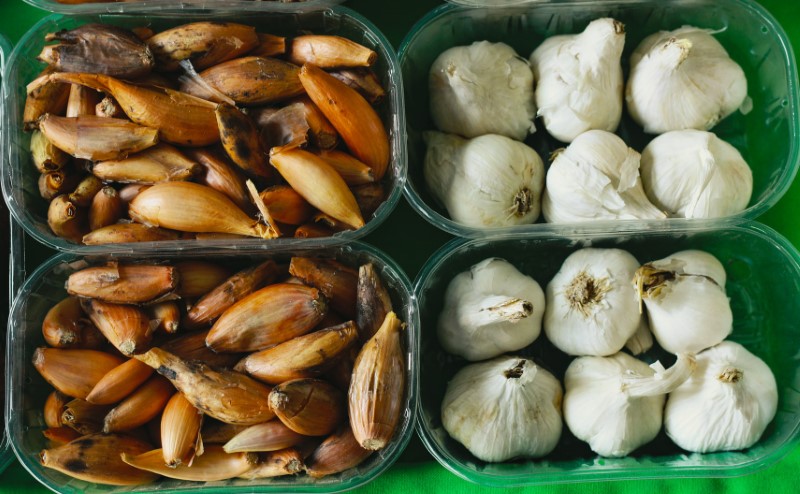
Shallots. You rarely see these in home kitchens, but in my world, they are an indispensable ingredient. Shallots are one of the things – standard in all mise-en-places – that make restaurant food taste different from your food. In my kitchen, we use almost ten kilos a day. You should always have shallots on hand for sauces, dressings, and sautés.
Butter. I don’t care what they tell you they use or don’t use at your favorite restaurant, you’re guaranteed to consume a ton of butter. In a professional kitchen, butter is always the first and last thing that goes into the pan. We fry in a mixture of oil and butter to get that lovely brown, caramelized color, and we finish all the sauces with butter (that’s called monter au beurre); that’s why my sauce tastes richer and creamier and fuller than yours, that’s why it has this lovely, thick, opaque consistency. Trust me, there’s a big jar filled with soft butter in all mise-en-places, and it’s well-used. Margarine? That’s not food. I can’t believe it’s not butter, as they say in the ads. I can. If you’re inclined to use margarine for anything, then you can put the book down now, because I can’t help you. Even the Italians – you know, those crafty Tuscans – they rave about liberating themselves from butter while praising the blessings of olive oil (and it is blessed), but try sneaking into the kitchens of a three-star restaurant in Northern Italy and see what they’re slipping into the pasta? And the risotto? And the veal chop? Could it be? It’s… I can hardly believe it, it IS butter!!
Roasted garlic. Garlic is heavenly. Few foods can taste in so many different ways as garlic when handled properly. Garlic abuse is a crime. Old garlic, burnt garlic, garlic that’s been peeled too long, garlic that has suffered the fate of being pressed out through that torture device called a garlic press, is all nasty. Please show respect for your
garlic. Slice it thin like you saw in Goodfellas, don’t burn it. Crush it with the flat side of the knife if you want, but don’t run it through the garlic press. I don’t know what gunk that comes out through the holes in one of those, but it’s not garlic. And try roasting garlic. It becomes soft and sweet if you roast it whole in its skin and squeeze it later when it’s soft and brown. Try a Caesar dressing, for example, with a mix of fresh garlic for a bit of bite, and some roasted garlic for the background flavor, and you’ll understand what I mean. There’s
nothing that will more irrevocably and to greater damage permeate your food like burnt or old garlic. And avoid at all costs that nasty muck-in-oil that’s rotting away in screw-cap glass jars. Are you too lazy to peel a fresh garlic bulb? Then you don’t deserve to eat garlic.
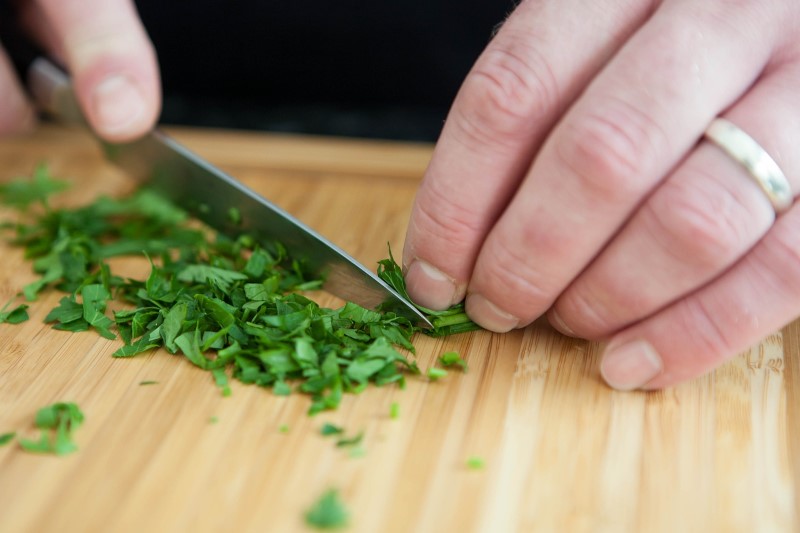
Finely chopped parsley. So what, you say? Restaurants garnish their food. Is there any reason why you shouldn’t do the same? And parsley even tastes good. Just don’t chop it in a machine, okay? Rinse the parsley sprigs in cold water, shake off the water, let them dry for a few minutes, then chop them as finely as you can with the new, sexy chef’s knife I’ve inspired you to buy. I assure you, if you sprinkle it on or around your dish, parsley will give your food the strikingly good, professional appearance it’s been missing.
Stock. No cooking without stock. You need it – and you don’t have it in your kitchen. I have the luxury of having 33-liter stockpots, a willing team of prep kitchen slaves, bones readily available, and lots of refrigerator space. Does that mean you should subject your guests to a sauce made with nasty, mass-produced bouillon cubes or oversalted canned clear soup? Make your own stock. It’s easy! Just roast some bones, roast some vegetables, toss them into a large pot with water and boil down and boil down and boil down. Make enough for a few months, and when it’s sufficiently reduced, strain it and freeze it in small containers, so you can pull it out of the freezer as needed. A life without stock is misery, and you’ll never make demi-glace without stock.
Demi-glace. There are many ways to make demi-glace, but I recommend simply taking your already reduced meat stock, adding some red wine, tossing in some shallots and fresh thyme and bay leaves and peppercorns, and then slowly, slowly letting it simmer and reduce until it’s thick enough to coat a spoon. Strain it. Freeze it in ice cube trays, take a cube or two as you need it, and you’re off – ready to take over the world. And remember, when you make sauce with demi-glace, don’t forget to monter au beurre.
Chervil, basil, chives, mint sprigs, etc. What do you need, what in heaven’s name?! A nice chervil sprig on top of your
chicken breast? A few healthy-looking basil leaves as decoration on pasta? A few artfully slung chives on your fish? A tuft of mint enjoying life in a dollop of whipped cream and maybe rubbing up against a single raspberry? Come on! Understand what it’s about here. It takes so little to elevate an otherwise plain-looking
dish. It doesn’t even require talent to garnish food. So why not just do it? And what about a fresh herb sprig – thyme or rosemary? Maybe you can use what you don’t use as a garnish as seasoning in the food? The dried sawdust they sell in those cute little jars in the supermarket? You can take them and the entire spice rack, and you can toss it all straight into the trash. It all tastes like barn floor. Use fresh herbs! Good food is very often, in fact, in the most cases, simple food. Some of the best food in the world – whole roasted fish, Tuscan style, for example – is a matter of three or four ingredients. You just have to make sure they’re good ingredients, fresh ingredients, and then you garnish them. How hard can it be?
Here’s an example: Here’s a very popular dish I used to serve at a highly regarded two-star restaurant. I got 32 dollars per
serving and had trouble keeping enough of it in stock because people were so wild about it. Take a fish – a snapper, striped bass, or dorado – have your fishmonger remove the gills, guts, and scales and wash it in cold water. Rub it inside and out with kosher salt and crushed black pepper. Stuff garlic, a slice of lemon, and a few fresh herb sprigs – rosemary or thyme, for example – into the cavity where the guts used to be. Place the fish on a lightly oiled baking sheet or a piece of foil and throw it into a very hot oven. Let it roast until it’s crispy and cooked through. Drizzle some basil oil over the dish – you know, the oil blend you made in the blender and then poured into your new plastic bottle? – sprinkle the fish with finely chopped parsley, garnish with a bit of basil… voilà?
We have the chapter from the book: “Kitchen Confidential“, written by Anthony Bourdain.
